
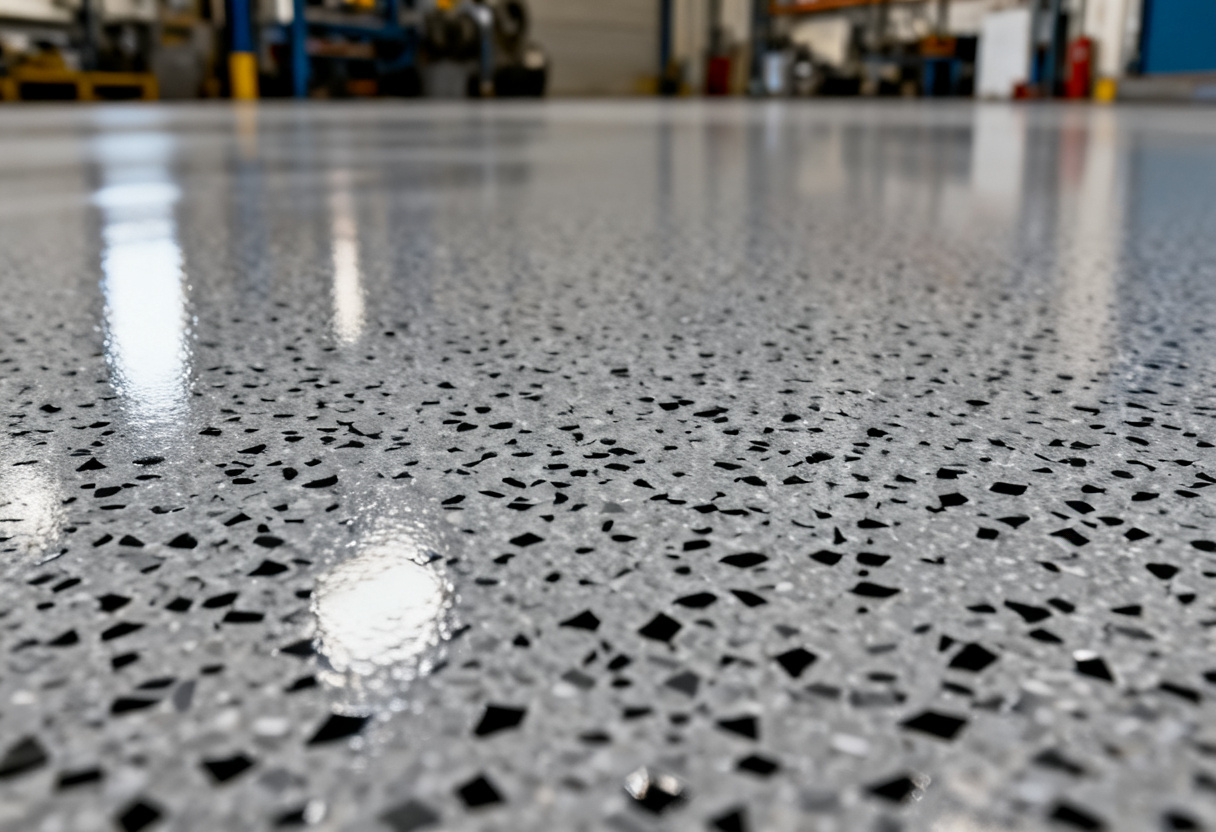
What Are Slip-Resistant Additives for Epoxy Floors?
Slip-resistant additives are small textured particles that get mixed into or broadcast over an epoxy topcoat. They create a grippy surface that holds traction underfoot when wet — something a smooth epoxy finish simply can’t do on its own.
Unlike stick-on tapes or paint-on treatments that wear down quickly under foot traffic and regular cleaning, professionally applied additives are built into the coating itself. They last, and they deliver measurable slip resistance that meets AS 4586 — the Australian standard used by WorkSafe Tasmania and health inspectors to assess whether a floor is safe.
The four main additive types used in professional epoxy systems are:
- Aluminium oxide — hard, angular aggregate best suited to workshops, factory floors, and heavy-duty commercial areas
- Silica/quartz sand — fine-to-medium texture, well suited to commercial wet areas and food service environments
- Polymer grit — a softer option used in aged care and healthcare settings where a gentler surface texture is needed
- Shark grip and fine broadcast products — blended into the topcoat for a subtle texture increase in residential and light commercial applications
Which additive is right for your floor depends on the environment, the traffic it takes, and the AS 4586 P-rating required — not a one-size-fits-all call.

Why Smooth Epoxy Floors Become Slip Hazards in Hobart
Hobart’s climate is the problem. Cool, damp winters, coastal humidity, and condensation-prone slabs mean moisture is a constant presence — in garages, workshops, commercial kitchens, and anywhere with a concrete floor close to ground level.
A smooth epoxy surface performs fine when it’s dry. The moment it gets wet, traction drops off quickly. For a workshop in Glenorchy where staff are moving through a roller door in the rain, or a kitchen in Salamanca that gets mopped three times a day, that’s not a minor inconvenience — it’s a genuine safety risk and a potential WorkSafe issue.
The floor itself isn’t the problem. The finish is. And that’s exactly what adding slip-resistant additives fixes.
How Slip-Resistant Additives Work
When additives are broadcast into or mixed through an epoxy topcoat, they create a micro-textured surface — tiny peaks and edges that give boots and shoes something to grip, even on a wet floor.
It’s a straightforward concept, but the execution is what separates a professional result from a DIY one. Particle size, density, and how evenly the additive is distributed all affect how the finished surface performs. Get it wrong and you end up with an uneven texture, patchy grip, or a floor that’s harder to clean than it needs to be.
Surface-applied tapes and paint-on anti-slip treatments don’t come close. They sit on top of the floor rather than becoming part of it, and they break down fast under regular foot traffic and commercial cleaning. Professionally specified and applied additives are part of the coating itself — they hold up.
Types of Slip-Resistant Additives We Use
We select additives based on where the floor is, what it has to handle, and what compliance rating it needs to hit. Here’s what we work with and where each one fits.
Understanding AS 4586 Slip Resistance Ratings
AS 4586 is the Australian standard that defines how slip-resistant a floor needs to be in a given environment. It’s what WorkSafe Tasmania and health inspectors reference when they assess whether a floor is safe and compliant. We assess every floor against this standard and specify the additive system needed to hit the required rating — there’s no guesswork involved.
The ratings that come up most often in our work are P3, P4, and P5.
| P-Rating | Environment | Recommended Additive |
|---|---|---|
| P3 | Residential wet areas, general commercial | Shark grip, fine broadcast, quartz sand |
| P4 | Commercial kitchens, food areas, high-traffic wet zones | Quartz sand, aluminium oxide |
| P5 | High-risk wet environments, industrial wet areas | Aluminium oxide |
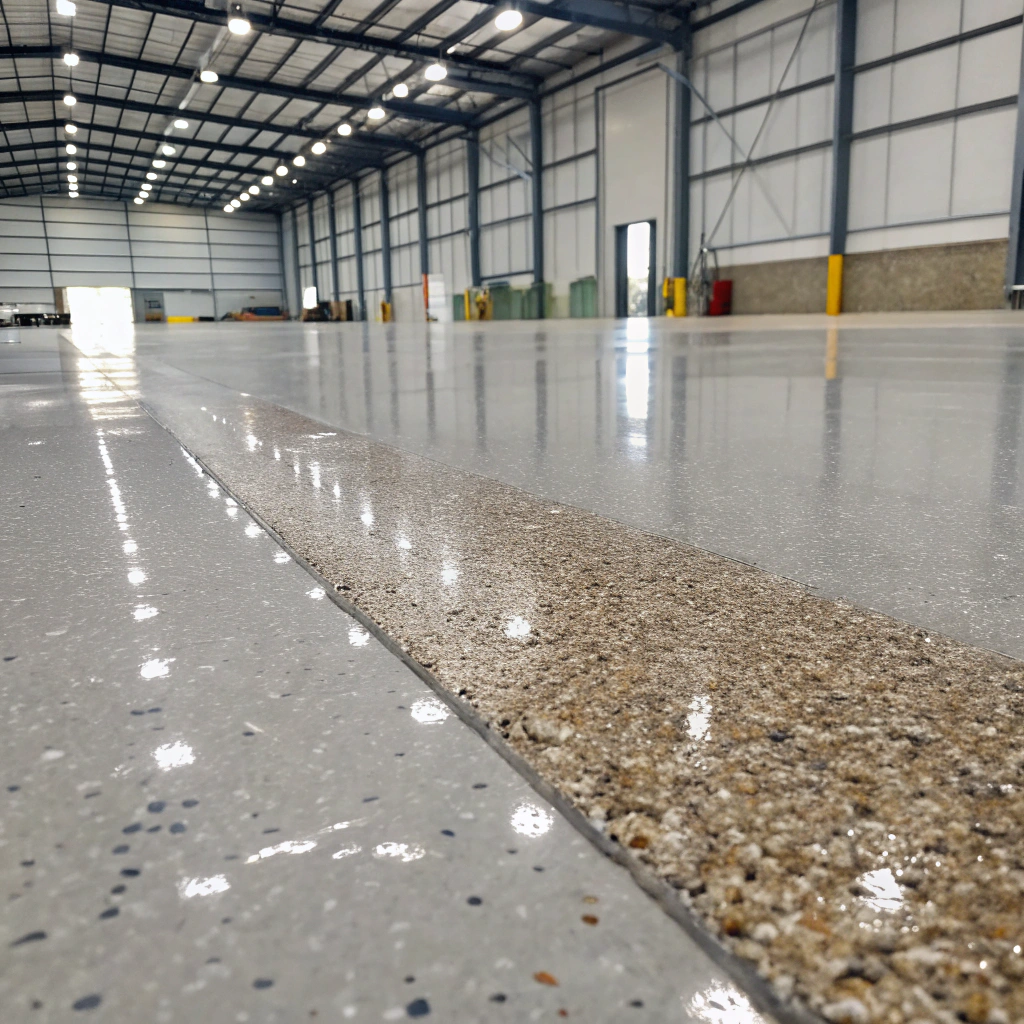
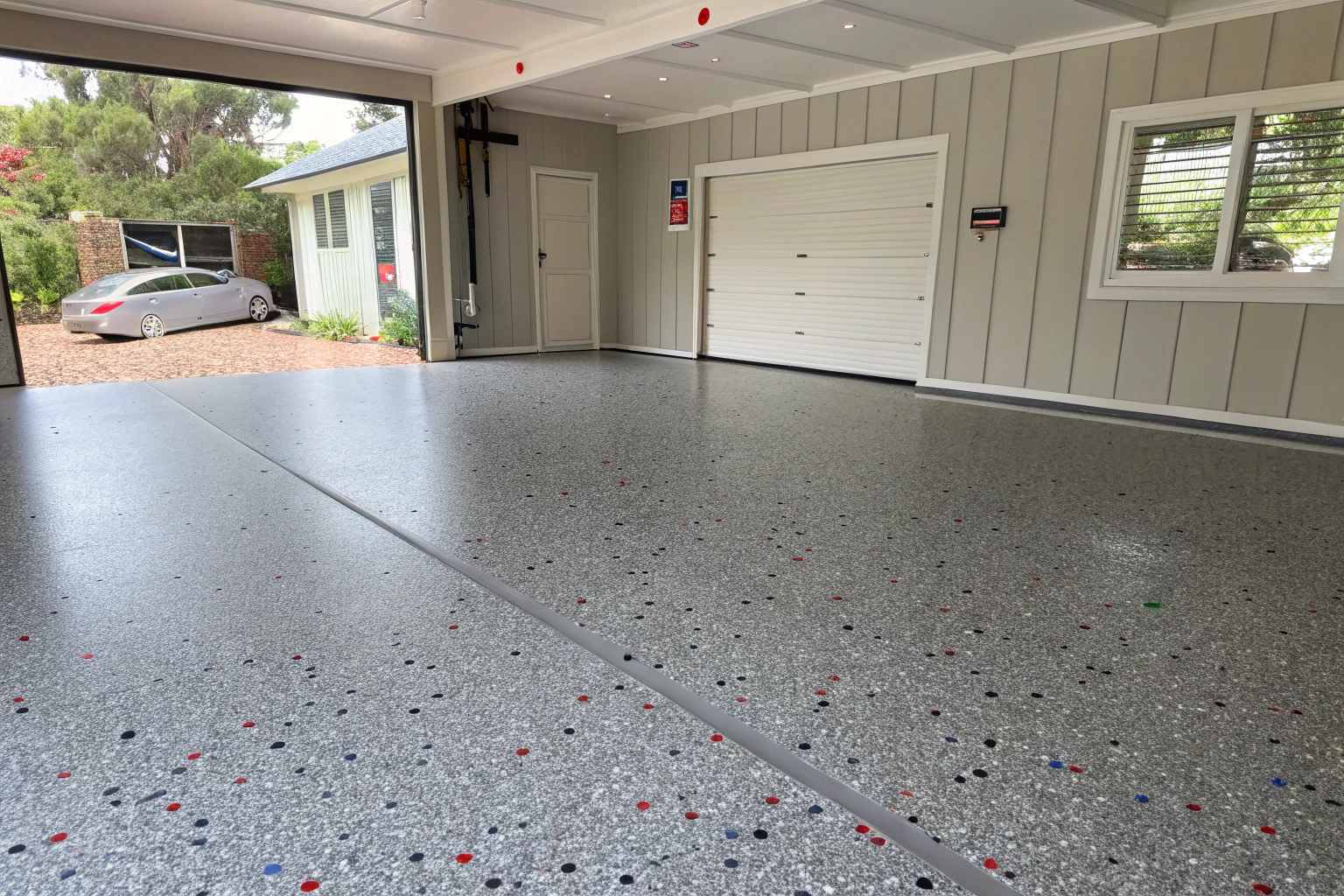
Where We Apply Slip-Resistant Additives in Hobart
Residential Garages and Home Workshops: A damp Hobart winter and a smooth epoxy floor is a bad combination. We add grip to existing garage and home workshop surfaces quickly and without fuss.
Commercial Kitchens and Hospitality Venues: Kitchen floors flagged at a health inspection need a compliant fix fast. We bring existing surfaces up to the required P-rating with minimal disruption to trading hours.
Workshops, Factories, and Light Industrial Floors: A slippery workshop floor is a WorkSafe liability. We apply heavy-duty additive systems to existing floors across Glenorchy, Moonah, and the broader Hobart industrial belt.
Aged Care and Healthcare Facilities: We use lower-abrasion polymer grit systems in aged care and healthcare settings — delivering the required slip resistance with a surface profile suited to residents with limited mobility.
The Additive Application Process
Floor Assessment and Suitability Check: Before anything else, we assess the existing floor — its condition, how well the current coating is bonded, and whether the surface is a viable candidate for additives. In most cases this can start remotely from photos and a brief description before we confirm a site visit.
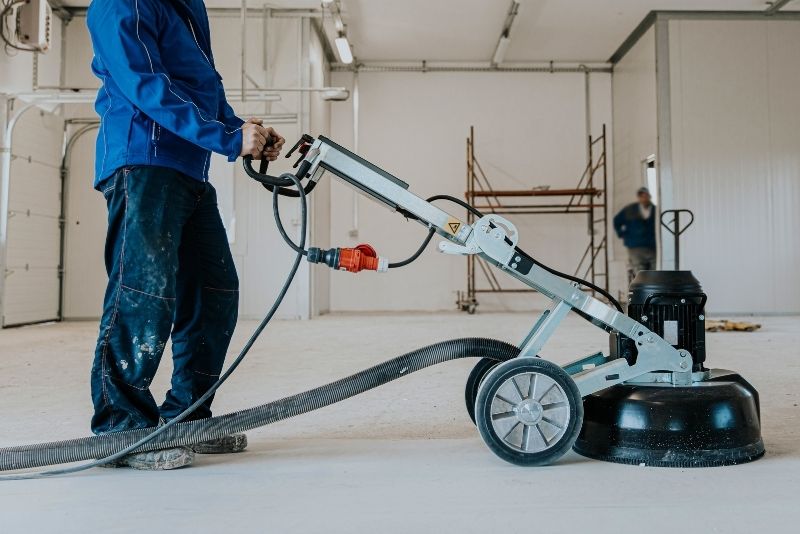
Surface Preparation: The existing surface needs to be clean, sound, and properly keyed before we apply anything. We carry out the preparation work needed to make sure the additive system bonds correctly and performs the way it should.
Additive Selection and Application: We select the additive type and density based on the environment, the traffic the floor handles, and the AS 4586 rating it needs to reach. The additive is then broadcast into or mixed through the topcoat and applied evenly across the floor.
Cure Time and Return to Service: Most additive applications cure significantly faster than a full floor restoration. Light foot traffic is typically possible within 24 hours, with full return to service shortly after. We’ll give you a clear timeline before we start so there are no surprises around downtime.



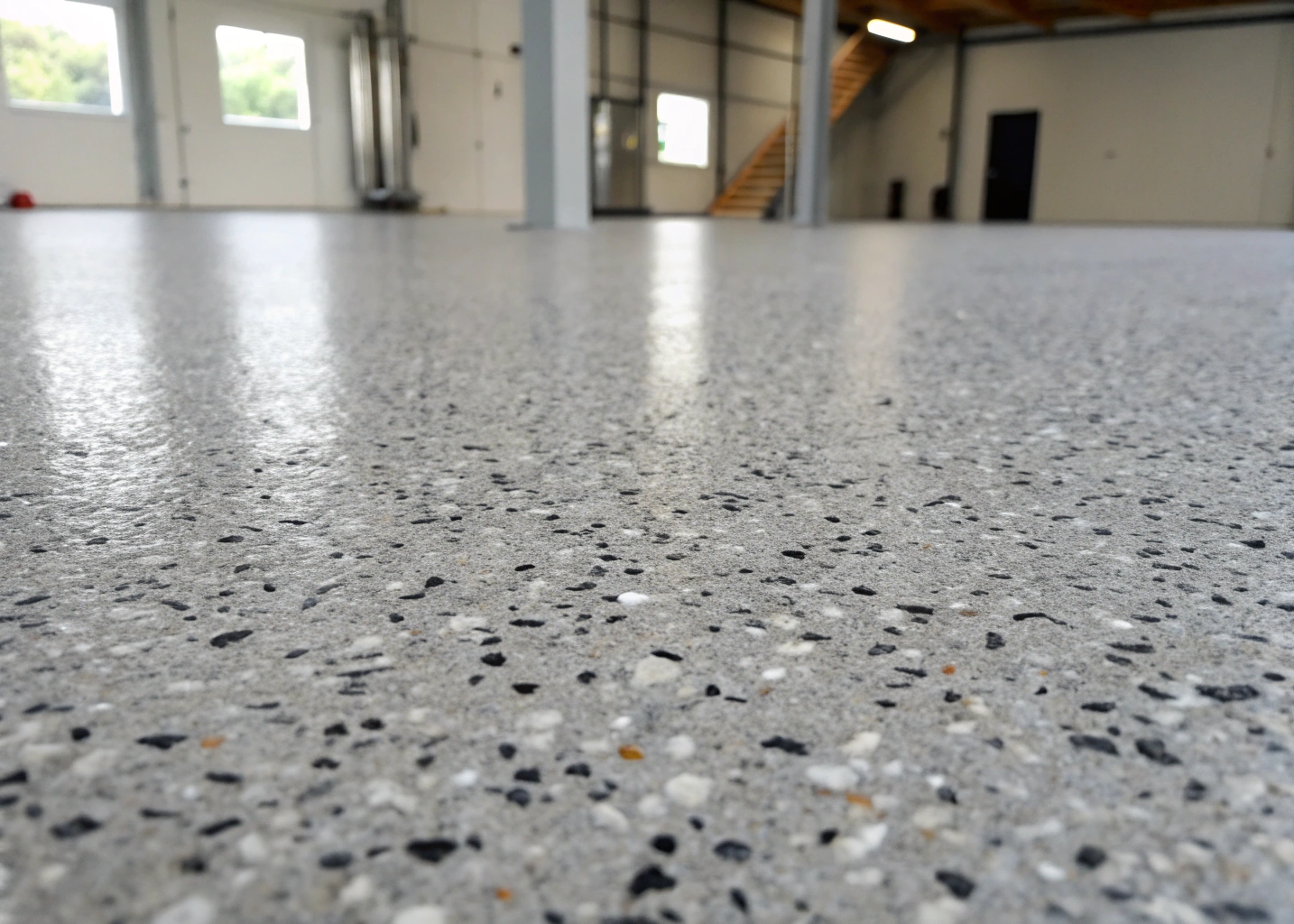
Is Your Existing Floor a Candidate for Additives?
In most cases, yes. If your existing floor is sound and the coating is still well-bonded, adding a slip-resistant finish is a straightforward upgrade — no full recoat needed.
The quickest way to find out is to send us a few photos and a brief description of the floor. We can give you a clear indication of suitability before committing to a site visit, which means less back-and-forth and faster answers — something that matters in a trade market like Hobart where getting a straight response from a contractor isn’t always easy.
If the floor does need more work before additives can be applied, we’ll tell you that upfront. No runaround.
Frequently Asked Questions
No. In most cases we can add a slip-resistant finish directly to your existing floor without a full recoat or restoration, provided the current surface is sound and well-bonded.
We assess the environment, the traffic the floor handles, and the AS 4586 rating it needs to meet. From there we specify the right additive type and density — it’s not a guesswork call.
AS 4586 is the Australian standard for slip resistance. It’s the benchmark WorkSafe Tasmania and health inspectors use to assess whether a floor is safe and compliant. We spec every job to meet the required rating for the environment.
Most additive applications are completed in a single day. The floor is typically ready for light foot traffic within 24 hours, with full return to service shortly after.
In most cases, yes. We plan the job around your operating hours where possible and sequence the work to keep disruption to a minimum.
Not significantly. We select the additive profile based on the environment, which includes cleanability. A commercial kitchen floor, for example, is specified to be grippy and easy to mop — both matter equally.
It works on most sound, well-bonded epoxy surfaces. If the existing coating is peeling, delaminating, or heavily contaminated, we’ll identify that in the assessment and let you know what needs to happen first.
Get a Free Slip Resistance Assessment
If your floor is a safety concern or a compliance issue, the first step is simple. Send us a few photos and a brief description and we’ll assess your floor’s suitability before we even need to visit site. Most enquiries get a fast turnaround — that’s just how we operate.
Call us on 03 6144 4078 or fill in the contact form below and we’ll get back to you quickly.
There’s no commitment involved in reaching out. Just straight answers about what your floor needs and what it’ll take to get it there.
