
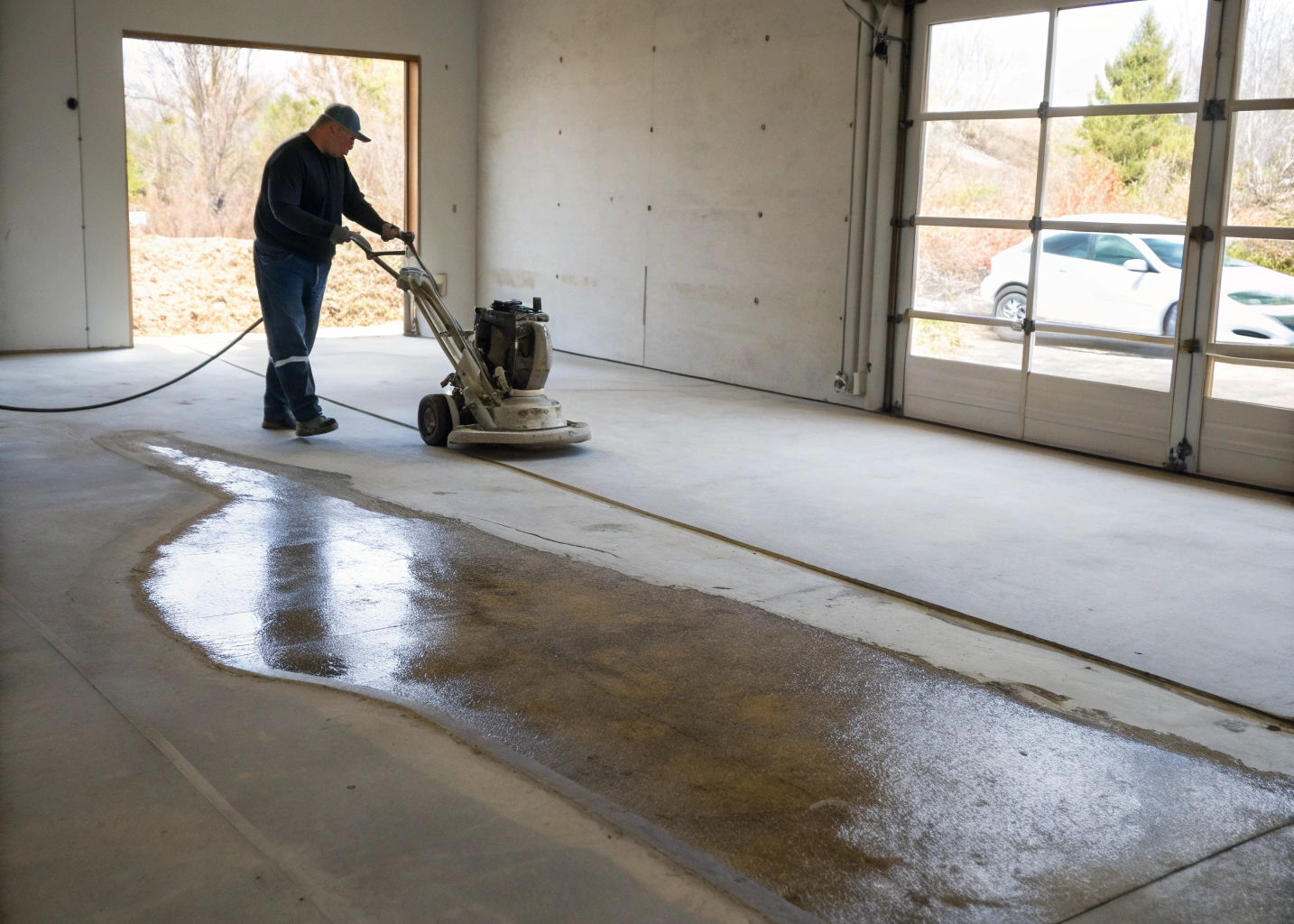
Why is surface preparation important for epoxy flooring?
Surface preparation determines whether an epoxy coating bonds permanently or fails early. No amount of product quality makes up for concrete that hasn’t been properly prepared beforehand.
- Mechanical adhesion — correctly prepared concrete gives epoxy the physical grip it needs to bond at a surface level, not just sit on top
- Contamination removal — oils, old coatings, and surface residue are fully cleared so nothing interrupts the bond
- Surface levelling — grinding removes high spots and ridges to produce a flat, consistent surface across the whole floor
- Moisture identification — professional preparation includes moisture testing, catching the leading cause of epoxy failure before coating begins
- Defect treatment — cracks and weak spots are found and fixed at prep stage, not discovered after the coating goes down
In Hobart, where older slabs, damp-affected concrete, and oil-contaminated workshop floors are common, thorough preparation isn’t optional — it’s what separates a floor that lasts from one that doesn’t.

Diamond Grinding: Hobart’s Most Versatile Preparation Method
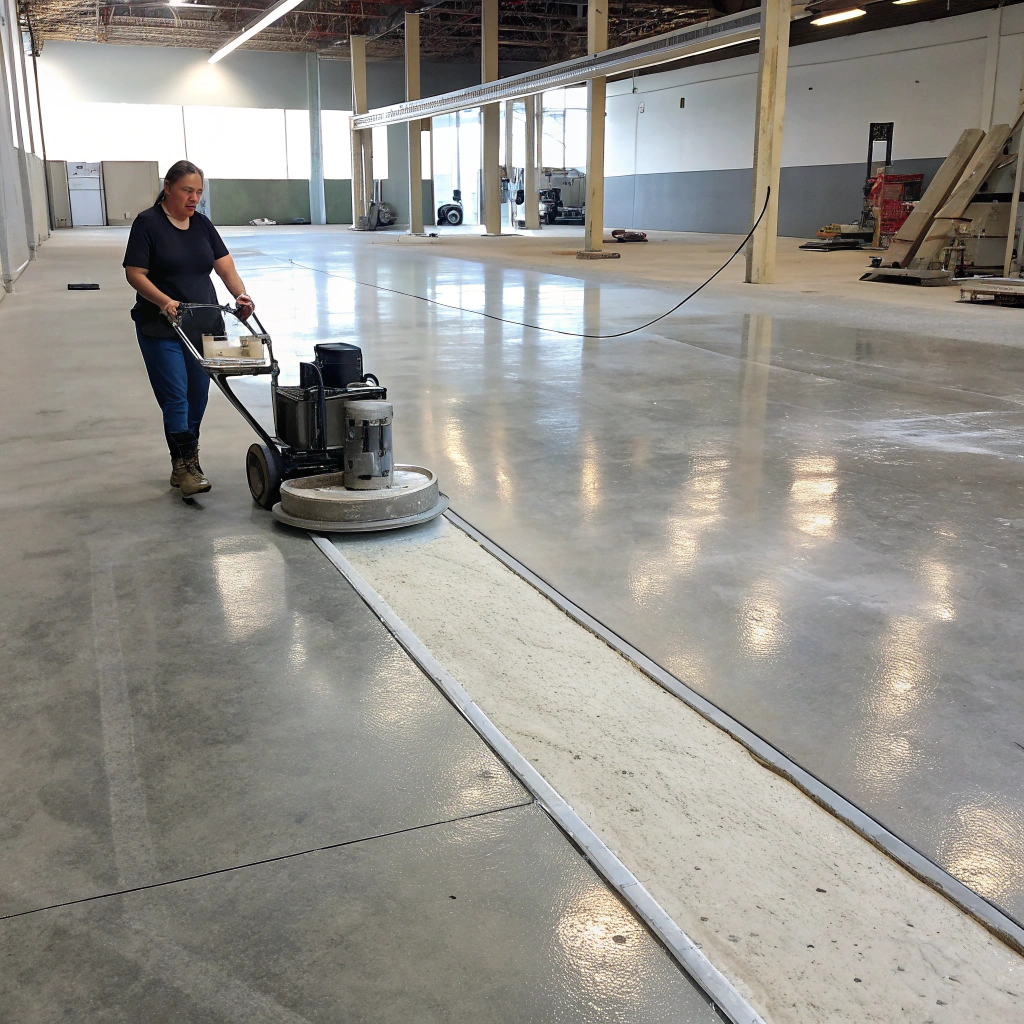
Diamond grinding is the method we use on the majority of Hobart jobs. It suits everything from older slabs in established suburbs to newer builder finishes in Rokeby and Huntingfield.
When Diamond Grinding Is the Right Choice: Grinding works across a wide range of conditions — oil-stained garage floors, previously coated surfaces, new slabs that are too smooth to grip, and commercial floors with light to moderate contamination. If dust control matters on site, wet grinding keeps things clean.
Surface Profile and Mechanical Key: Grinding creates a texture the epoxy grips onto — think sanding wood before painting. The depth of that texture is matched to the coating being applied, so the bond is as strong as possible from day one.
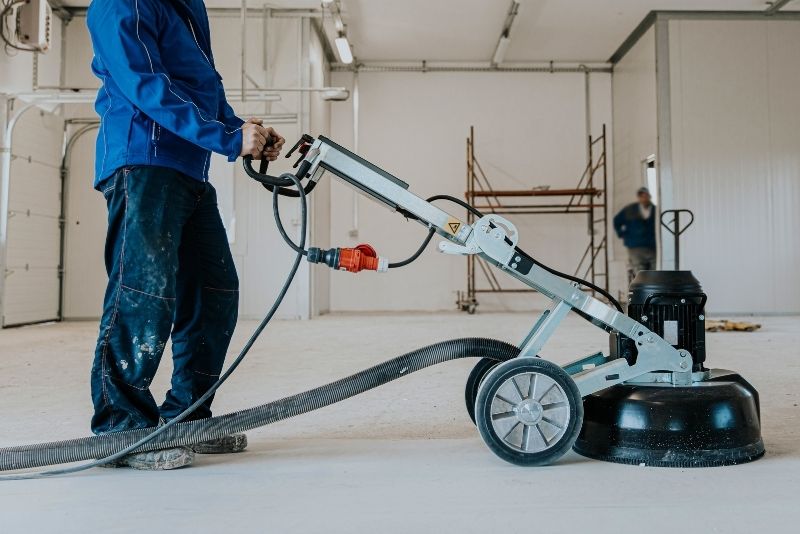
Residential vs Commercial Grinding Applications: The process is the same whether it’s a home garage in Clarence or a factory floor in Glenorchy. The difference is scale — smaller equipment for tight residential spaces, larger industrial grinders for bigger commercial floors.
Shot Blasting for Large Industrial and Warehouse Slabs
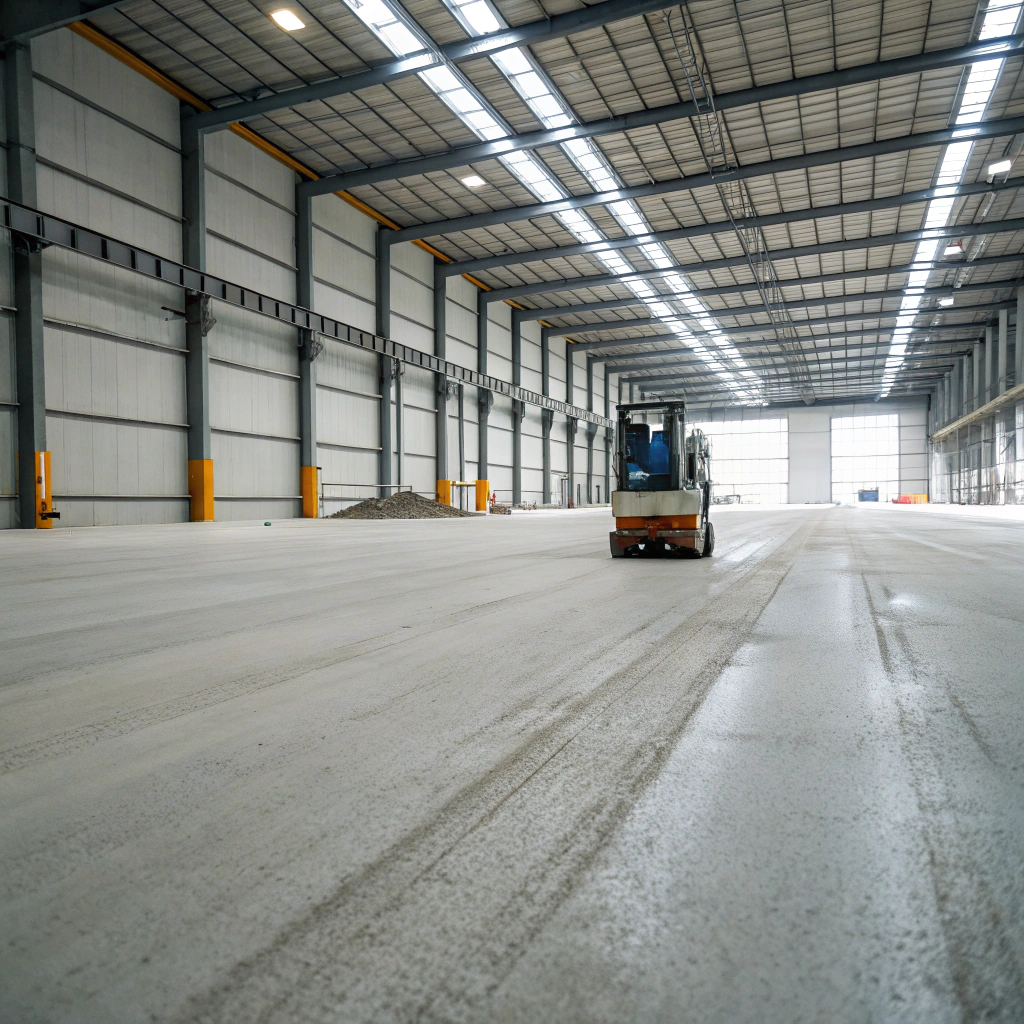
Shot blasting is the preferred method for large-area industrial floors. It’s faster and more consistent than grinding alone, and it handles heavily trafficked slabs better than most other preparation methods.
How Hobart’s Climate Affects Concrete Substrates
Hobart’s climate does things to concrete that warmer, drier cities simply don’t deal with. Cool wet winters, regular condensation under slabs, and freeze-thaw movement in older concrete all break down the surface over time — and most of that damage isn’t visible until you start grinding.
A lot of the heritage properties across Hobart and its inner suburbs were built without a damp proof course. That means moisture moves freely through the slab, and it doesn’t stop just because you’ve put a coating on top. We see this constantly on jobs across Moonah, Glenorchy, and the older residential pockets of Clarence and Rosny Park.
This is local knowledge that a mainland contractor isn’t going to bring to a Hobart job. We know what Hobart concrete looks like before we start, and we know what it’s going to need. That shapes how we specify every preparation job we take on — because the same approach that works in Brisbane or Melbourne won’t always work here.
Moisture Vapour and Why It Kills Epoxy Coatings
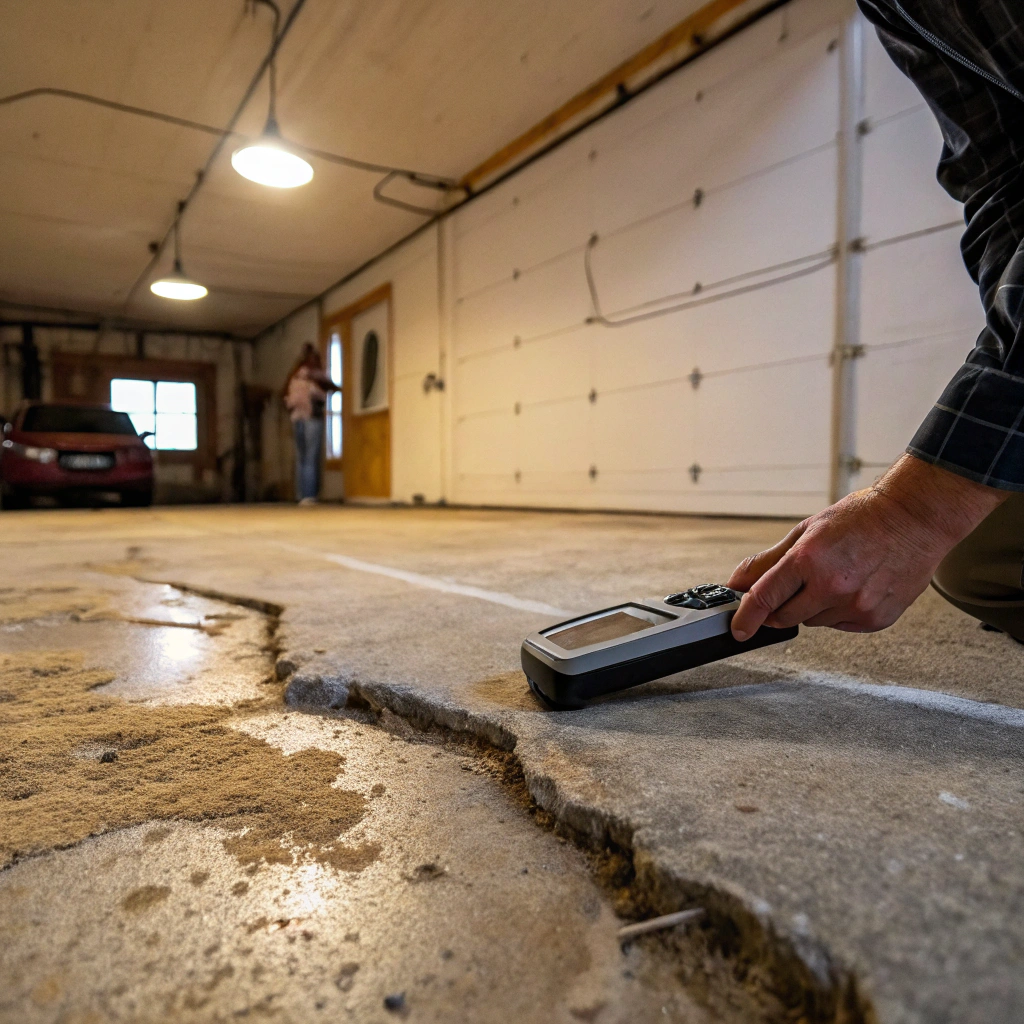
Moisture vapour is the most overlooked cause of epoxy failure in Hobart. It’s not about a wet floor you can see — it’s moisture moving up through the slab from below, slowly and invisibly, long after the concrete looks dry.
When epoxy goes down over an untested slab, that vapour has nowhere to go. It builds up underneath and pushes the coating off from below. Bubbling, lifting, full delamination — and it can happen within months.
Hobart slabs are particularly vulnerable. Older concrete, limited subfloor drainage, and cool ground temperatures through winter all create the right conditions for moisture problems. We test every slab before we coat it. If moisture levels are high, we apply a moisture barrier primer before anything else goes down. Skipping that test is how floors end up needing to be stripped and redone.
Preparation for Residential Garage and Home Workshop Floors
If you’ve got a garage or home workshop with deteriorating concrete, oil staining, or a DIY epoxy kit that’s already peeling — you’re not alone. We see it constantly across Moonah, Clarence, Rosny Park, and Rokeby. The coating failed because the surface wasn’t properly prepared before it went down. That’s almost always the reason.
Consumer epoxy kits don’t require the same preparation steps a professional system does — and they don’t perform like one either. Professional preparation means grinding back to clean, sound concrete, removing every trace of oil or old coating, testing for moisture, and fixing any cracks before the new system goes on.
That’s not overcomplicated. It’s just the correct sequence. Done right, a professionally prepared and coated garage floor holds up for years without lifting, peeling, or needing to be redone.



Commercial and Industrial Floor Preparation in Hobart
Commercial floors come with higher stakes. There’s downtime to manage, compliance to meet, and in some cases employees working on the surface while the job is being scoped. We work across Hobart’s key commercial and industrial segments, and each one has its own preparation requirements.
Workshops, Mechanics, and Fabrication Sheds
Oil contamination is the main challenge on workshop floors across Glenorchy and Moonah. Oil soaks deep into concrete over time and has to be chemically degreased before grinding — skipping that step means the coating won’t bond. WorkSafe anti-slip compliance is also part of the specification on most of these jobs.
Warehouses and Factory Floors
Large floor areas need consistent preparation across the full slab. Shot blasting is usually the right call here. We also factor in operational downtime from the start — staging the job to keep disruption to a minimum where the business needs to stay running.
Hospitality and Food-Grade Environments
Hobart’s hospitality sector has grown significantly, and fit-out deadlines are tight. Food-grade floors need to meet health department standards for chemical resistance and slip rating. We understand those requirements and work to the timelines these projects demand — a missed open date isn’t an option for a new venue.
Surface Preparation Standards and Compliance in Tasmania
Professional surface preparation isn’t just good practice — it’s what keeps a coating compliant and a property owner protected long after the job is done.
The standards that govern this work include ICRI concrete surface profile guidelines, which define the correct texture depth for different coating systems, and AS/NZS 4586, which covers slip resistance ratings for commercial floors.
WorkSafe Tasmania sets clear obligations for commercial and industrial floors around anti-slip performance — and those obligations start with how the floor is prepared, not just what goes on top of it.
We prepare floors to meet these standards as a baseline. For commercial operators, that matters. A correctly prepared floor holds up under a WorkSafe inspection, a health department visit, or a tenancy changeover.
Why Hobart Properties Trust Clear Cut Epoxy Flooring
We’re a Hobart-based business that works exclusively on Hobart floors. We know the substrates, the climate, and the conditions that make preparation harder here than in most other markets.
Every job we take on starts with preparation. Not because it’s on a checklist — because it’s the only way to get a result that holds up. We’ve worked across residential garages, commercial workshops, warehouses, and hospitality fit-outs across Greater Hobart, and the approach is the same every time.
We assess the slab first. We specify the preparation method based on what’s actually there. Then we coat it.
No shortcuts on the prep. No skipping the moisture test. No assuming the floor is ready because it looks fine.
That’s what Hobart property owners, builders, and contractors come back to us for.
Frequently Asked Questions
We assess the slab first — its condition, size, contamination level, and what coating system is going on top. That assessment tells us whether diamond grinding, shot blasting, or a combination of both is the right call.
In most cases, the concrete wasn’t properly prepared before the coating went down. Oil contamination, a surface that wasn’t ground back, or moisture that wasn’t tested for — any one of those will cause a coating to fail regardless of the product used.
Yes, every time. We test every slab before we coat it. Moisture vapour moving up through the slab is the leading cause of epoxy delamination in Hobart, and it’s not something you can see without testing.
It depends on the floor size, condition, and preparation method required. A standard residential garage typically takes half a day to a full day. Larger commercial floors take longer and can be staged to reduce operational downtime.
Sometimes, but only if the existing coating is fully bonded and in sound condition. We assess the current surface first. If the old coating is lifting, contaminated, or poorly bonded, it needs to come off before anything new goes down.
Yes. Cracks, voids, and weak surface areas are identified and repaired during the preparation stage. Coating over unrepaired defects is one of the fastest ways to get a floor that fails early.
Yes, and we do it regularly. Older concrete requires careful assessment — it can be softer, more porous, and more moisture-affected than modern slabs. We adjust our preparation method and equipment accordingly.
Get Your Concrete Surface Assessed Before Any Coating Decision Is Made
We offer preparation assessments for property owners, builders, and contractors across Greater Hobart. Tell us what you’re working with — we’ll tell you what it needs.
How It Works
- Assessment — we look at your slab and identify what preparation it needs
- Preparation Scope — we specify the right method and sequence for your floor
- Coating Installation — coating goes down on a surface that’s actually ready for it
Call us or send an enquiry today. We service Greater Hobart — Glenorchy, Moonah, Clarence, Rosny Park, Rokeby, Huntingfield, and surrounds.
📞 0361444078 ✉️ info@epoxyflooringhobart.com.au
