
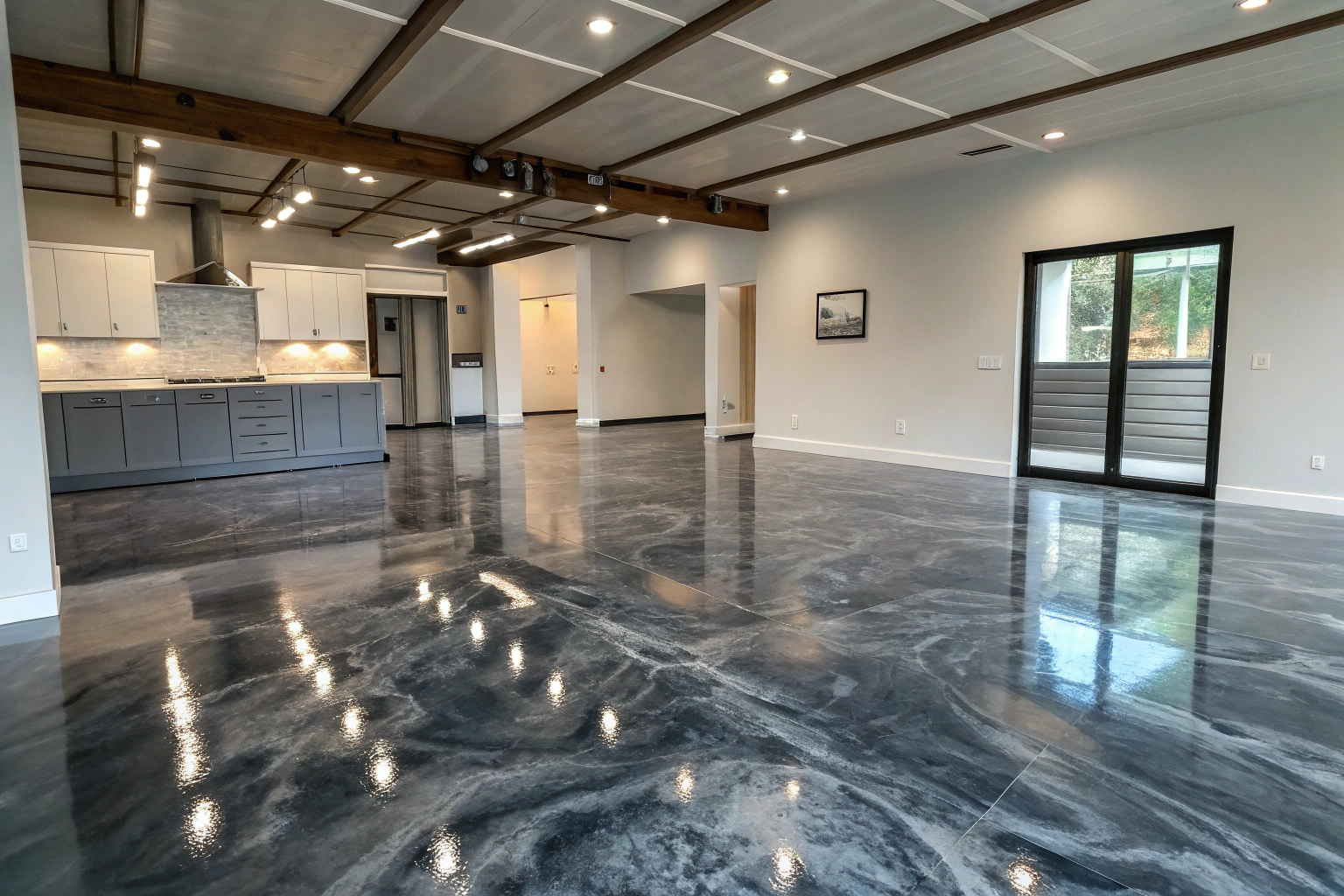
What Clear Coat Restoration Actually Does to Your Floor
Clear coat restoration isn’t a cosmetic touch-up — it’s a targeted structural repair of your floor’s protective layer. The process starts with mechanical preparation, where the degraded topcoat surface is lightly sanded or ground back to remove the worn, hazy material and expose a clean profile that the new coat can properly bond to.
From there, the surface gets a thorough clean and degrease to pull out any contaminants sitting in the existing coating. This step matters more than most people realise — any oil, residue, or loose material left behind will compromise adhesion and cause the restoration to fail the same way a DIY kit does.
Once the surface is prepped, a compatible clear topcoat system is applied over the existing floor. Compatibility is everything here. Putting the wrong product over an existing epoxy coating is one of the most common reasons restorations fail. Get it right, and you’ve got a floor that’s back to full gloss, full chemical resistance, and full protective performance — without touching the base coat beneath.

Signs Your Epoxy Topcoat Needs Restoring
Not every dull or tired-looking floor needs a full recoat. These are the signs that what you’re actually dealing with is a topcoat issue — and that restoration is the right path.
- Flat or hazy surface — the floor has lost its original depth of shine and looks dull even after cleaning
- Visible scuff marks and light scratches that sit in the surface layer rather than cutting through to the colour beneath
- Yellowing or discolouration concentrated at the surface, particularly in areas exposed to UV through windows or garage doors.
- Reduced chemical resistance — spills that used to wipe clean are now staining or marking the surface.e
- Uneven sheen across the floor, where high-traffic areas have worn down faster than low-traffic zones
- Surface feels rough or chalky underfoot,t where it used to feel smooth and hard
If the base coat colour and decorative layer beneath still look intact, there’s a strong chance the floor is a clear coat restoration candidate rather than a full recoat job.
High Gloss, Satin or Matte — Choosing Your Finish
Clear coat restoration doesn’t mean you’re locked into replicating the original finish. When the topcoat gets stripped back and reapplied, you’ve got a genuine opportunity to change the surface sheen level to something that better suits the space as it’s used today.
High gloss is the classic epoxy look — deep reflective shine, maximum light bounce, and a finish that makes a garage or commercial floor look sharp. It shows dust and water marks more readily, but cleans up fast and looks impressive.
Satin sits in the middle — a soft sheen that reads as clean and professional without the full mirror effect. Popular in workshops, showrooms, and residential spaces where a polished look is wanted without the high-maintenance appearance of full gloss.
Matte suits industrial and commercial environments where a low-sheen, no-fuss surface is preferred. Hides surface wear between cleans and works well in high-traffic areas.
Your Clear Cut Epoxy Flooring assessment will cover which finish suits your space and how it’ll hold up to your specific use.
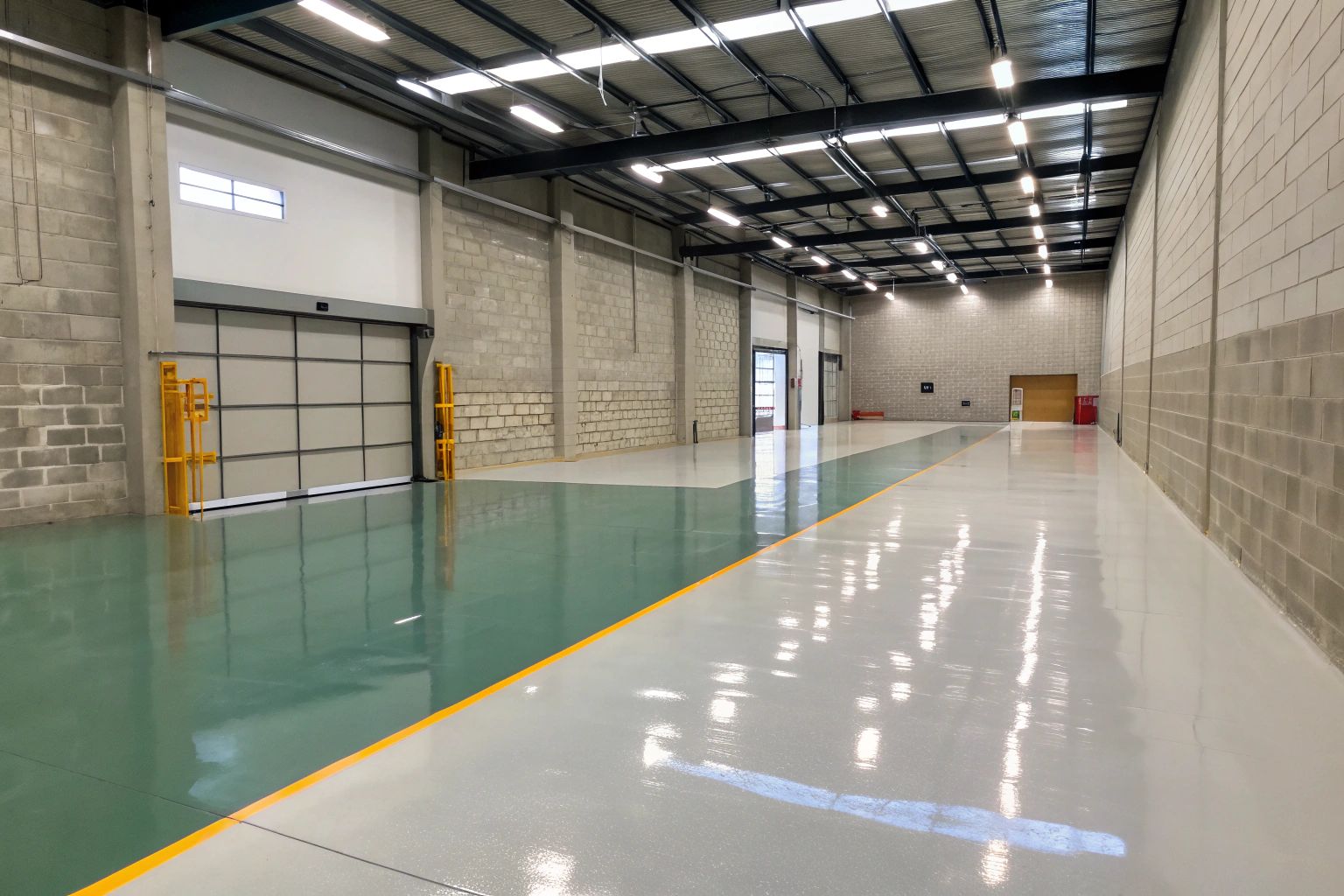
BENEFITS OF CLEAR COAT RESTORATION FOR HOBART PROPERTY OWNERS
The most immediate benefit is cost. Clear coat restoration comes in significantly cheaper than a full recoat system, where the base coat and decorative layer are still sound — you’re paying for targeted topcoat work, not a full floor rebuild. For Hobart property owners and business operators watching their renovation or maintenance budget, that difference is real and meaningful.
Beyond cost, restoration recovers everything the worn topcoat had lost. Gloss and visual clarity come back. Chemical resistance and stain resistance are reinstated. The surface hardness that protects the decorative layer beneath is restored. UV yellowing and hazing — a genuine issue in Hobart properties with north-facing garages and sun-exposed commercial spaces — gets addressed with a fresh UV-stable clear coat system.
The longer-term benefit is floor life. A professionally restored clear coat adds significant additional service years to an existing floor investment. Rather than replacing a fundamentally sound floor, restoration extends what’s already there — and in Hobart’s cooler, damper climate, a properly protected slab is always the smarter outcome.
Why Compatibility Matters When Restoring a Clear Coat
Compatibility is the part of clear coat restoration that separates a result that lasts from one that fails within months. Not every clear coat product bonds reliably to every existing epoxy system — and applying an incompatible topcoat over an existing coating is one of the most common reasons restoration jobs fail, peel, or delaminate shortly after completion.
The issue comes down to chemistry. Different epoxy systems cure differently, have different surface energies, and respond differently to new coatings applied on top. A product that performs perfectly on a bare, prepared slab can fail when applied over an existing system it wasn’t designed to work with.
This is exactly why clear coat restoration isn’t a job for off-the-shelf products from a hardware store. Clear Cut Epoxy Flooring identifies the existing system on your floor before any product is selected — making sure the new topcoat is chemically compatible, properly specified, and set up to bond correctly and last.
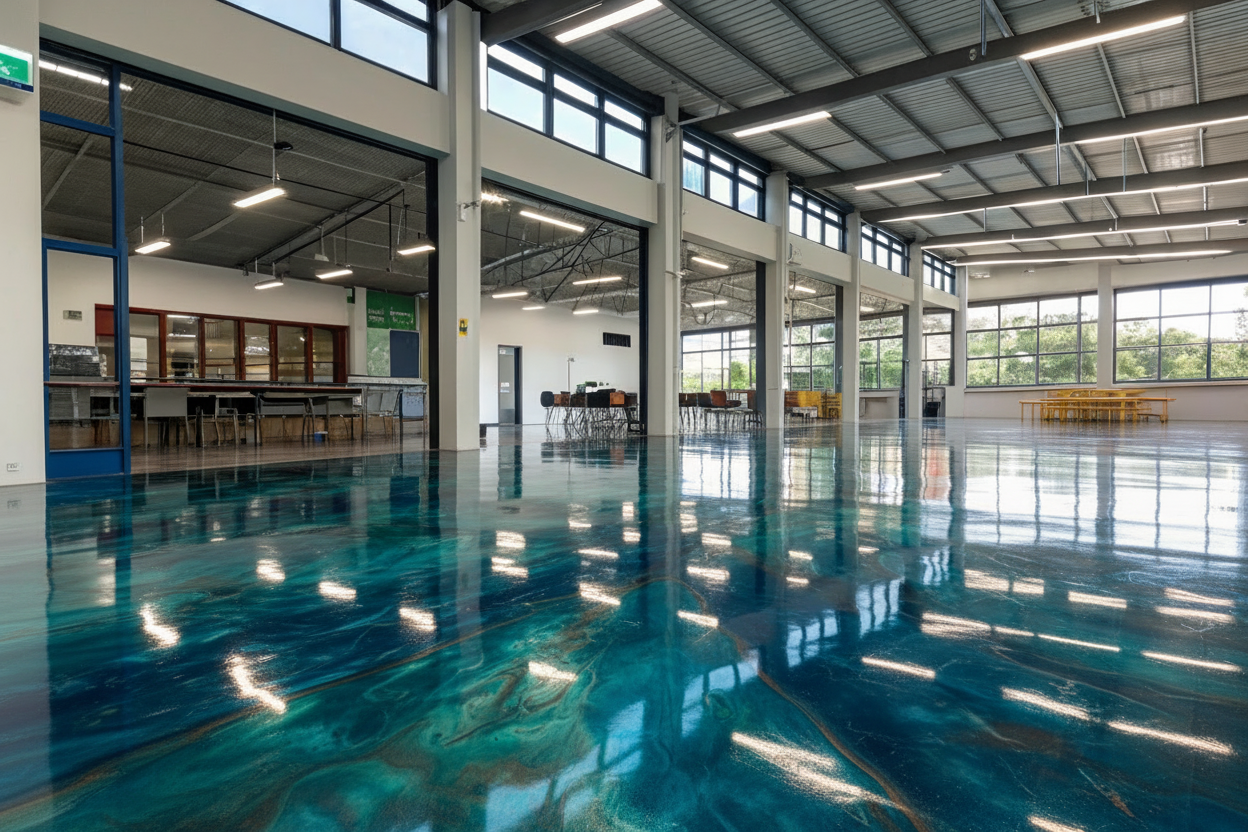
Residential and Commercial Clear Coat Restoration Hobart
Clear coat restoration works across both residential and commercial settings — and the approach shifts depending on how the floor is used and what it needs to perform against.
On the residential side, the most common jobs are garage floors and home workshop spaces. Hobart homeowners with a double garage that doubles as storage, a workspace, or a space they’re proud to park in want that gloss back. A restored topcoat delivers exactly that — and for a fraction of what a full recoat would cost on a floor that’s otherwise in good shape.
On the commercial side, the stakes are higher. Workshop operators in Glenorchy, warehouse and factory floors in Bridgewater, hospitality fitouts in Hobart’s CBD — these floors take constant punishment. A worn topcoat in a commercial environment isn’t just an appearance issue. It’s a cleaning problem, a chemical resistance problem, and potentially a compliance problem. Clear coat restoration brings the surface back up to a standard that meets the demands of a working commercial space — with minimal downtime and no unnecessary disruption to operations.
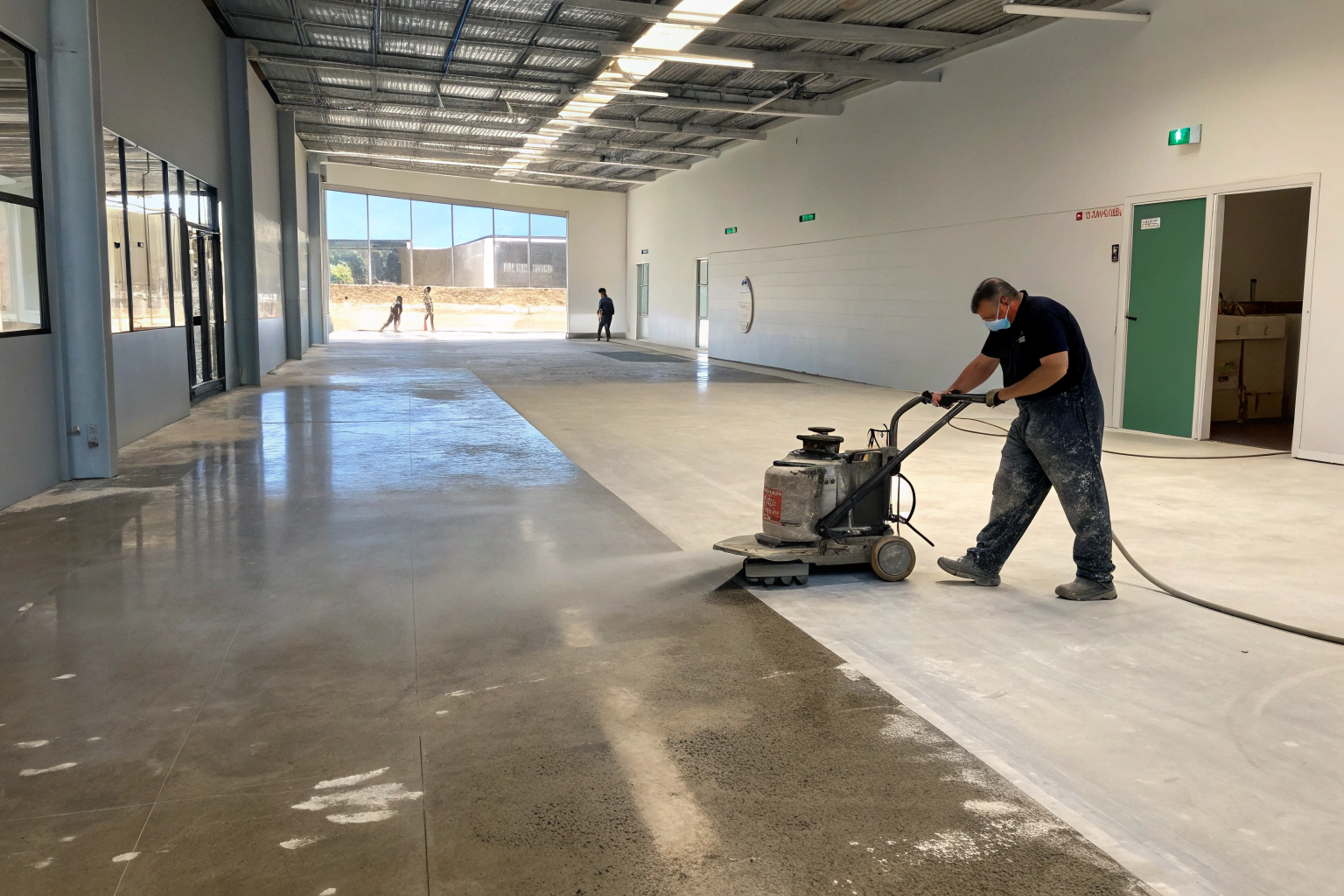
How Surface Preparation Determines the Life of Your Restored Floor
Surface preparation is the part of clear coat restoration that determines whether the result lasts three years or ten. Get it right and the new topcoat bonds hard, performs as specified, and holds up under real-world use. Cut corners on prep and the restoration fails from underneath — peeling, delaminating, or hazing within months regardless of how good the product applied on top was.
The degraded topcoat surface needs to be mechanically abraded — light sanding or grinding — to remove the worn layer and open up a clean surface profile the new coat can grip. Any contamination left behind, whether oil, dust, or residue from cleaning products, sits between the existing coating and the new topcoat and breaks the bond before it’s even cured.
This is where professional restoration separates itself from DIY attempts. Clear Cut Epoxy Flooring treats surface preparation as the job — not the step before the job — because that’s exactly what it is.
Clear Coat vs Full Recoat — What’s the Difference?
| Clear Coat Restoration | Full Recoat |
|---|---|
| Clear coat restoration targets the topcoat layer only. Where the base coat is sound, bonded, and the decorative layer beneath is intact, there’s no reason to pull the whole system back. The degraded surface gets mechanically prepared, cleaned, and a fresh compatible topcoat is applied over what’s already there. Faster turnaround, less material, less labour, and significantly lower cost — without compromising on the protective outcome when the underlying floor is in good condition. | A full recoat is the right path when the base coat has failed, delaminated, or sustained damage that goes beyond the topcoat layer. Deep scratches cutting through the colour, widespread adhesion failure, or base coat contamination from moisture vapour all point to a full recoat rather than a surface restoration. It’s a bigger job, a higher cost, and more downtime — but where the existing system is genuinely compromised, restoration won’t hold, and a full recoat is the only lasting solution. |
How to Maintain Your Restored Clear Coat Floor
A professionally restored clear coat is built to last — but how you look after it day to day has a direct impact on how long it holds up before it needs attention again.
- Clean regularly with a pH-neutral cleaner — harsh chemical cleaners and acidic products break down the topcoat surface over time and accelerate wear
- Wipe spills quickly — even a chemical-resistant topcoat has limits, and letting oils, solvents, or cleaning products sit on the surface works against the coating
- Use soft-bristle brooms or microfibre mops — abrasive cleaning tools scratch the topcoat surface and dull the finish faster than foot traffic does
- Put felt pads under heavy equipment and furniture — point loads from steel feet and equipment legs concentrate wear in specific spots
- Avoid dragging sharp or heavy objects across the surface — this cuts through the topcoat faster than anything else
- Schedule periodic inspections — catching topcoat wear early means a lighter restoration job next time rather than a full recoat
Frequently Asked Questions
If the base coat colour and decorative layer still look intact and the dullness is surface-level, clear coat restoration is likely the right path. A quick assessment — often from photos — will confirm which option your floor needs.
It works where the base coat is sound, bonded, and free from widespread damage. Floors with delamination, deep base coat failure, or significant moisture issues need a full recoat rather than a topcoat restoration.
A professionally restored clear coat on a well-maintained floor typically adds several years of additional service life. Longevity depends on traffic levels, cleaning practices, and UV exposure specific to the property.
Yes. Restoration is a good opportunity to change from high gloss to satin or matte — or vice versa. The new topcoat doesn’t have to replicate the original finish if something different suits the space better.
Foot traffic, UV exposure through garage doors and windows, chemical contact from oils and cleaners, and Hobart’s cooler damp conditions all contribute to topcoat degradation over time. North-facing garages and working workshops wear faster.
Get a Clear Coat Assessment for Your Hobart Floor
If your epoxy floor has lost its gloss, gone flat, or just doesn’t look the way it used to, don’t assume it needs a full recoat. Clear coat restoration is often all it takes, and the assessment process is straightforward and low-commitment.
Clear Cut Epoxy Flooring offers topcoat assessments for property owners and business operators right across Hobart. In many cases, clear coat condition can be assessed from photos and a brief description of the floor’s history before a site visit is even needed.
Get in touch today with a photo of your floor and a rough outline of its age and use. We’ll give you a straight answer on what it needs — and what it’ll cost.
