
Surface Preparation for Epoxy Floors Hobart
Every epoxy floor failure has a story, and in most cases, that story starts at the substrate. The product gets blamed. The installer gets blamed. But pull back the delaminated coating, and what you’ll find underneath is concrete that was never properly prepared — wrong profile, residual contamination, or surface laitance that should have been ground off before the first coat went down.
Hobart’s climate adds another layer to this. Temperature fluctuations between seasons, moisture movement in older slabs, and the particular concrete mixes common in southern Tasmanian construction all affect how a surface needs to be prepared for a coating system to perform long-term.
Getting surface preparation right in Hobart means understanding the substrate you’re working with, not just running standard equipment and calling it done. We’ve prepared floors across greater Hobart and southern Tasmania for residential, commercial, and industrial epoxy installations — garages in Kingston, warehouse slabs in Derwent Park, workshop floors in Moonah, and commercial spaces across the CBD.

Concrete Surface Profile Standards Explained
Surface preparation isn’t just about getting the concrete clean — it’s about achieving the correct surface texture for the specific coating system being applied. That’s where the CSP scale comes in, and it’s a detail that separates a genuine preparation specialist from someone who just runs a grinder across the floor.
What Is the CSP Scale and Why Does It Matter
CSP stands for Concrete Surface Profile. It’s the industry-standard scale used to specify and measure the texture of a prepared concrete surface, running from CSP 1 — a near-smooth, lightly etched surface — through to CSP 9, which describes an aggressively fractured and profiled substrate. Different epoxy and coating systems require different CSP levels to achieve the bond strength they’re engineered for.
Apply a heavy-duty industrial epoxy to a CSP 1 surface, and it’ll delaminate. Apply a thin decorative coating to a CSP 6 profile, and the texture telegraphs straight through the finish. We specify and achieve the correct CSP for the epoxy system being applied — not a generic preparation job that leaves the installer guessing.
Diamond Grinding for Concrete Surface Preparation
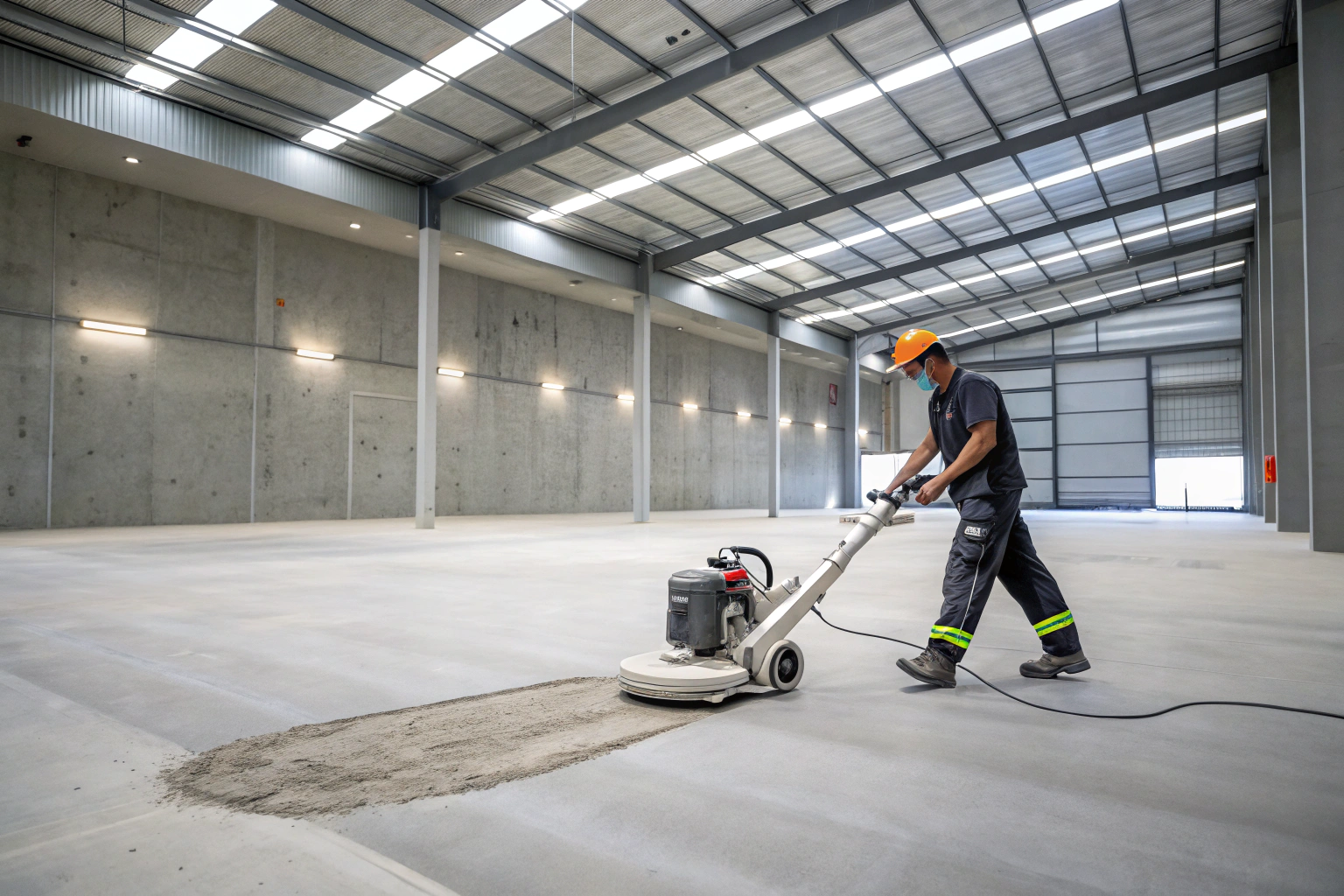
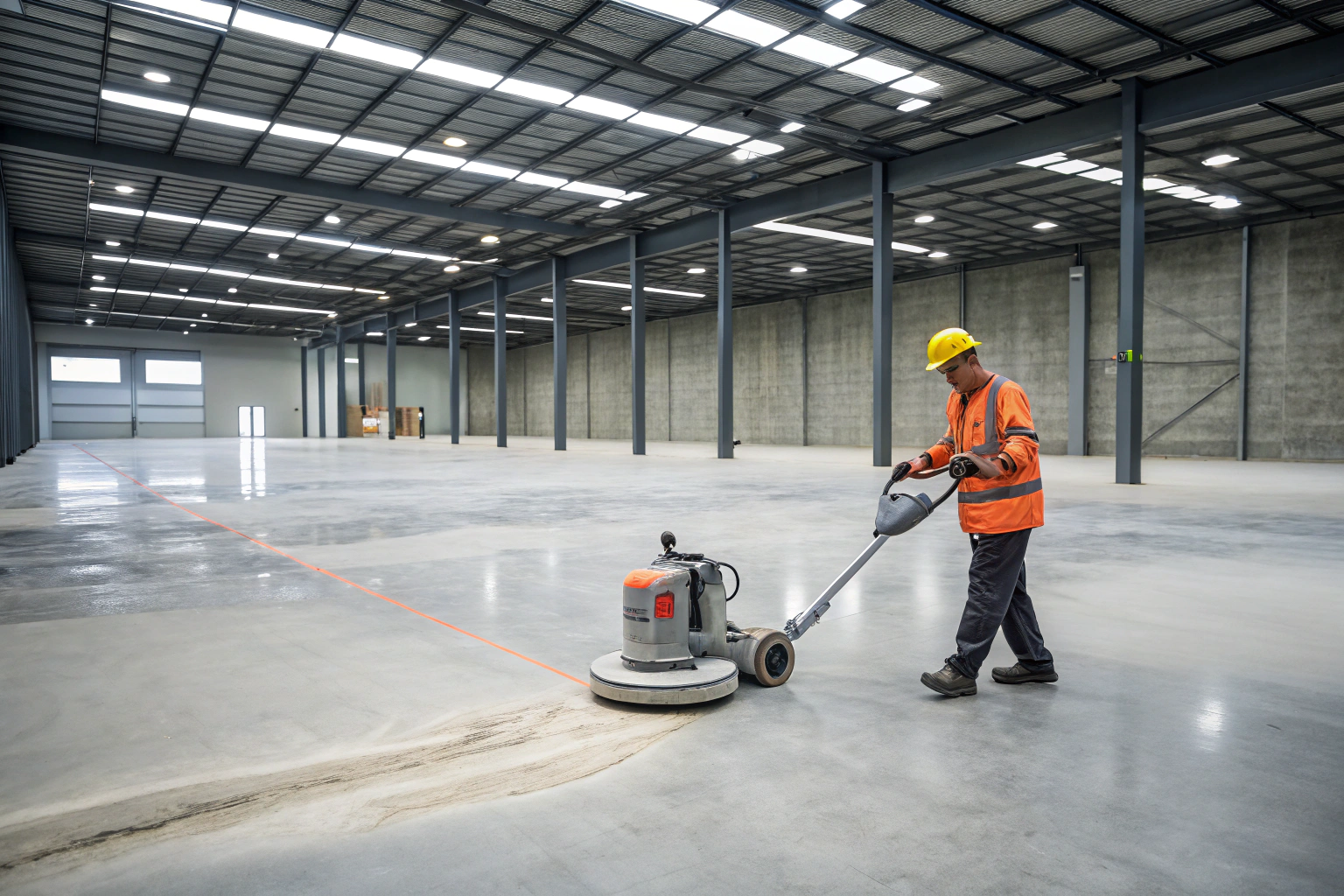
Diamond grinding is the industry standard preparation method for most residential, commercial, and light industrial concrete floors in Hobart. It uses industrial diamond-segmented tooling to grind the concrete surface down to a clean, profiled substrate that epoxy and coating systems can bond to properly.
How Diamond Grinding Works
The grinder drives rotating diamond segments across the concrete surface, cutting through laitance, existing coatings, adhesive residues, and minor contamination in a single controlled pass. What’s left is a consistent surface profile across the entire floor area — open, clean concrete ready to accept whatever system is being applied.
When Diamond Grinding Is the Right Method
Diamond grinding suits most floors where shot blasting equipment can’t be practically deployed. Confined spaces, areas around existing fixtures, residential garages, and smaller commercial floors are all natural fits. It’s also the right call when a specific surface profile is required for a particular epoxy system specification. Available in a range of grind profiles, it adapts to the product going down — not the other way around.
Shot Blasting for Large-Scale Concrete Preparation
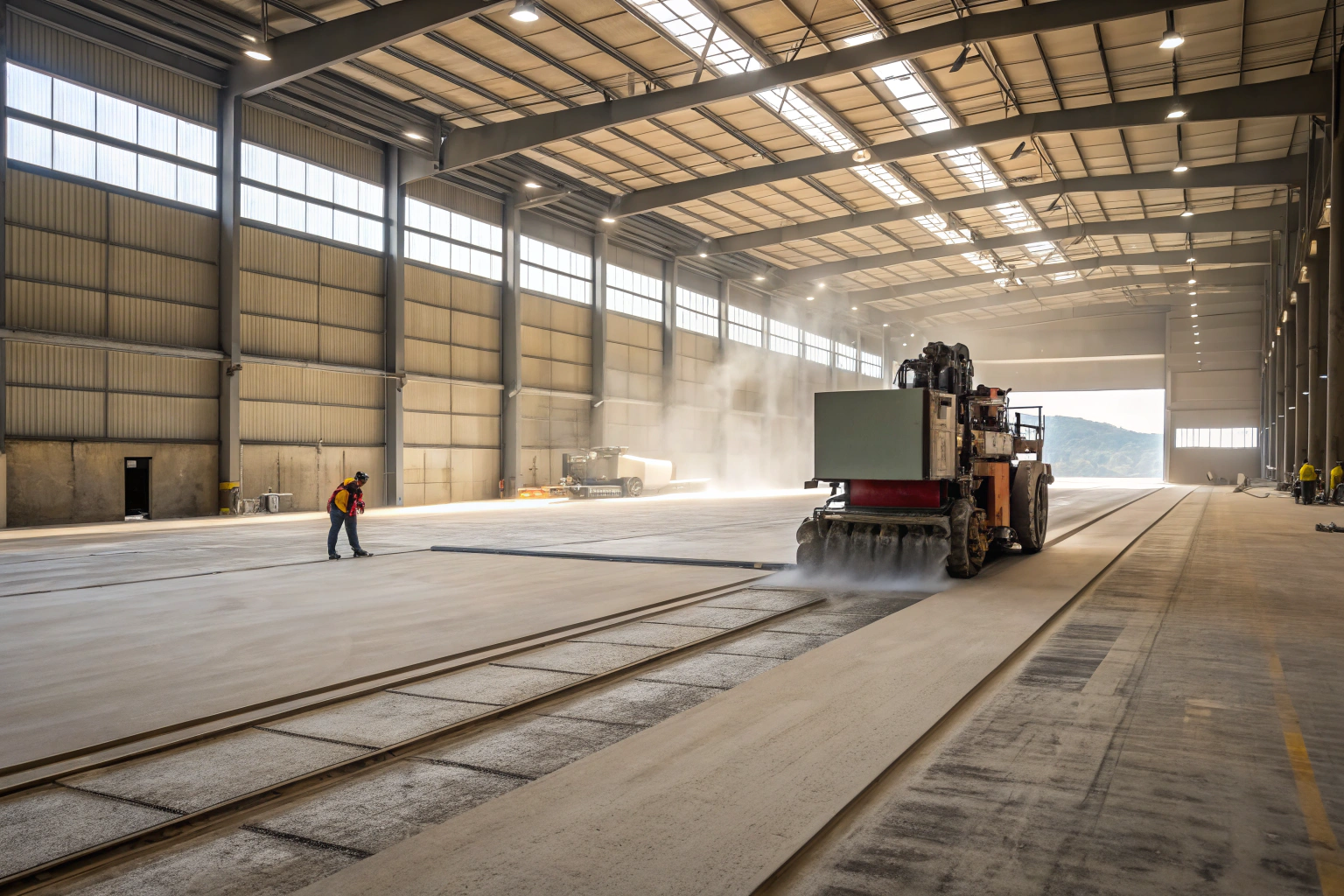
Shot blasting is the preferred preparation method for large industrial, warehouse, and commercial slab areas where grinding would be impractical and the speed of coverage matters. It delivers a highly consistent surface profile across open floor areas significantly faster than any grinding setup can achieve.
How Shot Blasting Works
The machine propels steel shot at high velocity across the concrete surface, fracturing and removing the surface layer along with any contamination sitting in or on the slab. Self-contained dust recovery systems capture the spent shot and debris in a single pass — making it clean enough for occupied or environmentally sensitive work environments.
When Shot Blasting Is the Right Method
Warehouse floors, aircraft hangars, large commercial slabs, and any open industrial area where a heavy-duty epoxy system is being specified. Shot blasting produces the aggressive surface profile that those systems need to bond and perform under serious load and traffic. If the floor is big, open, and going down with an industrial coating, shot blasting is the right tool for the job.
Combined Preparation — When Mechanical Work Alone Isn’t Enough
Mechanical preparation handles most surfaces without issue. But in automotive workshops, industrial facilities, and any slab that’s spent years absorbing oil, fuel, or chemical spills — grinding or shot blasting alone won’t get the job done.
Oil-saturated concrete is a specific problem. The contamination doesn’t just sit on the surface — it penetrates deep into the slab. Run a grinder over it, and you’ve opened up a clean profile that’s still leaching oil from beneath. Any epoxy applied over that substrate is working against the contamination from day one.
These are the situations that need a combined approach:
- Automotive workshop floors with years of oil and fuel saturation
- Industrial slabs with a chemical spill history
- Warehouse floors previously used for heavy machinery or fluid storage
- Any concrete surface where grinding reveals persistent dark staining or wet patches
The correct process is chemical degreasing treatment followed by mechanical preparation — in that order. We assess contamination levels before specifying preparation works, so the method matches what’s actually in the slab, not just what’s visible on top.
Matching Surface Profile to Your Epoxy System
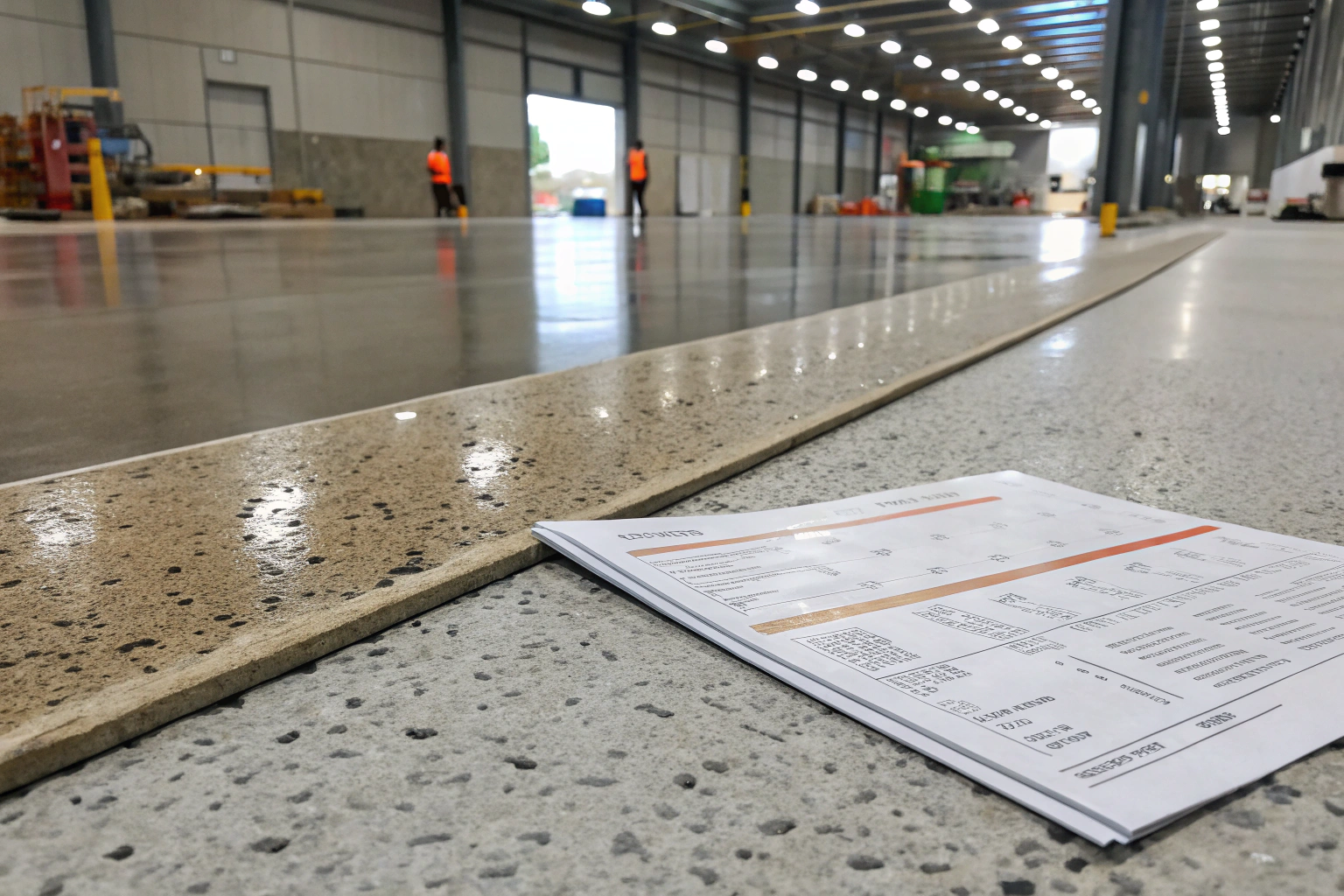
Not every epoxy system wants the same surface underneath it. A thin decorative coat, a mid-build commercial floor, and a heavy-duty industrial system each carry different preparation requirements — and applying the wrong profile to any of them creates problems that no amount of product quality or installer skill can fix.
This is where preparation specification matters as much as the preparation work itself. A floor that’s been over-profiled for a thin coating system will show texture through the finished surface. A floor that’s been under-profiled for a heavy industrial system won’t deliver the bond strength the product was engineered for.
We work from the epoxy system specification before we put equipment on the floor. The coating going down tells us the CSP required, the tooling we’ll run, and whether a combined preparation approach is needed first. That’s how preparation gets done to spec — not to a generic standard that might suit the product or might not.
Oil and Contamination Treatment for Industrial Slabs
Industrial and automotive slabs in Hobart take a punishment that residential floors never see. Years of oil, fuel, hydraulic fluid, and chemical spills work their way into the concrete matrix — and by the time a floor coating is being specified, that contamination is often sitting centimetres deep in the slab, not just on the surface.
Mechanical preparation alone won’t resolve it. Grinding or shot blasting opens up a clean profile on top while the contamination beneath continues migrating back to the surface. Any epoxy applied into that situation is fighting a losing battle before the first coat cures.
The correct treatment sequence for heavily contaminated industrial slabs is:
- Initial contamination assessment to determine penetration depth and type
- Chemical degreasing treatment applied and allowed to fully penetrate and react
- Hot water extraction or pressure cleaning to flush loosened contamination
- Mechanical preparation following chemical treatment to achieve the correct CSP
- Final surface assessment before coating works proceed
We assess contamination levels on every industrial and automotive project before specifying preparation works. The slab tells us what it needs — and we work to that, not a one-size-fits-all process.
Dust-Controlled Surface Preparation for Occupied Environments
Surface preparation has a reputation for being disruptive — and on poorly managed job sites, that reputation is earned. Concrete dust is a genuine health hazard, and grinding or shot blasting without proper dust management in an occupied or partially occupied environment isn’t an acceptable way to work.
Both our diamond grinding and shot blasting setups run with integrated dust recovery systems that capture the vast majority of airborne particulate at the source. The floor gets prepared. The rest of the building stays clean.
This matters across a wide range of Hobart project environments. Occupied commercial premises where neighbouring tenants or staff are still on site. Food production and hospitality facilities with strict hygiene requirements. Healthcare and aged care environments where dust exposure simply isn’t an option. Retail spaces where preparation works are scheduled around trading hours. Residential homes where garage preparation is happening alongside normal household activity.
If your project involves preparation works in a sensitive or occupied environment, talk to us about how we manage dust and disruption on site before works begin.
Frequently Asked Questions — Surface Grinding and Shot Blasting Hobart
Diamond grinding uses rotating diamond tooling to profile the concrete surface and suits most residential and smaller commercial floors. Shot blasting propels steel shot at high velocity and is the preferred method for large open industrial and warehouse slabs.
The epoxy or coating system being applied determines the preparation method required. We assess the substrate, the product specification, and the project environment before recommending the correct approach for your specific floor.
CSP stands for Concrete Surface Profile — the industry scale used to specify prepared surface texture. Different coating systems require different CSP levels to bond correctly. The wrong profile means the floor either won’t adhere or won’t finish cleanly.
Yes. Both our grinding and shot blasting setups run integrated dust recovery systems that make preparation works manageable in occupied commercial, retail, healthcare, and residential environments with minimal disruption to surrounding areas.
Yes. Oil-saturated slabs require chemical degreasing treatment before mechanical preparation begins. Grinding over contaminated concrete without prior treatment leaves contamination migrating back to the surface, which causes epoxy delamination regardless of product quality.
Get a Surface Preparation Assessment and Quote in Hobart
If you’ve got an epoxy installation coming up — or you’re a builder or contractor specifying preparation works for a project across greater Hobart or southern Tasmania — get in touch for a preparation assessment and quote.
We operate diamond grinding and shot blasting equipment suited to projects at any scale, from single residential garage floors through to large industrial and warehouse slabs. We assess the substrate, specify the correct preparation method and surface profile for the coating system being applied, and get the slab ready to perform.
Call us or send through your project details, and we’ll get back to you with a straightforward quote. No guesswork. No generic preparation. Just a substrate done right.
