
What Hobart Industrial Floors Are Actually Up Against
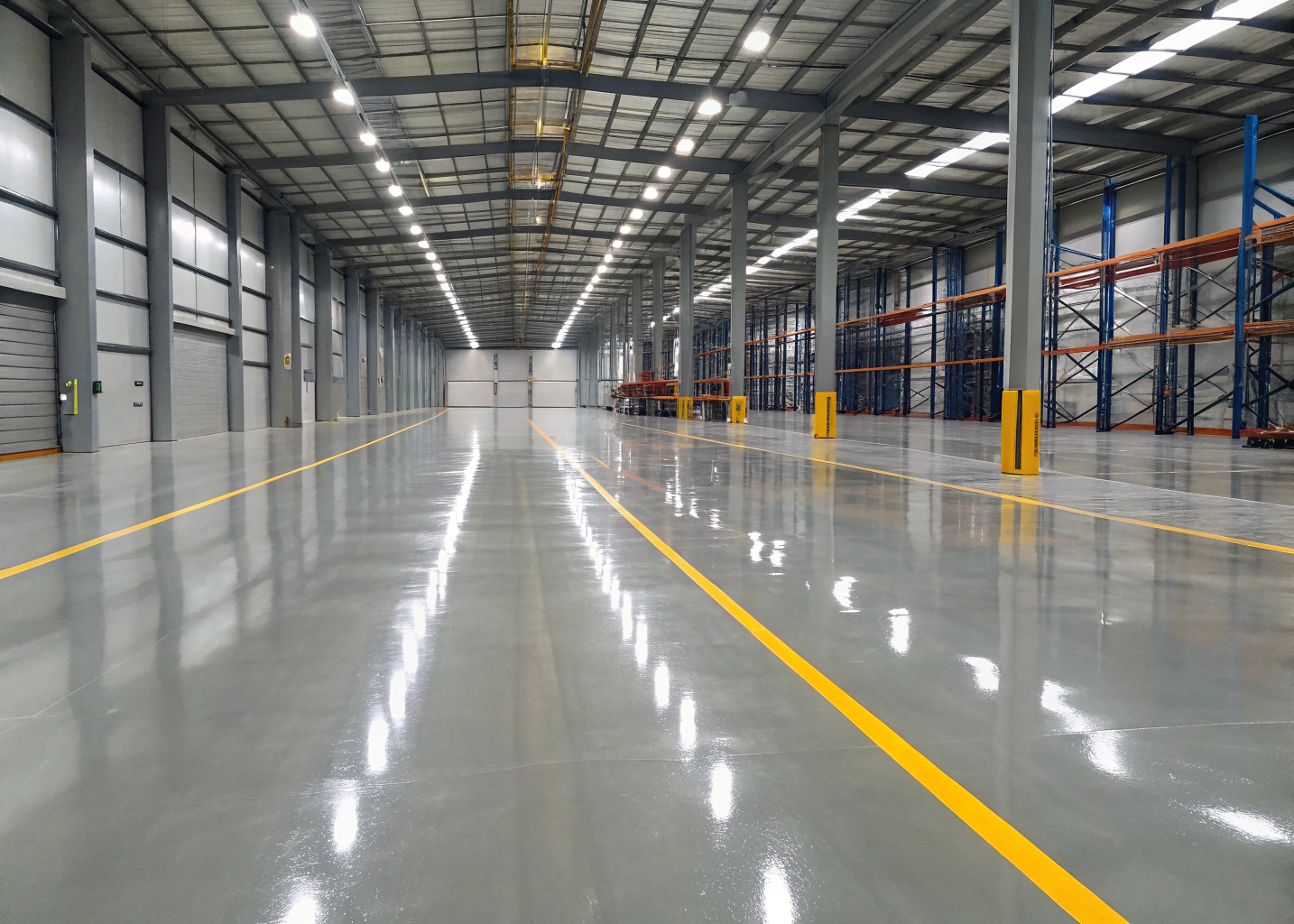
A warehouse floor takes punishment that no light commercial or residential surface ever faces. Understanding what it needs to withstand is the starting point for specifying the right system — and it’s where most underperforming floors were let down from the beginning.
The demands we design for on every industrial flooring job in Hobart:
- Forklift and pallet jack traffic — repeated heavy wheeled loads across the full floor area, every shift
- Racking point loads — concentrated weight from pallet racking systems that standard concrete coatings can’t support long-term
- Impact events — dropped pallets and equipment movement without cracking or spalling
- Chemical and fluid exposure — oils, hydraulic fluid, cleaning agents, and industrial chemicals are contained at the surface, not absorbed into the slab
- Slip hazards — wet zones, loading docks, and high-traffic aisles require anti-slip ratings built into the system
- Concrete dust — sealed surfaces eliminate the fine particulate that damages machinery and creates hygiene issues in sensitive environments

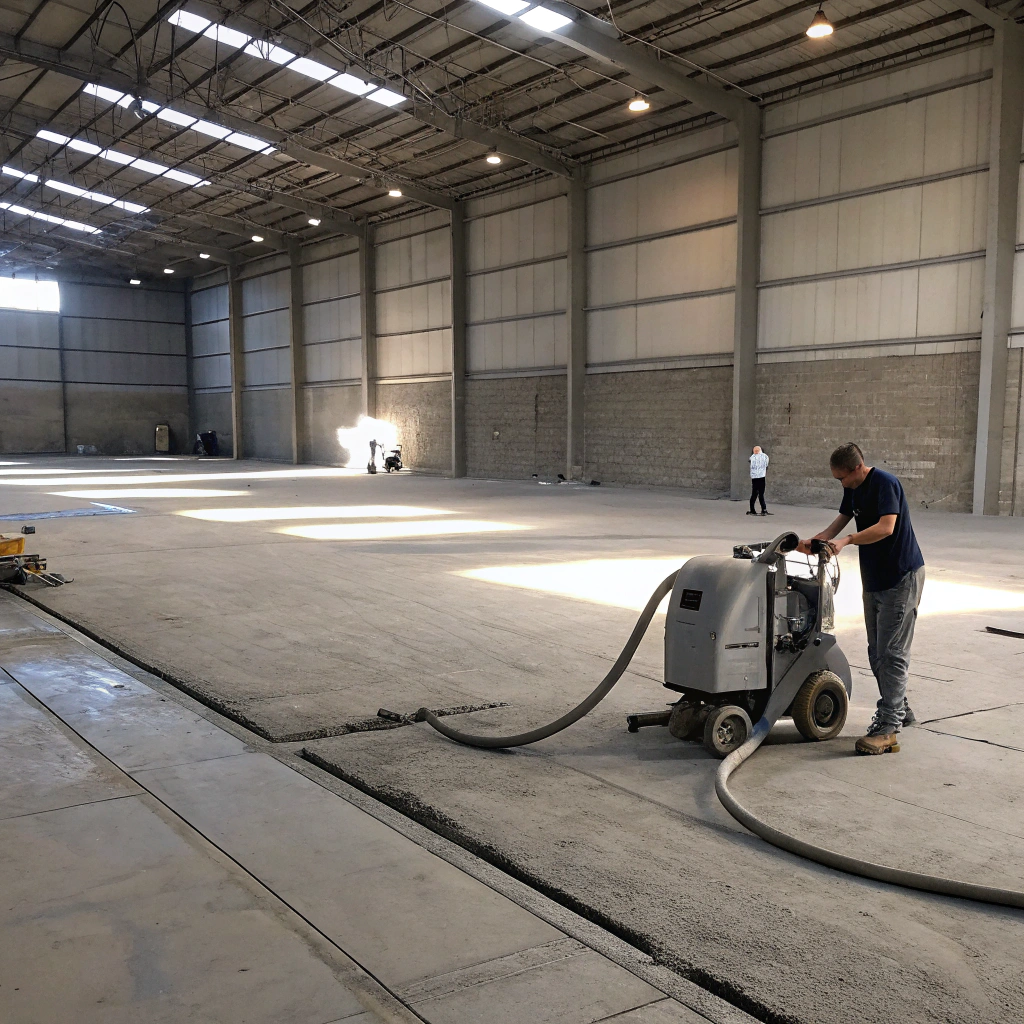
Installing Around a Live Operation: Staged Delivery for Working Warehouses
Closing a warehouse for a week to coat the floor is not realistic for most Hobart operators. We plan every industrial floor coating installation around your operational schedule — working in bays or zones so the rest of the facility stays open during the process. Fast-cure systems are available where downtime windows are tight.
What our installation programme covers:
- Site assessment and floor specification before any work begins
- Zone staging plan agreed with the operations or facilities manager
- Surface preparation completed zone by zone to minimise disruption
- Coating application with cure time factored into the handover schedule
- Line marking applied as a final stage once the base system has fully cured
- Walkthrough inspection and sign-off before we leave the site
The goal is a floor that meets specification and a business that keeps running — not a job that suits our schedule.
The Epoxy Industrial Flooring Systems We Specify for Warehouse Environments
Not all epoxy is industrial epoxy. The systems we use for warehouse and factory floors are high-build, high-compressive-strength coatings — a different category entirely from light commercial or decorative products. Every Tasmanian epoxy coatings specification we write starts with the facility’s actual load profile, chemical exposure, and operational requirements before a product is selected.
Compliance and Safety: What Hobart Warehouse Operators Need to Know
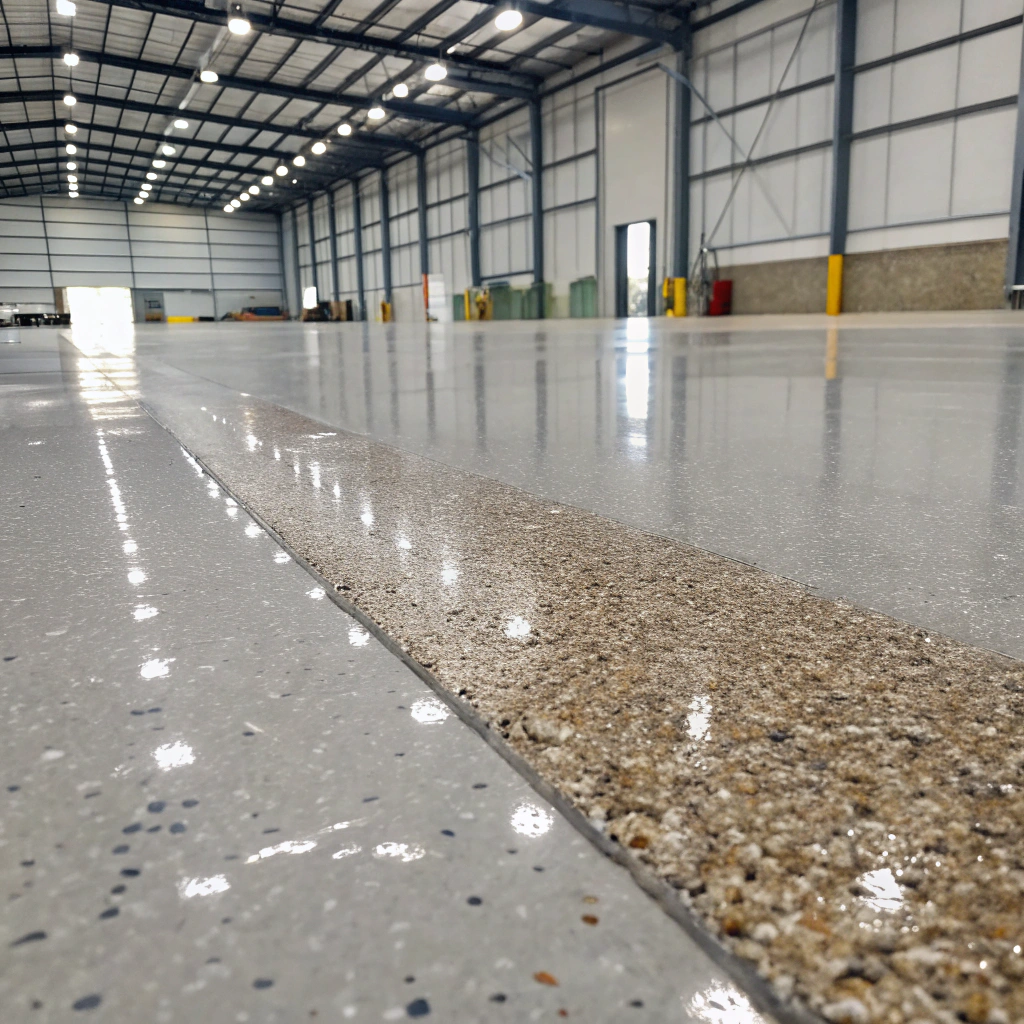
Floor condition is a compliance matter, not just a maintenance one. Under the Work Health and Safety Act 2012 (Tasmania), businesses are obligated to maintain floors that are safe for workers — free of trip hazards, slip risks, and deteriorated surfaces that create foreseeable harm. A coated, maintained floor is active risk management. An uncoated or failing floor is a documented liability.
The standards our industrial flooring solutions are specified against:
- AS 4586 slip resistance classification — wet areas, loading docks, and fluid-present zones require a minimum rating; we build the correct anti-slip aggregate into the system at specification stage
- WorkSafe Tasmania obligations — spalled, cracked, or uneven concrete is an identifiable hazard; epoxy remediation demonstrates a duty-of-care response
- Food safety and hygiene requirements — warehouses storing consumables or operating under a food safety plan require impervious, chemically resistant, and cleanable surfaces; we specify food-grade systems for these environments
How Industrial Epoxy Floors Improve Day-to-Day Operations
A well-specified industrial floor does more than protect the slab — it actively improves how a facility runs. Hobart warehouse and factory operators who’ve made the switch consistently report operational gains they didn’t anticipate when they first contacted us.
The practical improvements our clients notice most:
- Faster cleaning turnaround — a seamless epoxy surface wipes down in a fraction of the time bare or deteriorated concrete takes, reducing cleaning labour across every shift
- Better light distribution — a light-coloured epoxy finish reflects overhead lighting more effectively, improving visibility across the floor without additional lighting infrastructure
- Reduced machinery wear — dust suppression from a sealed slab means less particulate entering equipment, extending service intervals and reducing maintenance costs
- Clearer traffic management — line marking applied directly into the epoxy system defines forklift lanes, pedestrian walkways, and safety zones in a way that painted concrete simply doesn’t hold
- Improved staff confidence — workers operating on a clean, slip-resistant, well-marked floor report fewer near-misses and a measurably better working environment
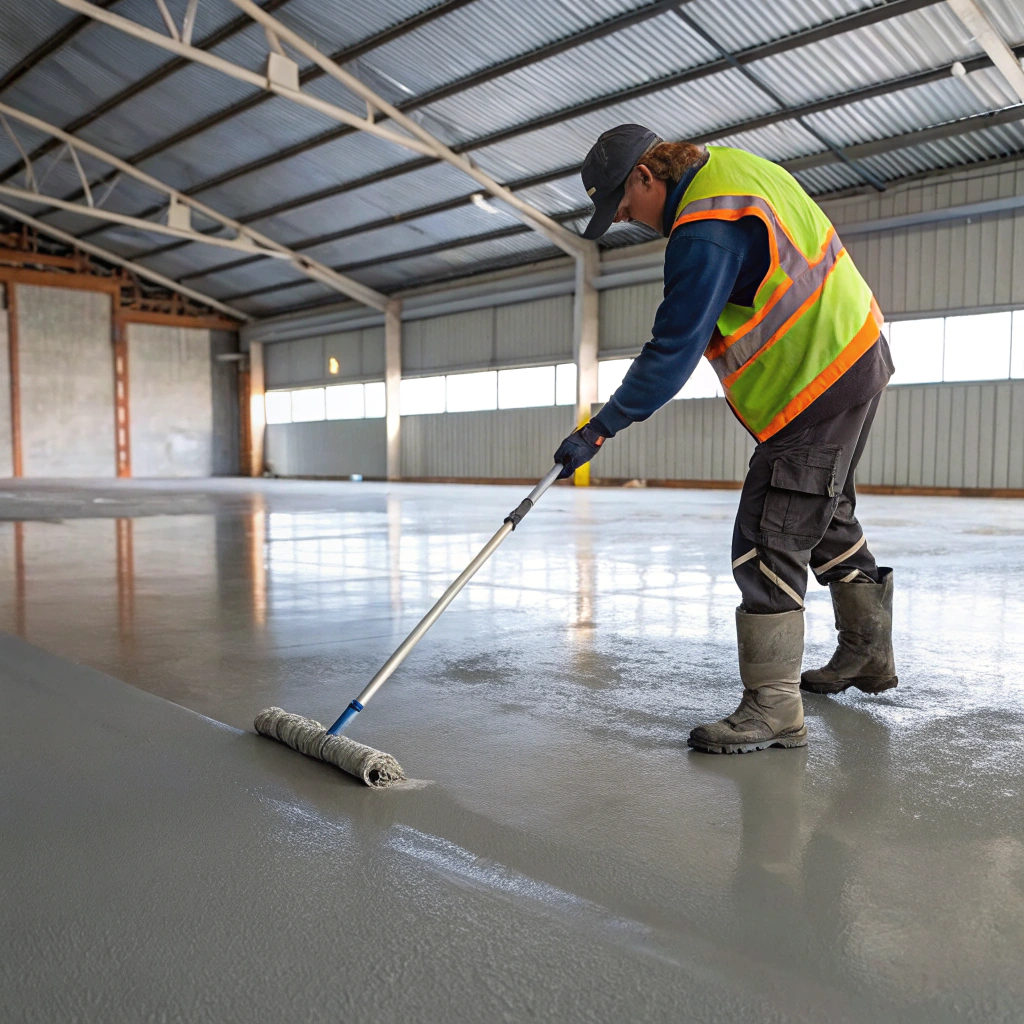
Epoxy Flooring Hobart: The Industrial Precincts We Service
We work across Hobart’s industrial and commercial corridors regularly — these are the areas where most of our warehouse and factory floor projects are concentrated:
- Glenorchy and Moonah — logistics operators, light manufacturing, and trade workshops along the Brooker Highway corridor
- Derwent Park — warehousing, distribution, and food production facilities
- Cambridge and Rosny Park — commercial and industrial estates on the eastern shore
- Brighton and Bridgewater — growing peri-urban industrial precinct servicing northern Hobart’s expanding logistics sector
- Broader Tasmania — we travel for the right job; rural and regional facilities across the state are within scope
If you’re searching for epoxy flooring near me and operating anywhere in greater Hobart or regional Tasmania, we service your area.
What Separates an Industrial Floor Coating from a Decorative One
This distinction matters because the two are often confused — and facilities managers who have been quoted decorative systems for an industrial application find out the difference quickly, usually when the floor starts failing under forklift traffic within the first year.
The key differences:
- Film build: Industrial systems are applied at significantly greater thickness — more material, more protection, more longevity under load
- Compressive strength: Rated for the weight and impact events that occur in a working warehouse, not foot traffic and light trolleys
- Chemical formulation: Industrial coatings resist the specific fluids present in the facility — hydraulic oil, cleaning chemicals, fuel — rather than offering generic stain resistance
- Surface preparation requirements: Industrial applications require shot blasting or heavy diamond grinding to achieve the surface profile needed for bond strength; decorative installs often use lighter prep methods that won’t hold under industrial conditions
FAQs — Industrial Warehouse Flooring Hobart
We use high-build epoxy base coats paired with polyurethane topcoats for most warehouse applications. The system is selected based on your facility’s load profile, chemical exposure, and operational requirements — not a one-size product applied to every job.
A correctly specified and properly prepared industrial epoxy floor will typically last 15 years or more under normal warehouse conditions. The preparation stage is the biggest factor — floors that fail early almost always had inadequate surface prep, not a product problem.
Yes. We stage installations in bays or zones so the rest of your facility stays operational throughout the process. We agree a sequencing plan with your operations or facilities manager before work begins, and fast-cure systems are available where downtime windows are particularly tight.
We use shot blasting for large open areas and diamond grinding for edges and confined spaces. Before any coating goes down, we repair cracks and joints with industrial-grade fillers and test for moisture vapour — particularly important on older Hobart slabs where damp conditions are common.
Yes. We specify anti-slip aggregate into the system to meet AS 4586 slip resistance classifications for the relevant zones — loading docks, wet areas, and pedestrian aisles each carry different requirements. A correctly coated floor also addresses the duty-of-care obligations around trip hazards and deteriorated surfaces under the Work Health and Safety Act 2012 (Tasmania).
Cost depends on floor size, slab condition, the system specified, and the extent of preparation required. A facility with heavily contaminated concrete or significant crack repair needed will cost more to prepare than a clean slab. We don’t quote off a rate card — we assess the site first and provide a specification and quote matched to the actual job.
Yes. Line marking is applied as a final stage once the base system has fully cured. We mark forklift lanes, pedestrian walkways, bay delineation, and safety zones directly into the epoxy system — it holds far longer than paint applied to bare or uncoated concrete
Book a Site Assessment With Clear Cut Epoxy Flooring Hobart
A square-metre rate means nothing without knowing the condition of your slab, the load profile of your facility, and what the floor actually needs to withstand. We don’t quote industrial jobs off a price list — we assess the site first and provide a specification and quote matched to the real job.
Clear Cut Epoxy Flooring Hobart services warehouse, factory, and industrial facilities across Glenorchy, Derwent Park, Moonah, Cambridge, Rosny Park, Brighton, and greater Tasmania. If your floor is overdue for attention — or if a WorkSafe concern, upcoming inspection, or operational issue has made it urgent — the next step is a site visit.
Call us on 0361 444 078 to book your assessment. We’ll come to you, assess the slab, and give you a straight specification and quote — no obligation.
