
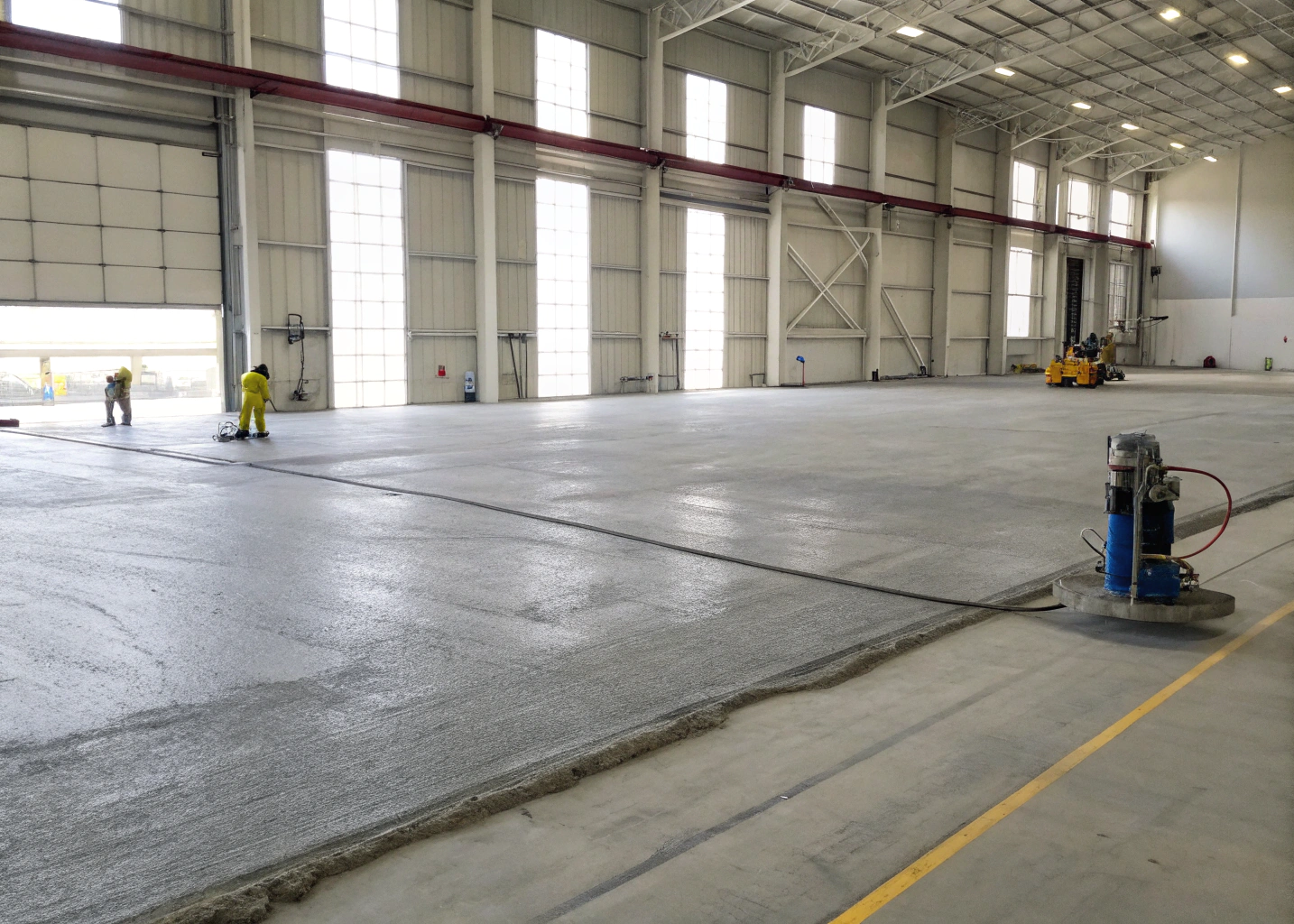
What Type of Epoxy Flooring Is Suitable for Aircraft Hangars?
The right epoxy system for an aircraft hangar is one that eliminates FOD risk, handles aviation fluids without breaking down, and holds up under the weight of aircraft and ground equipment.
For Australian aviation hangar environments, suitable systems include:
- 100% solids epoxy base — high-build coating that fully seals the concrete surface and stops dusting and spalling at the source
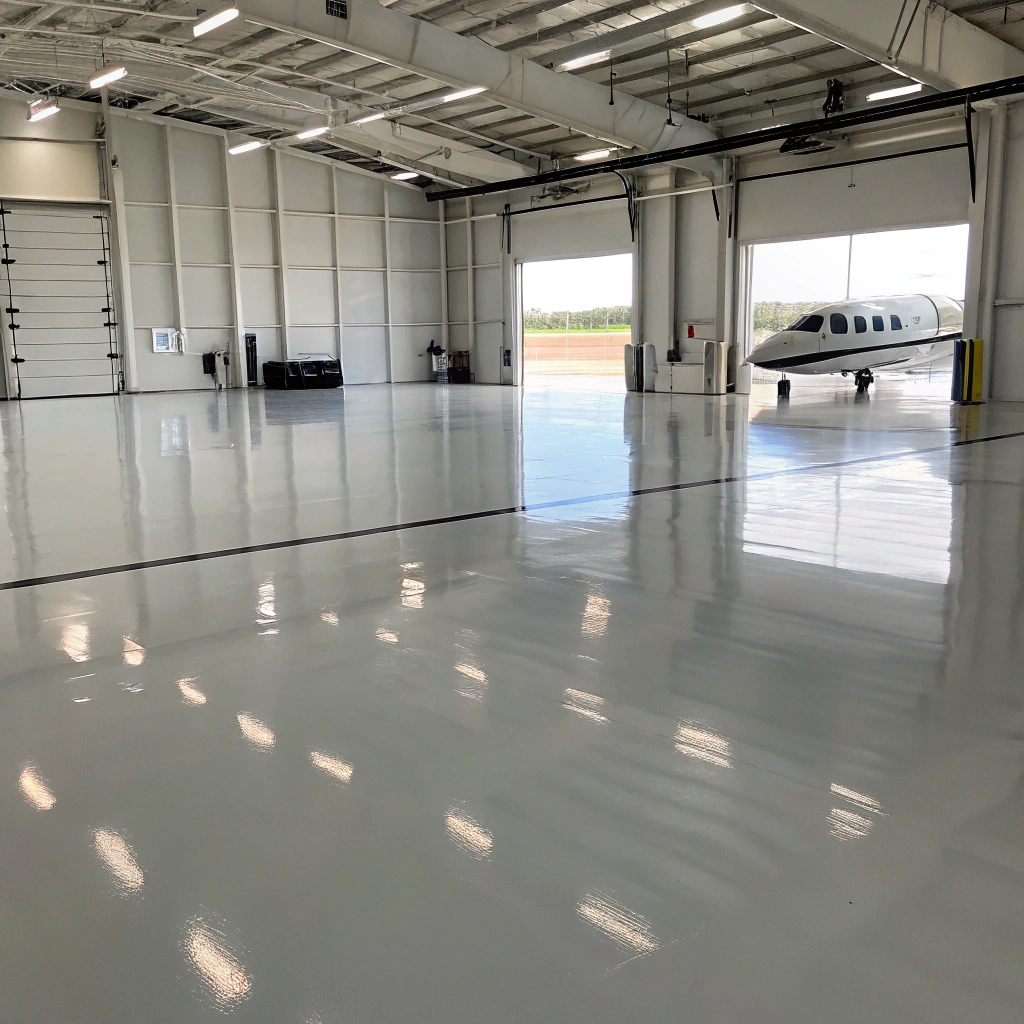
- Self-levelling epoxy — creates a flat, seamless surface with no joints or edges where debris can collect
- Epoxy quartz broadcast — for high-traffic areas and ground support equipment zones where surface durability is the priority
- ESD epoxy — for avionics workshops and maintenance areas where electrostatic discharge is a risk
- Polyurethane topcoat — adds chemical resistance and handles Skydrol hydraulic fluid, which breaks down standard epoxy systems
- Anti-slip broadcast finish — meets ground crew slip resistance requirements under Australian safety standards
Metallic epoxy systems are not suitable for aviation hangar environments.

Why Hangar Floors Demand a Specialist Epoxy System
A standard commercial epoxy system isn’t built for what a hangar floor goes through every day.
Aircraft put extreme point loads onto small patches of floor. Tow vehicles and ground support equipment move constantly across the surface. Tools get dropped. Fuel and hydraulic fluid spill. When the wrong system goes in, the problems show up fast — epoxy peels under wheel loads, fluids soak into failed areas, and the surface starts shedding material. Now the floor itself is generating the FOD you’re trying to eliminate.
A hangar floor also has to be cleanable to a standard that supports a compliant, well-managed facility. General-purpose coatings aren’t designed for that.
We look at your specific facility — the aircraft using it, the fluids being handled, the traffic patterns — and specify a system that matches what the floor actually has to do.
FOD Hazards and How a Sealed Epoxy Surface Eliminates Them
What Is FOD?
FOD — Foreign Object Debris — is any loose material near an aircraft that can be pulled into an engine, strike an airframe, or damage tyres and undercarriage. Deteriorating concrete floors are a primary source. Dusting, spalling, crumbling joints, and loose aggregate all shed material that ends up where aircraft are operating.
How Epoxy Eliminates FOD Risk
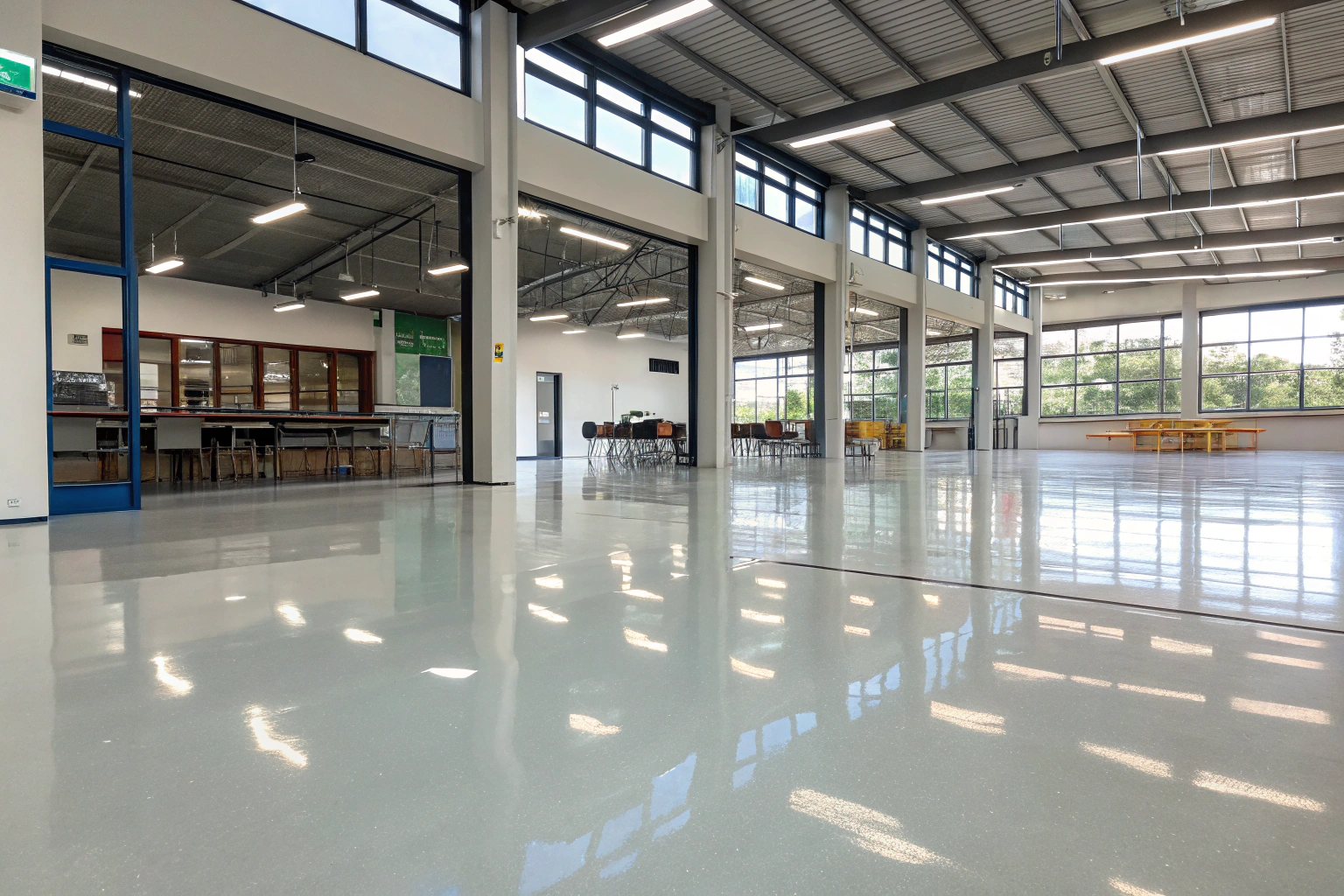
A sealed epoxy surface encapsulates the concrete underneath, stopping dusting and spalling at the source. No joints or cracks means nowhere for debris to collect. Light-coloured systems also make it easier to spot anything sitting on the floor before it becomes a problem.
A FOD-controlled environment around aircraft isn’t optional — and a sealed floor is one of the most direct ways to support that.
Common Hangar FOD Sources From Uncoated Concrete Floors
- Concrete dust from surface deterioration
- Spalling — chunks breaking away from the surface
- Debris from crumbling expansion joints
- Loose aggregate exposed as the surface wears
Chemical and Fluid Resistance for Aviation Environments
Aviation Fuels and Hydraulic Fluids
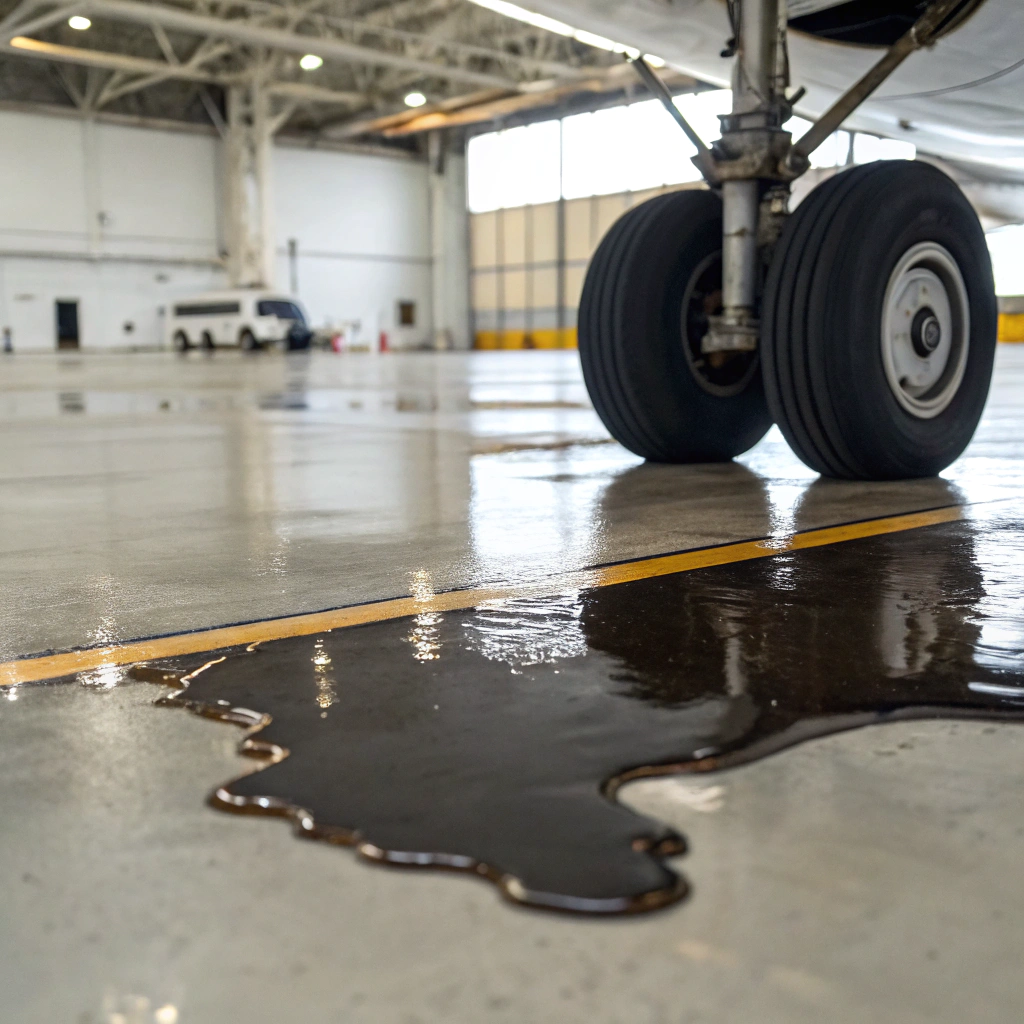
Avgas, Jet A-1, and hydraulic fluids spill on hangar floors as part of normal operations. The floor has to contain those spills without soaking them in or breaking down. Skydrol hydraulic fluid is worth calling out specifically — it’s aggressive toward standard epoxy systems and widely used in commercial aviation. We select systems rated for Skydrol resistance. Fuel penetrating unsealed concrete also creates fire risk and environmental problems beyond a stained surface.
De-Icing Chemicals and Cleaning Agents
Southern Tasmania’s winters mean de-icing fluid is a genuine part of operations for Hobart-based operators. Industrial cleaning agents used in washdowns add to that chemical load over time. The systems we specify handle the full range of fluids an aviation facility deals with — not just the obvious ones.
Load-Bearing Capacity for Aircraft, GSE and Tow Vehicle Traffic
A hangar floor deals with three distinct types of load — and the epoxy system has to handle all of them.
Static aircraft wheel loads concentrate enormous weight onto very small contact patches. A main undercarriage wheel sitting in one spot for days puts serious pressure on a small area of floor. Ground support equipment and tow vehicles add dynamic load — constant movement across the surface in the same traffic patterns. And during maintenance, tools and equipment get dropped, which means impact load is a daily reality.
The epoxy system we install needs the compressive and flexural strength to handle all three without cracking or peeling away from the surface.
Surface preparation is just as important as the system we put down. High-performance epoxy applied over weak or contaminated concrete will still fail. We get the substrate right before a single coat goes down — because that’s what determines how long the floor actually lasts.
Compliance Obligations: CASA, Fire Safety and Spill Containment
CASA Facility Requirements
CASA standards for regulated facilities include requirements around floor condition and maintaining a FOD-controlled environment. A deteriorating floor that can’t be properly cleaned creates a compliance liability. We provide full system documentation and product data sheets to support facility audits.
Fire Safety and Spill Containment
Our seamless epoxy floors prevent fuel and hydraulic fluid from migrating across the surface or soaking into the concrete — supporting faster spill cleanup and reducing fire risk.
Environmental Protection Obligations
Fuel and hydraulic fluid penetrating unsealed concrete creates contamination risks under Tasmanian and federal environmental legislation. Our sealed epoxy system puts a solid barrier between spills and the substrate.
How Our Epoxy Flooring Supports Aviation Facility Compliance
- Supports CASA facility standards for floor condition and FOD control
- Seamless surface aids spill containment and fire safety obligations
- Sealed substrate reduces environmental contamination risk



Hangar Floor Installation: Surface Preparation and Large-Scale Delivery
Surface Preparation for Large Hangar Slabs
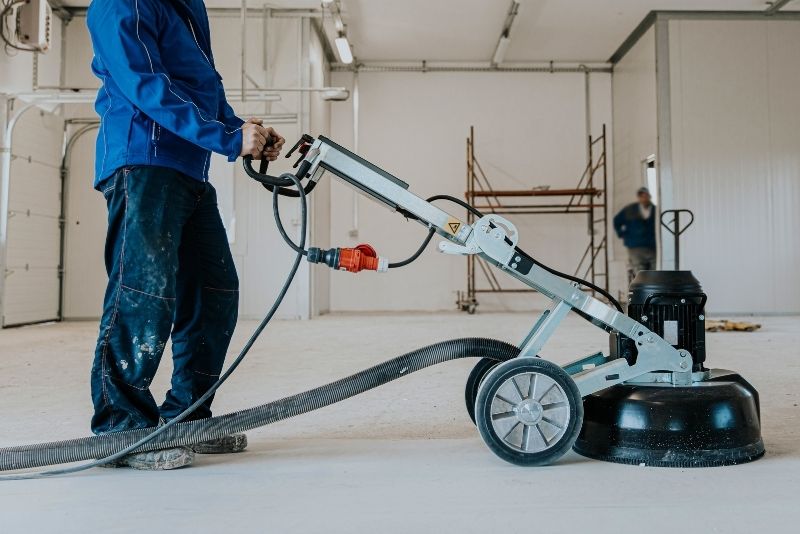
Hangar floors are large — and proper preparation across the full slab can’t be done with small equipment. We use shot blasting for large-area surface preparation, delivering a consistent mechanical profile across the entire floor that gives the epoxy system the grip it needs to bond properly and last. Inadequate preparation is the most common reason epoxy fails on large slabs.
Joint Treatment and Crack Repair
Expansion joints and cracks need to be treated before epoxy goes down. Left untreated, they’ll reflect through the coating and create edge failure points over time. We assess and specify joint treatment and crack repair as part of every installation — it’s not something we skip to cut costs.
System Application and Cure
We have the equipment capacity and crew to deliver large-scale hangar installations efficiently. Where operational continuity is needed, we can stage the installation to keep parts of the facility running. Written specifications, system data sheets, and formal documentation are available for procurement and facilities management processes.
Hobart Aviation Facilities We Service
We work with a wide range of aviation facilities across Hobart, the Cambridge aviation precinct, and broader southern Tasmania, including:
- General aviation hangars at Hobart Airport and Cambridge aerodrome
- Commercial aircraft maintenance facilities
- Helicopter hangars and rotor-wing operations
- Flying school and aero club hangars
- Private aircraft storage hangars
- Ground support equipment storage areas
Whether you’re running a regulated maintenance organisation or storing a privately owned aircraft, we bring the same preparation standards and system specifications to every job. Our reach extends to private hangar and aero club facilities across southern Tasmania — if you’re outside Hobart, get in touch and we’ll confirm coverage for your location.
Frequently Asked Questions
Hangar floors face a combination of demands that standard commercial systems aren’t built for — aircraft wheel loads, Skydrol and aviation fuel exposure, FOD risk from surface deterioration, and compliance obligations. We specify heavy-duty systems engineered specifically for aviation environments, not adapted from general commercial flooring.
A fully sealed epoxy surface stops the concrete underneath from dusting, spalling, or shedding loose material. It also eliminates the joints and cracks where debris collects. Light-coloured systems make it easier for ground crew to spot anything on the floor before it gets near an aircraft.
Yes. Skydrol is aggressive toward standard epoxy formulations and we account for that in our system selection. We specify coatings that are tested and rated for Skydrol resistance — this is a non-negotiable for any facility handling commercial aircraft.
Yes. We provide full system data sheets, product specifications, and written installation documentation. If your facility is subject to CASA oversight or internal compliance audits, we make sure the paperwork is there to support it.
We use shot blasting for large-area preparation. It delivers a consistent mechanical profile across the full slab that gives the epoxy the bond it needs. Hand grinding or small equipment simply can’t do that job properly at hangar scale — and poor preparation is the most common reason epoxy fails.
Yes. We can stage large installations to keep sections of the facility operational during the process. We work through the logistics with you during the site assessment so the installation plan fits around your operations.
Cure times vary depending on the system specified and the conditions on the day. We give you clear cure time information as part of the written specification so you can plan around it. We don’t give generic timeframes — we confirm the details once we’ve assessed your specific floor and environment.
Request a Site Assessment and Written Specification
If your hangar floor is generating FOD risk, failing under fluid exposure, or creating a compliance headache, we can help. We assess the floor, specify the right system for your facility, and provide full written documentation to support your procurement and audit processes.
Here’s how it works:
- Call us or submit an enquiry below
- We carry out a site assessment and put together a written system specification
- You receive a formal quote with full product data sheets and documentation
📞 0361444078 ✉️ info@epoxyflooringhobart.com.au 📍 Serving Hobart · Cambridge Precinct · Southern Tasmania
We respond to all aviation facility enquiries within one business day.
