

What Are Concrete Overlays and Toppings?
The two terms get used interchangeably, but they refer to slightly different systems — and knowing the difference helps you understand what you’re actually getting.
A concrete topping is a thin cementitious layer applied directly over an existing slab. It’s used to level an uneven surface, cover staining or surface damage, and create a fresh, smooth substrate ready for further finishing or coating.
A concrete overlay goes a step further. It adds a functional or decorative layer over the existing slab that can be coloured, textured, stamped, stencilled, or polished — opening up a wide range of finish options that bare concrete simply can’t provide on its own.
Both systems bond directly to the existing slab, which means no removal, no demolition, and no need to repour. The existing concrete stays in place — what changes is the surface you see, walk on, and maintain every day.
Used correctly, these systems extend floor life significantly, improve appearance dramatically, and give older Hobart slabs a second life they wouldn’t otherwise get.

Decorative Finish Options Available with Overlay Systems
One of the biggest advantages of an epoxy overlay system is what it makes possible once the surface is properly prepared. A fresh, level overlay substrate unlocks a range of decorative finishes that deteriorated or contaminated concrete simply can’t support on its own.
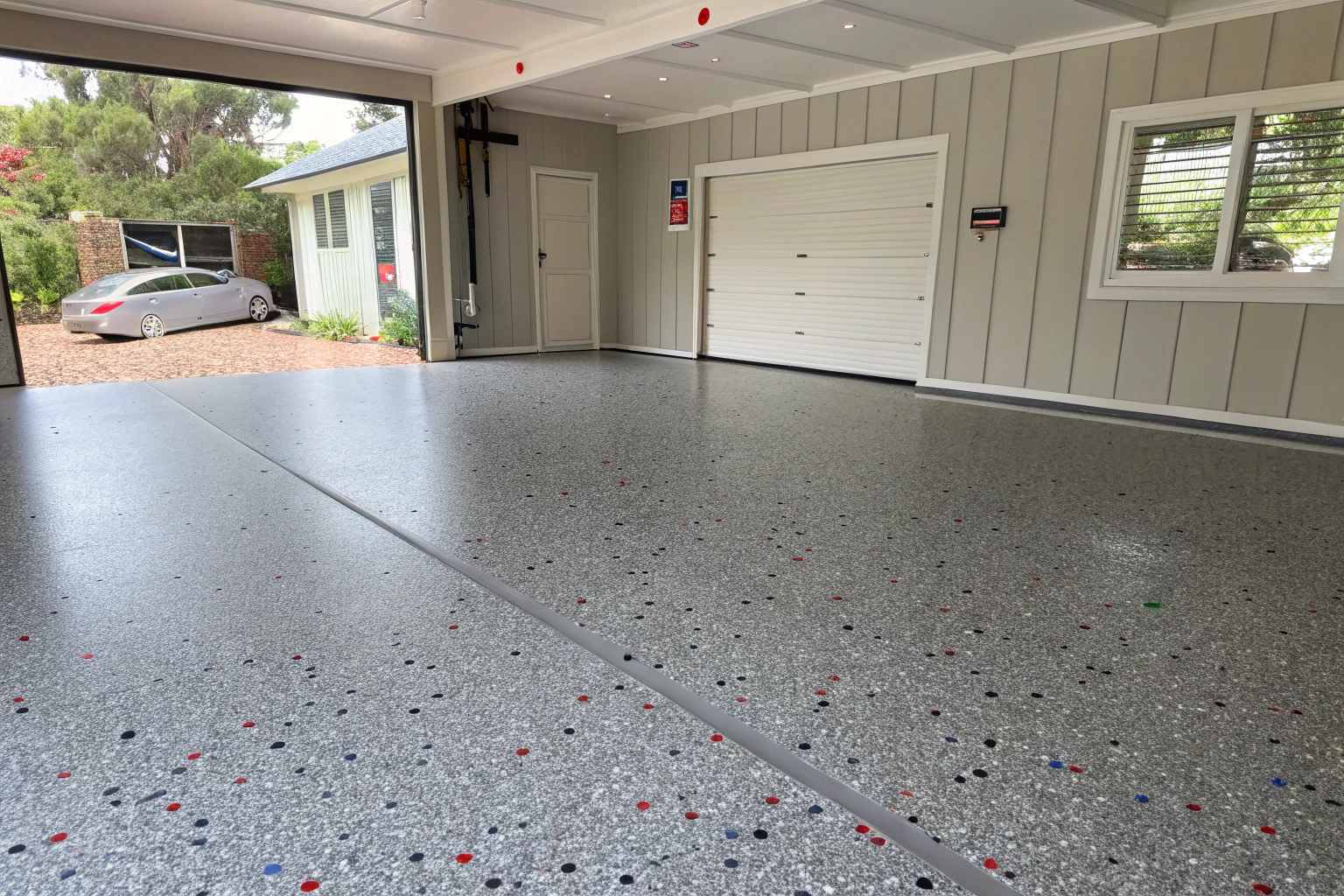
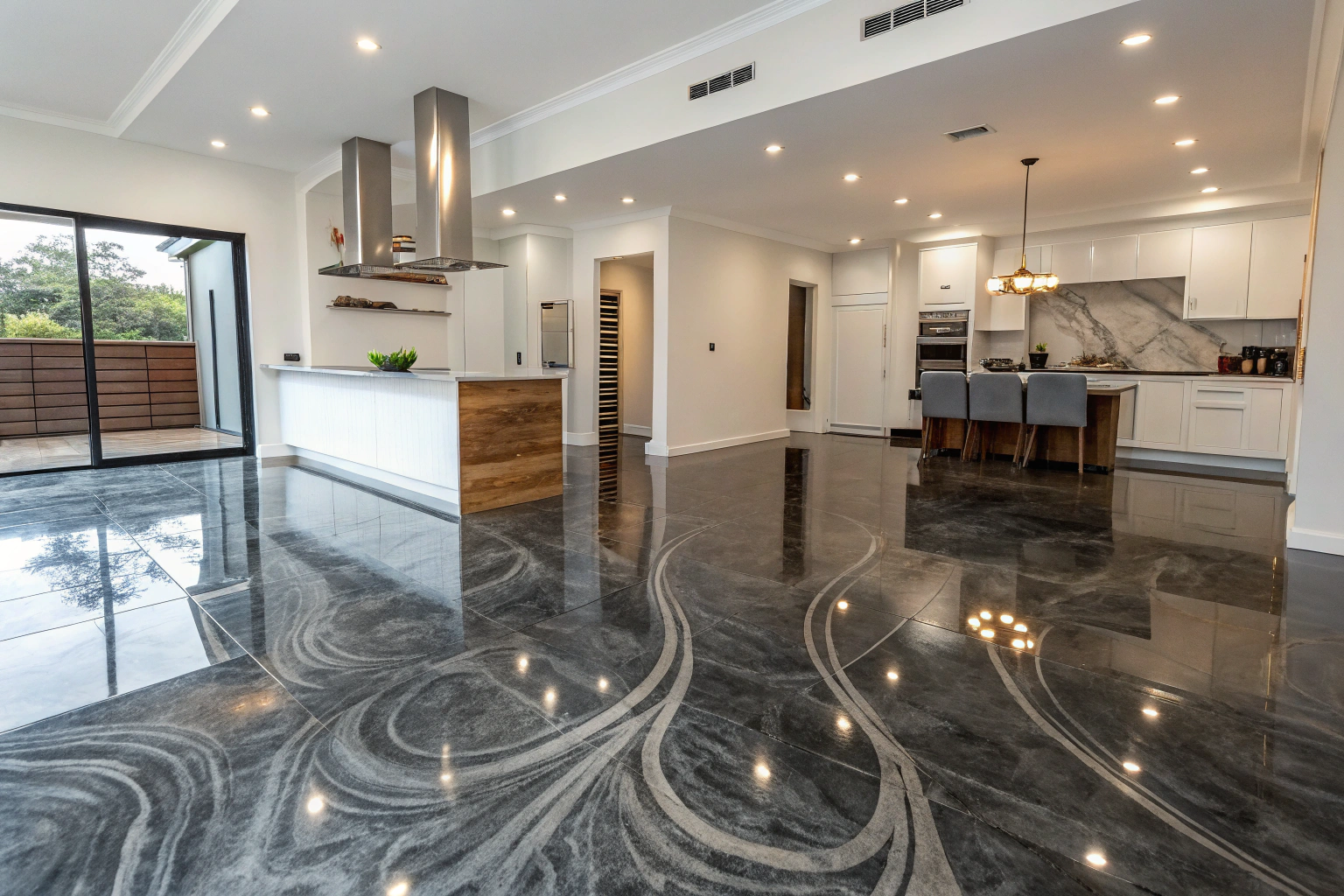
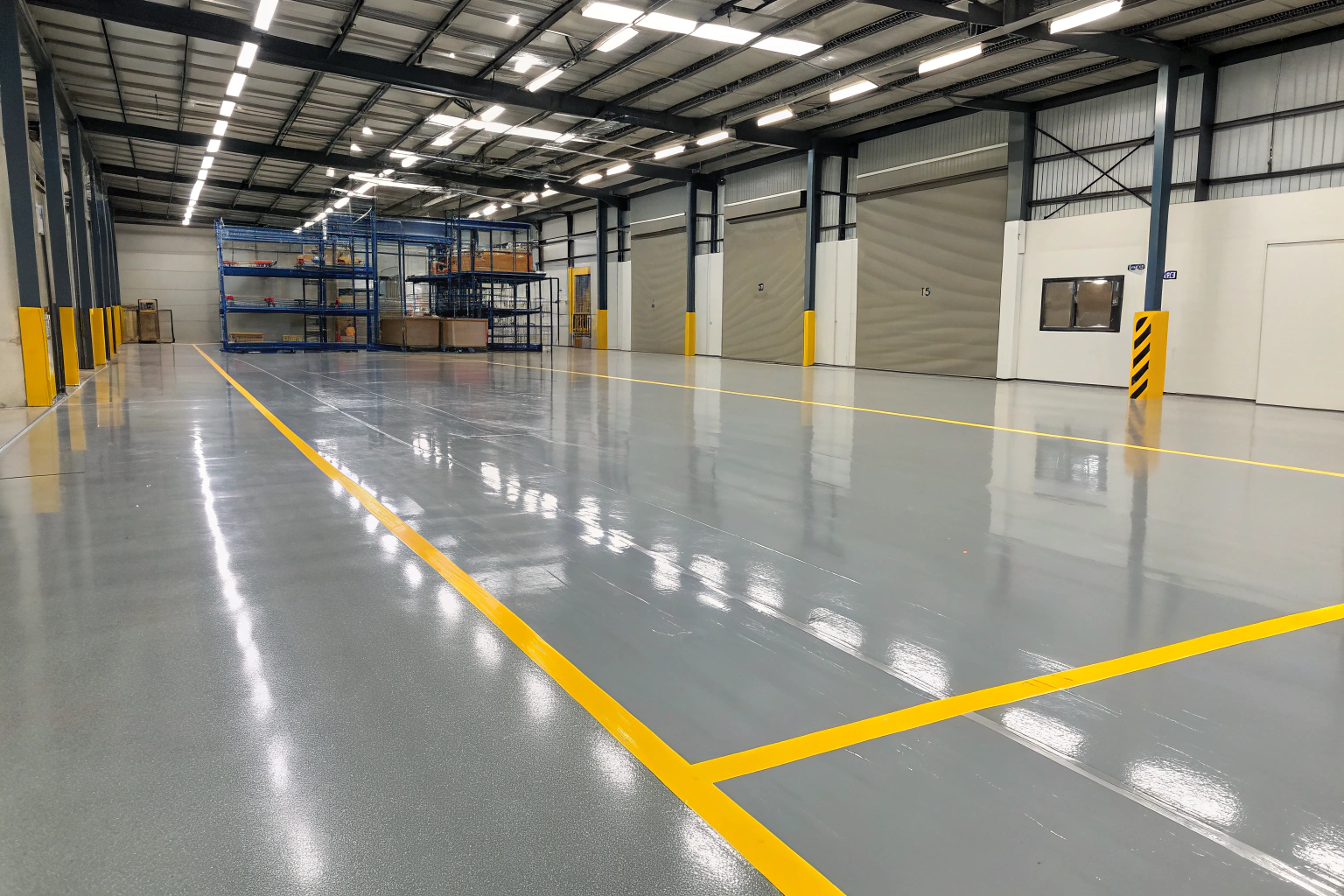
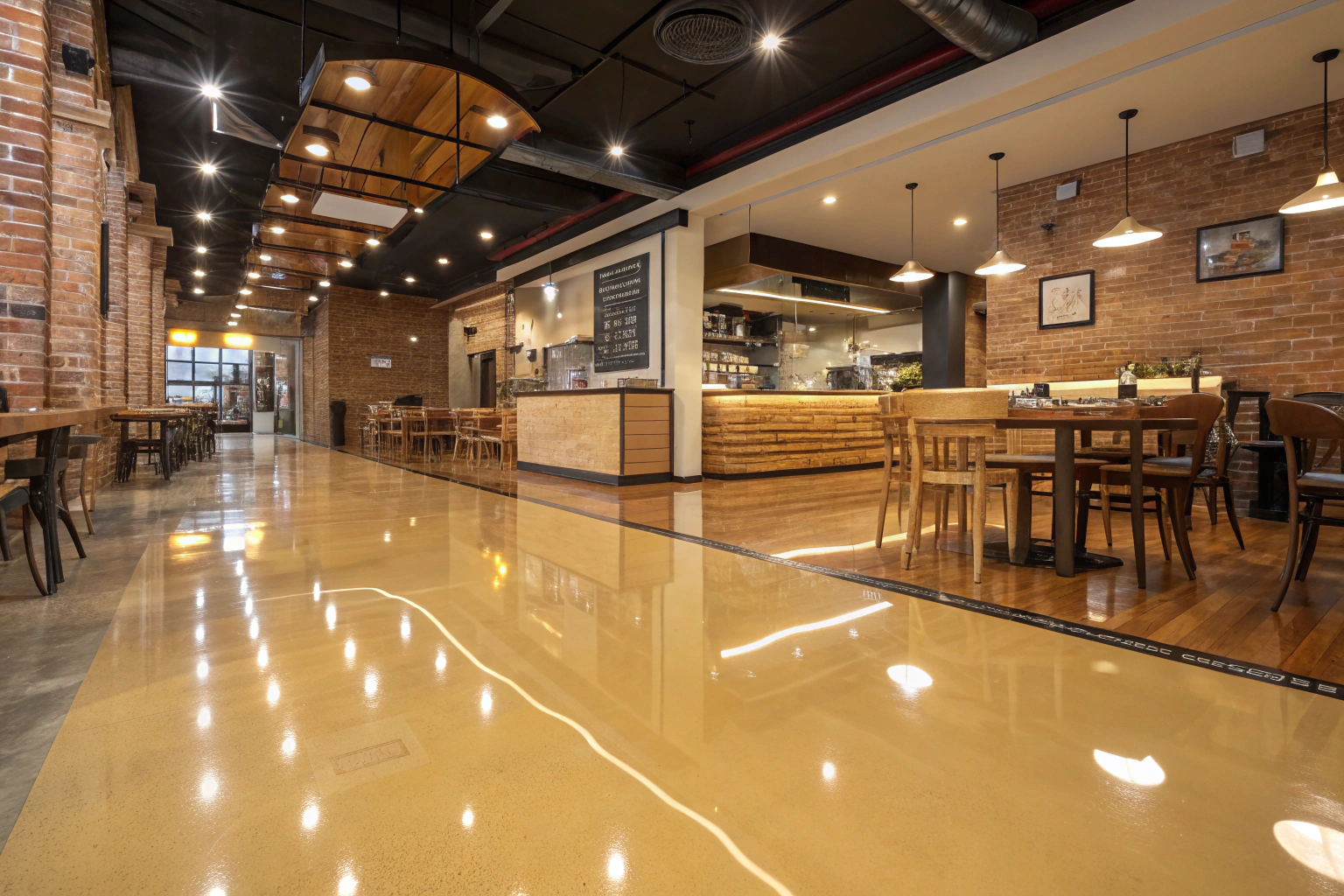
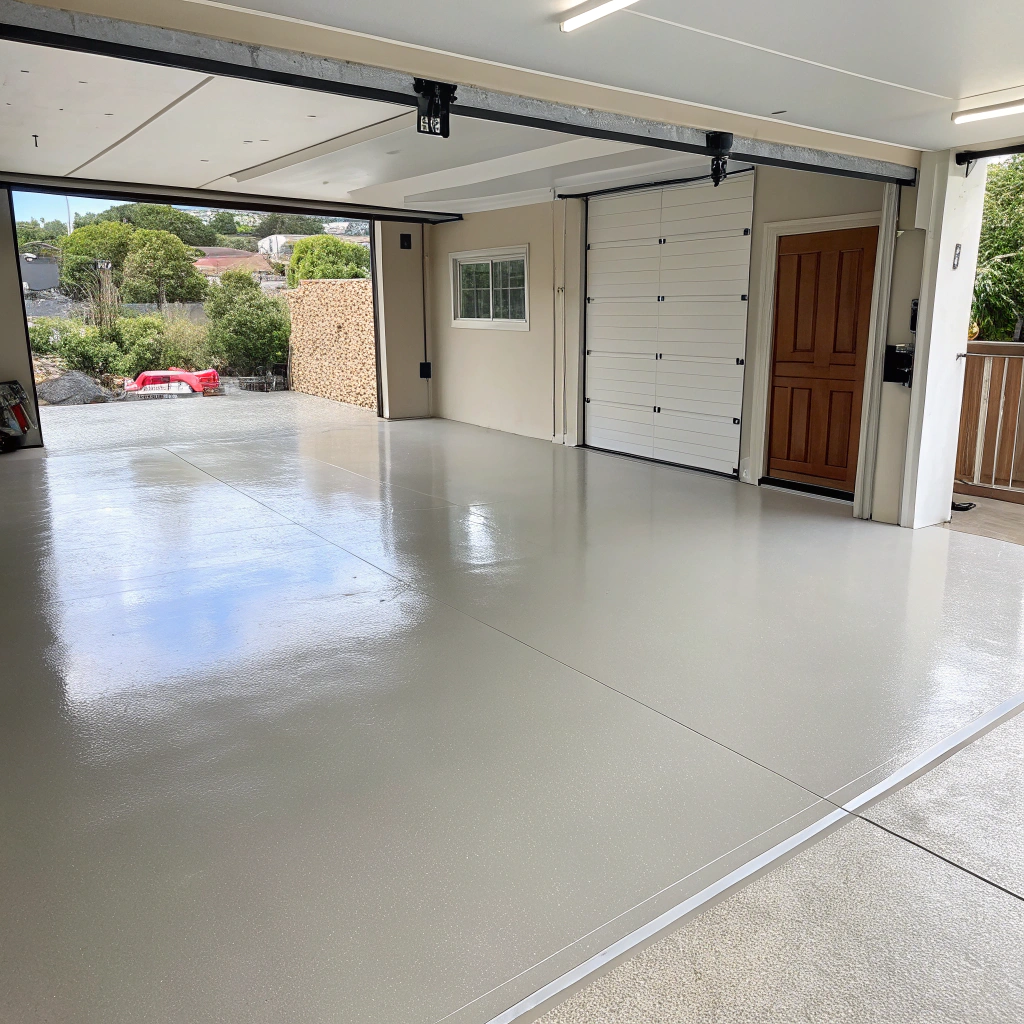
Metallic epoxy is one of the most popular choices across Hobart residential and hospitality projects — deep, reflective finishes with real movement and depth that make a floor genuinely impressive to walk into. Flake systems broadcast vinyl flake into a base coat for a durable, textured, multi-colour finish that works particularly well in garages and workshops. Solid colour epoxy delivers clean, uniform coverage for commercial floors, warehouses, and industrial spaces where function drives the brief. For those after a smoother, higher-end look, polished epoxy finishes replicate the appearance of polished concrete at a lower cost and with faster installation. And across all systems, anti-slip topcoats can be applied where commercial compliance or workplace safety standards require a rated surface underfoot.
The overlay does the groundwork. The finish does the talking.
Overlay vs Topping — What’s the Difference?
Why Resurfacing Beats Replacement in Most Cases
Full concrete removal and replacement sounds straightforward until you’re actually facing it. Jackhammers, skip bins, dust through the entire property, weeks of downtime, and a cost that catches most people off guard. For an occupied home or a trading commercial premises, it’s a serious undertaking — and in most cases, it’s completely unnecessary.
Where the existing slab is structurally sound, resurfacing with a professional epoxy overlay or topping system delivers the same result at a fraction of the cost and disruption. A few reasons it’s the smarter path in most scenarios:
- Cost — resurfacing typically costs significantly less than demolition and repour
- Speed — overlay systems are installed and back in service far faster than a full replacement
- No demolition — no jackhammers, no skip bins, no concrete dust through the building
- Same result — a properly applied overlay system performs as well or better than fresh-poured concrete as a substrate for epoxy.
- Less risk — replacement opens up unknowns beneath the slab; resurfacing works with what’s already there.
For most Hobart properties, resurfacing isn’t the compromise option. It’s the right one.
Where Concrete Overlays and Toppings Are Used Across Hobart
Overlay and topping systems work across a wide range of property types, and the applications we see most commonly across Hobart reflect both the city’s older building stock and its growing commercial scene.
On the residential side, the most common jobs are garage floors, patios, alfresco areas, and internal living spaces in homes transitioning to a polished or coated concrete aesthetic. Pool surrounds and pathways where the existing surface has deteriorated are also common, particularly in older Clarence and Kingston properties.
Commercially, the demand comes from retail floors, hospitality venues, office fitouts, and warehouse spaces requiring a smooth, level, compliant surface. Hobart’s expanding café and restaurant scene — driven heavily by tourism and the MONA effect — has made food-grade, chemical-resistant overlay systems an increasingly common request. Builders and fitout contractors also rely on overlay systems regularly as a fast, reliable substrate preparation solution ahead of full epoxy installation.
Why Surface Preparation Makes or Breaks the Result
Every failed epoxy overlay job comes back to the same thing. Not the product. Not the finish system. The preparation.
Surface preparation is where professional results are permanently separated from DIY attempts. A concrete surface that looks clean to the eye is rarely clean enough for a bonded overlay or epoxy system. Contamination from oil, old adhesives, previous coatings, and general surface degradation creates a barrier between the overlay and the slab, and no matter how good the product applied on top is, that bond will fail eventually. Usually sooner than expected.
Professional preparation involves diamond grinding or shot blasting the existing surface to open the concrete profile, remove contaminants, and create the mechanical adhesion that overlay systems depend on. Cracks are assessed and treated. A bonding primer is applied before any overlay material goes down.
It’s not the glamorous part of the job. But it’s the part that determines whether your floor looks the same in ten years as it does on day one.
Concrete Overlay Thickness — Does It Matter?
It does —, and it’s one of the more common questions we get during site assessments across Hobart.
Overlay thickness affects everything from how well the system bridges existing surface imperfections to how it performs under load over time. Apply too thin and the overlay won’t adequately cover damage or provide the mechanical strength the epoxy system above it needs. Apply too thick without the right product specification, and you introduce shrinkage and adhesion risks that compromise the whole job.
Most standard epoxy overlay and topping systems are applied at between 3mm and 10mm, depending on the condition of the existing slab, the level of surface correction required, and what finish system is going on top. Heavily damaged or uneven slabs may require a build-up in stages rather than a single thick application.
The right thickness isn’t a number you pick from a chart. It’s determined by what the slab actually needs, which is exactly why a proper site assessment before any product is specified or priced matters as much as it does.
Frequently Asked Questions
A professionally applied epoxy overlay system typically lasts 10–15 years or more with normal maintenance. Longevity depends on surface preparation quality, the system specified, and the level of traffic or chemical exposure the floor sees daily.
Yes, provided the slab is structurally sound. Minor cracking, staining, and surface damage are exactly what overlay systems are designed to correct. Active structural cracking or significant subsidence needs to be addressed before any overlay is applied.
Most residential overlay jobs are completed within one to three days depending on floor size and system complexity. Commercial projects may take longer. Cure times before foot traffic and full load vary by product and conditions.
Yes. Overlay and topping systems are commonly applied to patios, alfresco areas, pool surrounds, and pathways across Hobart properties. Exterior applications require UV-stable topcoats and appropriate slip-resistance ratings for safety.
Cost depends on floor size, condition of the existing slab, preparation required, and the finish system specified. An on-site assessment is the only reliable way to provide an accurate quote for your specific floor.
Get a Free Site Assessment Across Hobart and Surrounds
Every concrete floor is different. The right system, the right finish, and an accurate quote all depend on what’s actually in front of us — and that starts with a free on-site assessment.
We service Hobart and the surrounding areas, including Clarence, Kingston, Huonville, and New Norfolk. Whether it’s a garage floor in Glenorchy, a commercial space in the CBD, or a patio in Kingborough, we’ll come out, assess the slab, and give you an honest recommendation — not a sales pitch.
If an overlay is the right solution for your floor, we’ll tell you exactly what’s involved. If it’s not, we’ll tell you that too.
Get in touch today and book your free assessment.
