
How Our Anti-Slip Epoxy Coatings Create a Safer Surface
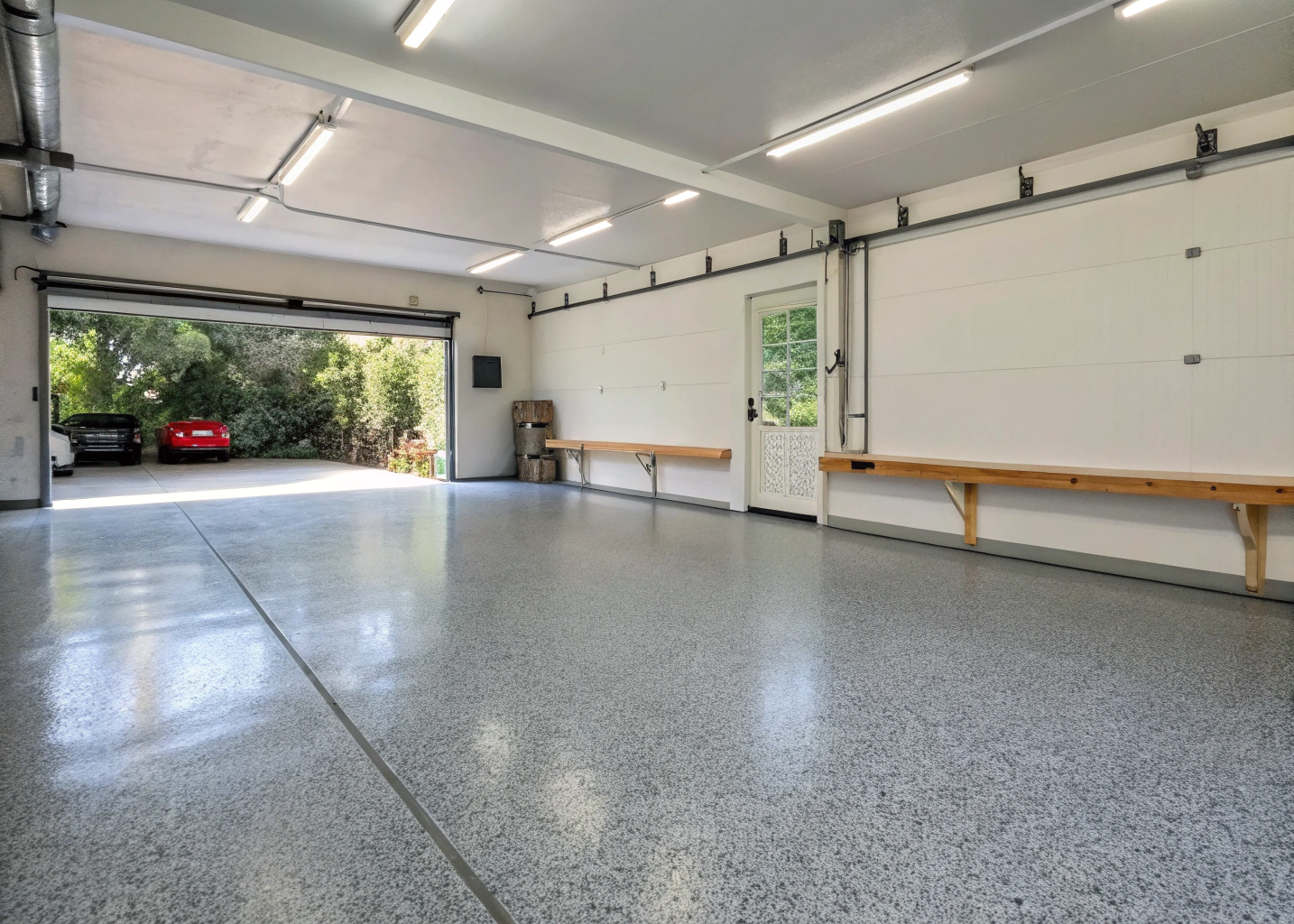
When concrete gets wet, it offers almost no resistance underfoot. In a busy Hobart commercial kitchen, on a loading dock, or even in a home garage on a rainy winter morning, that’s a serious problem — and one we solve every week across southern Tasmania.
Our anti-slip epoxy floor coatings work by embedding textured aggregates — aluminium oxide, quartz sand, or polymer grit — directly into the topcoat during application. The result is a surface profile that dramatically increases traction even when water, oil, or cleaning product is present. Unlike anti-slip tapes or paint-on treatments that sit on top of the floor and degrade quickly, the aggregate in our epoxy systems is locked into the coating itself. It doesn’t peel, shift, or create trip edges over time.
We calibrate the grip level to the environment. A light anti-slip finish appropriate for a residential laundry or home garage is very different from the heavy-duty aggregate system we specify for a commercial loading dock, a food processing facility in Glenorchy, or an aged care corridor. Getting that specification right is where our preparation and expertise make the difference.

The Real Cost of Ignoring Slip Hazards in Your Hobart Workplace
Under Australian workplace health and safety legislation, your business has a duty of care to maintain flooring that is reasonably free of slip hazards. That obligation doesn’t require a written policy — it applies the moment employees, customers, or contractors set foot on your premises.
For Hobart business owners running workshops in Glenorchy, commercial kitchens in the CBD, or warehouse facilities in Bridgewater and Rokeby, an uncoated or smooth-sealed concrete floor in a wet or oily environment is a documented compliance risk. WorkSafe Tasmania can and does issue improvement notices for inadequate flooring — and a slip-and-fall incident on an unaddressed hazard creates significant personal exposure for the business owner.
We’ve spoken with enough Hobart operators after a near-miss to know: the cost of our professional anti-slip epoxy floor treatment is a fraction of a single workers’ compensation claim. The question we hear most is “how much will this cost?” The more relevant question is how long the hazard has already been on your floor.
Our Understanding of Slip Resistance Standards — AS 4586 and What It Means for Your Floor
In a commercial or institutional context, “it feels grippy” is not a compliant answer — and we don’t treat it as one.
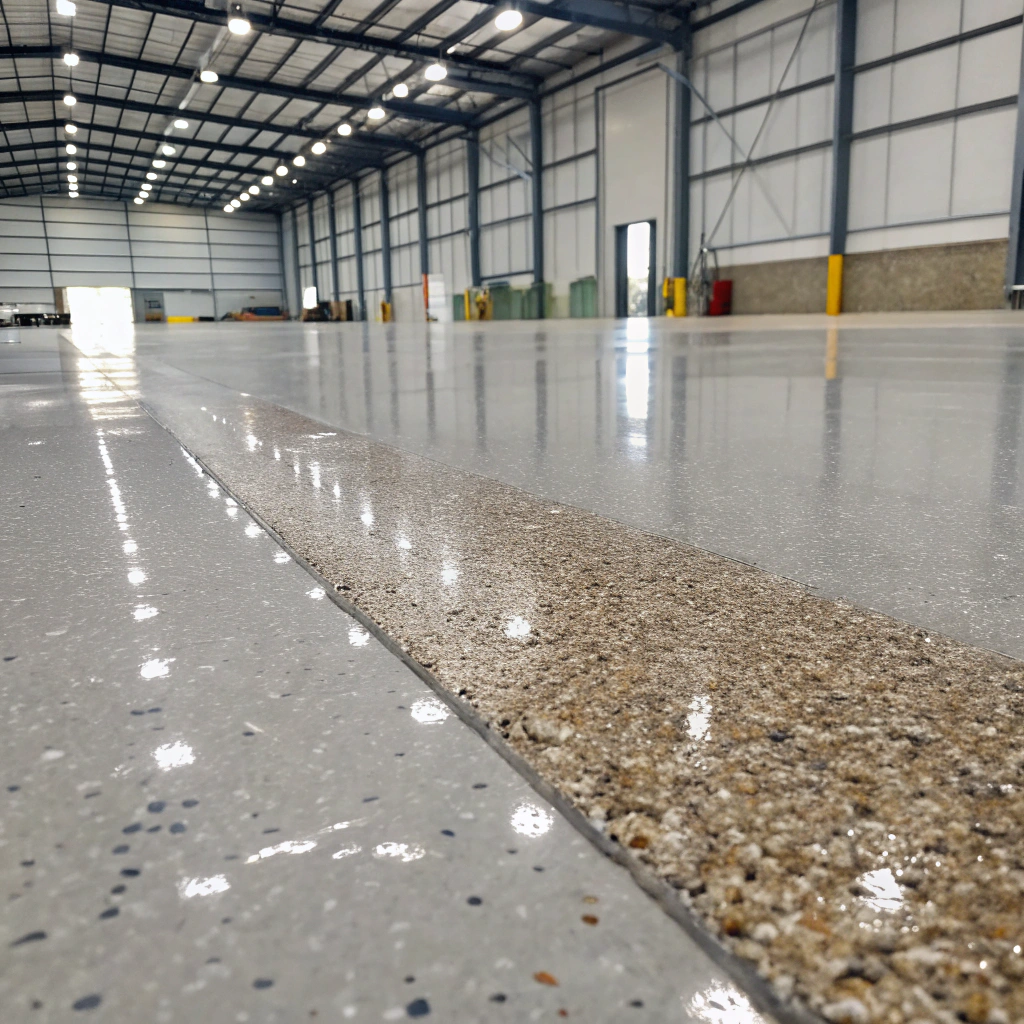
Australian Standard AS 4586 classifies pedestrian surface materials according to their slip resistance under wet pendulum test conditions. Different environments require different P ratings. A P4 or P5 rating is required for barefoot wet areas such as pool surrounds. A P3 rating applies to commercial kitchen and food preparation floors. Aged care and medical environments often require documented classification to satisfy both WorkSafe obligations and facility accreditation requirements.
When we specify a commercial non-slip epoxy floor coating system, we select it with these classifications in mind. The aggregate type, particle size, broadcast density, and topcoat system all affect the final slip resistance rating. We don’t apply a generic anti-slip finish and call it done — we match the system to what your floor actually needs to achieve.
Why Our Epoxy Systems Outperform Tapes, Paints, and Surface Treatments
There’s a range of products marketed as anti-slip solutions, and we’ve seen the results of most of them on floors we’ve been called in to fix.
| Solution | Typical Lifespan | Compliance Potential | Maintenance |
|---|---|---|---|
| Anti-slip tape | 6–18 months | Low | Peeling edges create trip hazards |
| Paint-on anti-slip coating | 1–3 years | Moderate | Fades and wears in high-traffic zones |
| Our non-slip epoxy floor coating | 10–15+ years | High — AS 4586 achievable | Damp mop, standard commercial cleaners |
The recurring cost of replacing tapes and reapplying paint-on treatments — plus the labour and downtime involved — consistently exceeds the investment in a proper epoxy system within three to five years. In a commercial or industrial environment, that calculation shifts even further when WorkSafe compliance and incident liability are factored in.
Why Hobart's Climate Makes Our Preparation Process Non-Negotiable
Most anti-slip flooring content is written for warmer, drier markets. Hobart is neither of those things — and that shapes how we approach every job.
Our cool, wet winters create condensation conditions that are genuinely problematic for concrete floors, particularly in garages, sheds, and older commercial buildings built without damp-proof courses. Moisture vapour transmission through the slab is a known failure point for improperly prepared epoxy systems, and it’s one of the main reasons we get called to fix floors that were coated with consumer-grade kits and failed within months.
Every job we do in Hobart starts with moisture testing of the slab. Where vapour transmission is present, we apply a moisture-tolerant primer or barrier system before any coating goes down. Our diamond grinding and shot blasting stage removes oil, laitance, and old paint — anything that would prevent the coating from bonding to the concrete properly. In a Glenorchy workshop or a Rokeby garage that’s been in use for years, that preparation stage is often the most important part of the entire job.
Our Non-Slip Garage Floor Coating for Hobart Homes
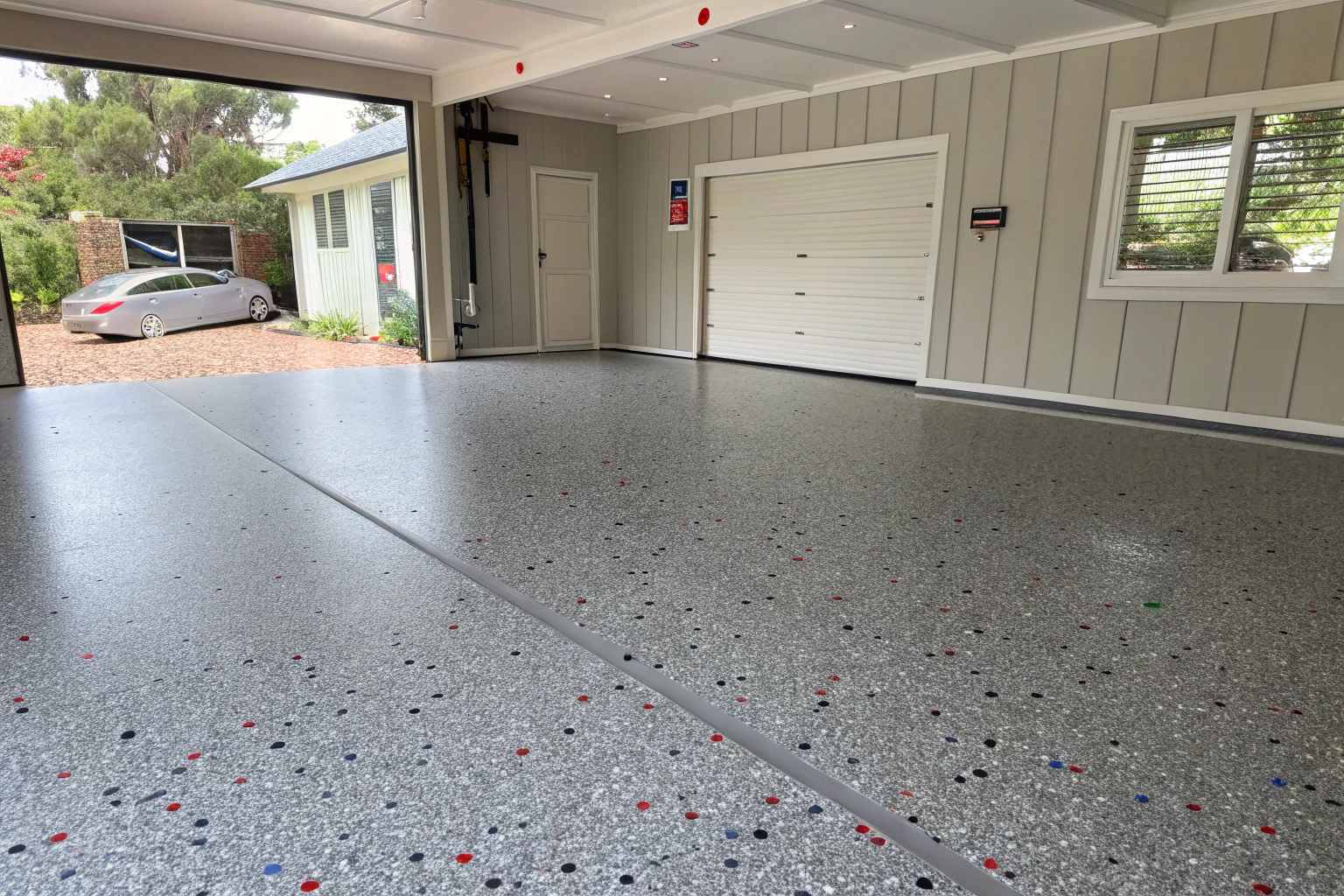
The garage is one of the most commonly overlooked slip hazards we encounter on residential jobs. Concrete that gets wet from rain, condensation, or vehicle runoff becomes slippery quickly — particularly when oil or road grime is present. For households with children, older family members, or a home workshop setup, that risk is there every single day.
Our non-slip garage floor coating transforms the surface in a single application. We calibrate the finish for light residential grip — enough to handle Hobart’s wet conditions without the aggressive texture of an industrial system — and the result is a floor that is dust-free, easy to clean, and significantly safer than bare concrete.
For Hobart homeowners preparing to sell, our epoxy-coated garage also presents well. A clean, finished floor photographs better and reads as a well-maintained property — a meaningful advantage in a market where presentation affects sale outcomes.
FAQs: Non-Slip Epoxy Coatings Hobart
Our non-slip epoxy systems typically last 10 to 15 years or more in residential environments, and 7 to 12 years in high-traffic commercial and industrial settings. Longevity depends on surface preparation quality, traffic load, and how the floor is maintained. A properly prepared and correctly specified system installed by our team will significantly outlast any tape or paint-on alternative.
It depends on what’s already there. We assess the existing surface before committing to anything. If the current coating is well-bonded, correctly prepared, and compatible with our system, we can coat over it. If it’s peeling, contaminated, or failing, we remove it first. Applying a new coating over a compromised surface is one of the most common reasons floors fail prematurely — we won’t cut that corner.
Our coatings are straightforward to maintain. A regular damp mop with a mild pH-neutral cleaner is all that’s needed for most residential and commercial floors. For industrial environments with oil or chemical exposure, we recommend a degreaser compatible with epoxy surfaces. Avoid abrasive scrubbing pads and harsh solvents — they’re unnecessary and can dull the finish over time.
Yes. We specify our commercial and institutional systems to meet AS 4586 slip resistance classifications, including the P ratings required for commercial kitchens, pool surrounds, aged care facilities, and other regulated environments. Where a client needs documented compliance — for a WorkSafe inspection or facility accreditation — we work to the appropriate standard from the specification stage, not as an afterthought.
Light foot traffic is typically possible within 24 hours. Full cure for vehicular traffic or heavy equipment use generally takes 5 to 7 days depending on the system and ambient temperature. In Hobart’s cooler months, cure times can extend slightly — we factor this into our scheduling and give you a clear timeline before we start, particularly for commercial jobs where downtime matters.
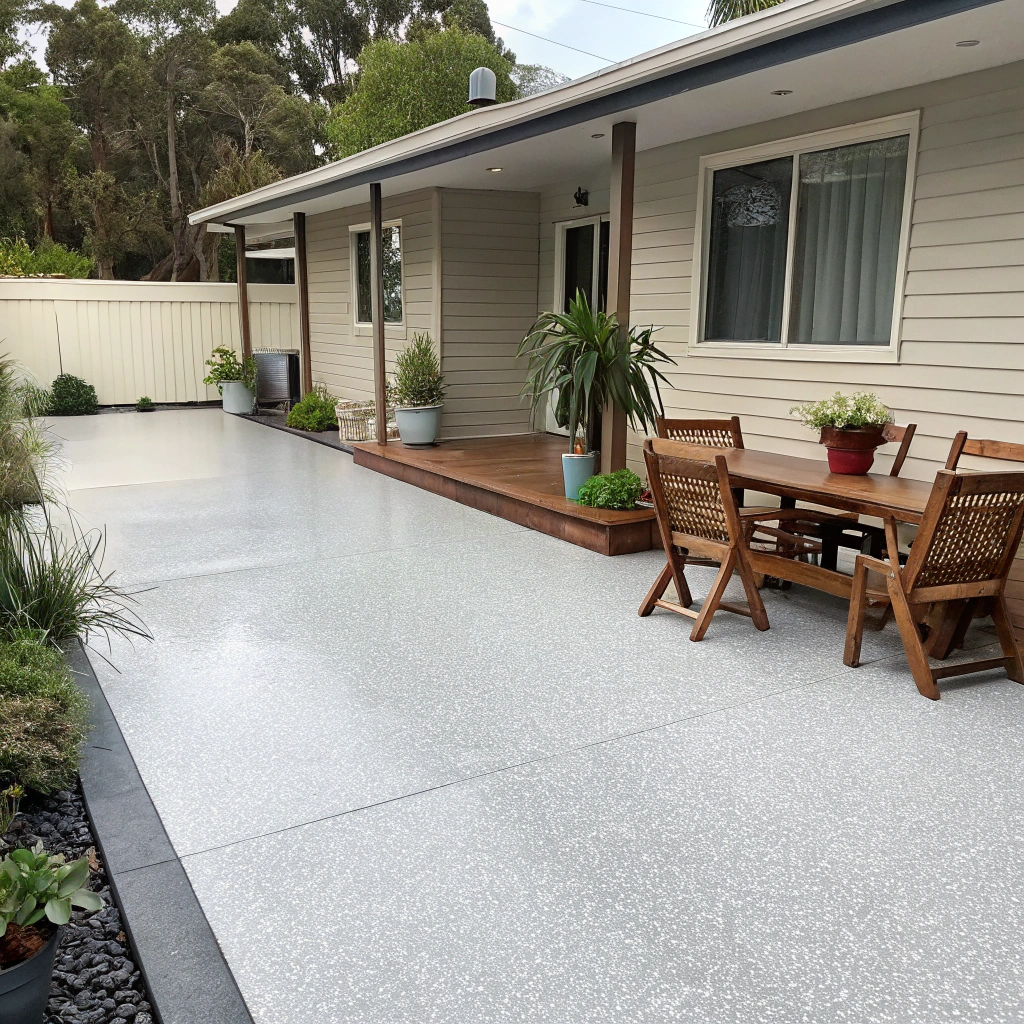
Yes, and we do it regularly. Pool surrounds, external steps, patios, and commercial outdoor entries are all surfaces we coat with UV-stable, weather-resistant non-slip systems. Hobart’s cool and wet conditions require us to monitor ambient temperature and surface moisture carefully on installation day — we won’t apply coating in conditions that would compromise adhesion or cure.
Not in our experience. The aggregate we use creates a surface profile that increases grip without creating deep crevices that trap dirt. Our topcoat seals the aggregate into the system, so the surface remains smooth enough to mop effectively while still providing the traction you need. Commercial kitchen and food premises clients in particular find our floors easier to clean than the uncoated concrete they replaced.
Talk to Us About Non-Slip Epoxy Flooring for Your Hobart Property
Whether you’re running a Glenorchy workshop with a WorkSafe concern on your mind, managing a Hobart café preparing for a health inspection, dealing with a Kingston garage that gets treacherous every winter, or operating a Clarence warehouse with a loading dock that needs bringing up to standard — we’re the team to call.
We service Hobart and surrounding areas including Glenorchy, Clarence, Kingston, Kingborough, Brighton, Rokeby, and the broader southern Tasmania region. Every job starts with a proper site assessment — not a generic quote over the phone, but a genuine look at your slab condition, your environment, your traffic load, and your compliance requirements, so what we install is matched to what your floor actually faces.
Contact us today for a free site assessment and quote.
