
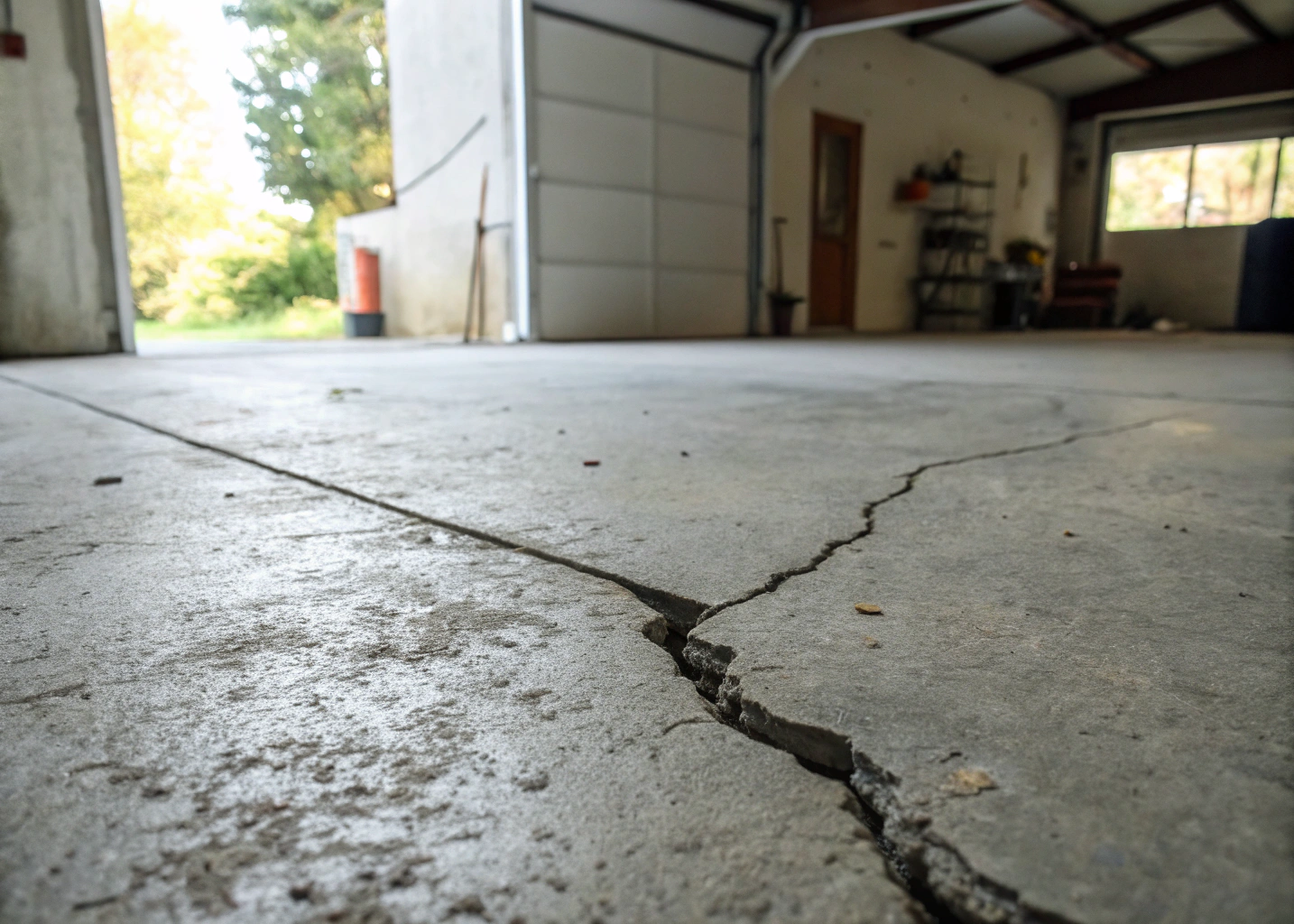
Can You Epoxy Over Cracked Concrete?
Yes — but only if the cracks are repaired correctly first. Skipping this step, or using the wrong filler, is the number one reason epoxy coatings fail.
Here’s how we do it properly:
- Assess the crack — check the type, width, depth, and whether it’s still moving
- Clean the crack faces — remove dust, debris, and any loose material so the repair bonds properly
- Apply the right repair compound — matched to the crack type and the coating going over it
- Grind flush — the repaired area is ground back level with the surrounding slab
- Prep the full surface — crack repair is integrated into the broader surface preparation before coating begins
One thing worth knowing: flexible fillers from the hardware store are not compatible with rigid epoxy systems. If the repair compound moves or flexes under the epoxy, the coating delaminates. Hobart’s damp, cool conditions make this even more of a risk on moisture-affected slabs.

Why Concrete Cracks — and Why It Matters for Hobart Properties
Cracking is built into concrete. As it cures, it shrinks. As temperatures change, it moves. Add the weight of vehicles, equipment, or heavy shelving and the slab is under constant stress. That’s not a defect — it’s just the nature of the material.
In Hobart, a few things make it worse. Cool, wet winters mean moisture gets into cracks and the ground shifts with seasonal changes. Older slabs in Glenorchy, Moonah, and Clarence were often poured without a moisture barrier underneath, so water moves up through the slab as well as in from the sides.
The real issue is what happens when cracks are left alone. They get wider. Edges lift and become trip hazards. Moisture gets deeper into the substrate. And if you apply a coating over an unrepaired crack, it will show through — or cause the coating to fail altogether.
The good news is it’s a straightforward problem to fix when it’s done correctly.
The Four Crack Types and What Each One Means
Not all cracks are the same, and the repair method depends on what type you’re dealing with. Here’s a plain-language breakdown.
Why Incorrect Repairs Cause Coating Failure
This is the part most people don’t know until it’s too late.
Hardware store fillers and flexible sealants are designed to move. That’s fine for expansion joints and outdoor gaps — but epoxy is a rigid system. It bonds hard to whatever is underneath it. If the repair compound beneath flexes, moves, or isn’t chemically compatible with the epoxy going over it, the coating lifts. It’s not a question of if — it’s when.
Most DIY epoxy failures that happen within 12 to 18 months come back to this. The floor looked fine when it was first done. Then a corner lifts, then a patch peels, and before long the whole floor is coming up. The coating gets the blame, but the real problem was what happened — or didn’t happen — underneath it.
At Clear Cut Epoxy Flooring Hobart, we select repair compounds specifically matched to the coating system going over them. The repair product and the coating work together as a system, not against each other. That’s what makes the difference between a floor that lasts and one that’s being redone two years later.
The Professional Crack Repair Process
Here’s exactly how we approach crack repair on every job.
Crack Assessment and Classification: Before anything gets filled, we inspect the floor properly — mapping cracks, checking width and depth, testing for moisture, and determining whether each crack is dormant, active, or structural. That classification drives every decision that follows.
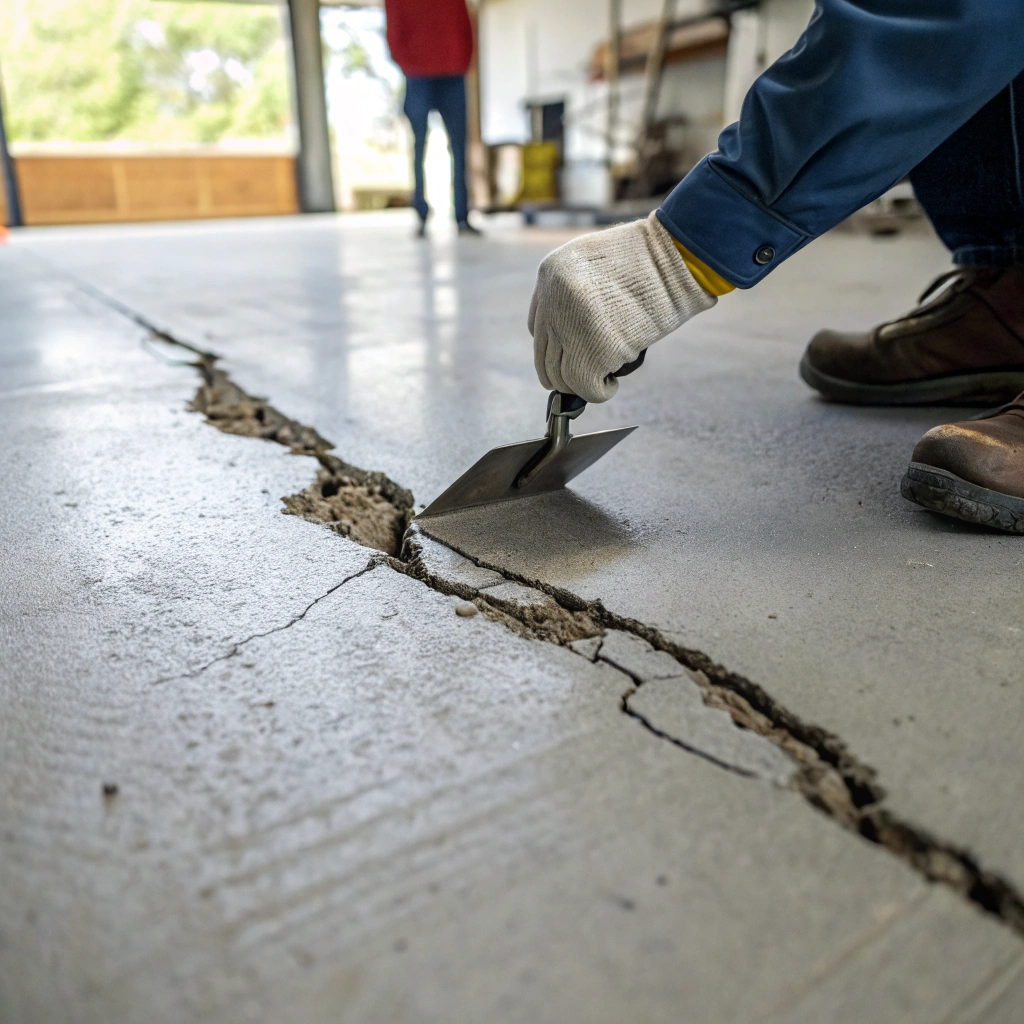
Crack Face Preparation: We clean out dust, debris, and loose material from inside the crack before any compound goes in. If the crack faces aren’t clean and sound, the repair won’t bond — and a repair that doesn’t bond is worthless.
Compound Selection and Application: The repair compound is chosen based on the crack type and the coating going over it. Narrow cracks get injected, wider ones filled by trowel, with primer applied first where the slab needs it.
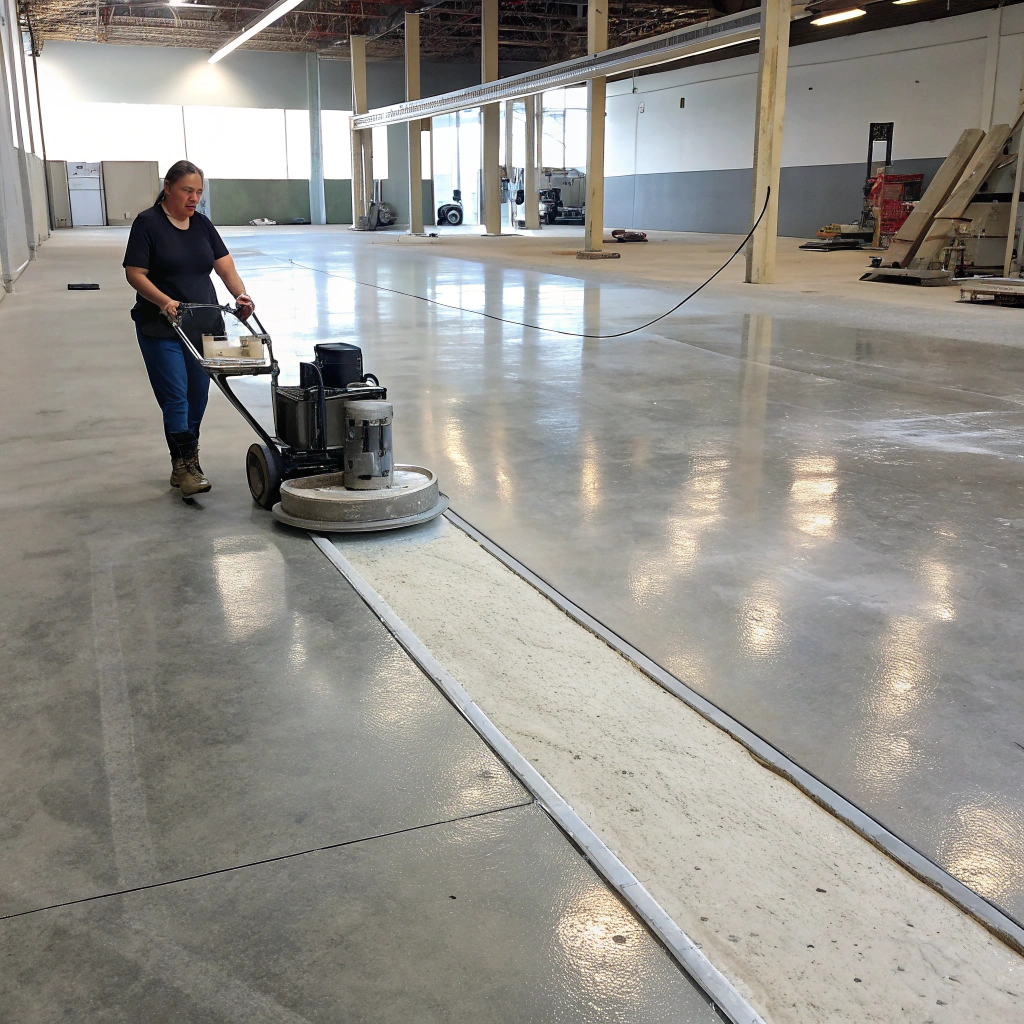
Grinding Flush and Integration: Once cured, the repaired area is ground back flush with the surrounding slab — no ridges, no bumps. From there, crack repair feeds directly into the broader surface prep scope ahead of coating.
Crack Repair as Part of Surface Preparation
Crack repair doesn’t happen in isolation. It’s one part of a complete surface preparation scope — and that’s exactly how we treat it at Clear Cut Epoxy Flooring Hobart.
When we assess a floor before coating, cracks are identified and repaired as part of that process. You don’t need to self-diagnose what type of crack you have or figure out what product to use before calling us. That’s our job.
The full prep sequence — diamond grinding, crack repair, moisture testing, and primer — all work together. Pull one out and the whole system is compromised. A beautifully ground floor with an unrepaired crack will still fail. A correctly repaired crack on a floor that hasn’t been ground properly will still fail. Everything has to be right across the whole surface before a coating goes down.



Commercial and Industrial Floors — Safety and Compliance
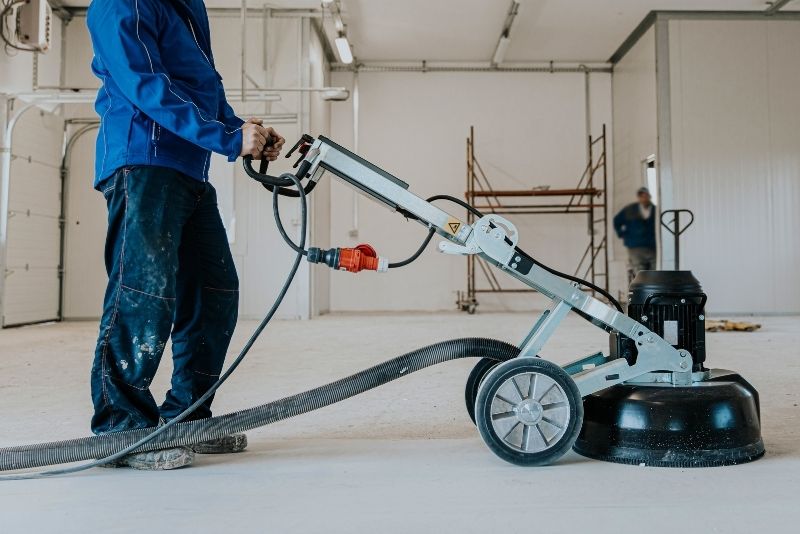
Open cracks in a commercial or industrial floor aren’t just an eyesore — they’re a WorkSafe liability.
Raised crack edges catch forklifts, trolleys, and pallet jacks. Debris collects inside open cracks and creates slip and trip hazards for anyone working on the floor. In a food premises, open cracks fail health department inspections outright. These aren’t minor issues — they’re the kind of thing that shuts operations down or generates an incident report.
We work across Hobart’s commercial and industrial areas regularly — workshops and fabrication sheds in Glenorchy and Moonah, food premises in the CBD and on the waterfront, warehouses in Bridgewater and Rokeby. In every one of those settings, crack repair ahead of an anti-slip or food-grade coating isn’t optional — it’s a requirement.
If you’re a builder or contractor managing a commercial fit-out, we offer free site assessments. Get the substrate sorted before the coating goes down, not after.
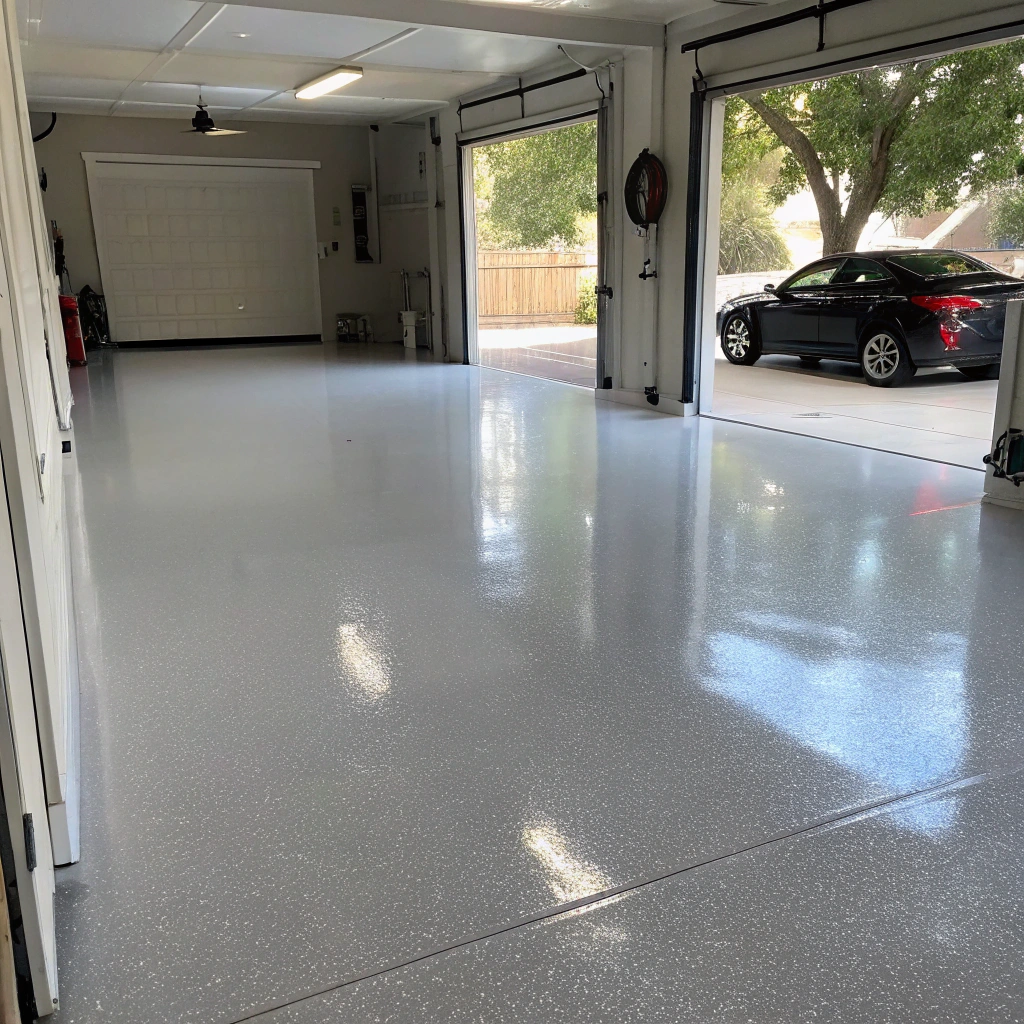
Residential Garage and Workshop Floors Across Hobart
This is one of the most common patterns we see: builder finishes the house, leaves the garage slab bare, homeowner buys a DIY epoxy kit, applies it over unrepaired cracks, and within 18 months the coating is peeling. The cracks telegraphed straight through, the prep wasn’t right, and now the floor needs to be stripped and redone properly.
Professional crack repair breaks that cycle. We fix the substrate first — then the coating goes down on a surface that’s actually ready for it.
Hobart’s cool climate plays a role here too. Uninsulated garages cycle through significant temperature and moisture changes across the seasons. That movement accelerates crack progression, especially in older slabs. Addressing the substrate properly, not just the surface, is what gives a floor its longevity.
We work across Clarence, Rosny Park, Rokeby, Huntingfield, Kingston, and Lindisfarne regularly. Correctly repaired and coated floors in Hobart garages and workshops hold up for 10 to 15 years without needing to be recoated.
Frequently Asked Questions
Yes, but the cracks need to be correctly repaired first. We assess, clean, fill with the right compound, and grind flush before any coating goes down.
We determine that on site. Some cracks are cosmetic, others are still moving, and some point to something structural underneath. You don’t need to figure that out yourself before calling us.
If it’s repaired correctly and ground flush beforehand, no. If it’s skipped or filled with the wrong product, yes — it will telegraph straight through.
Almost always comes down to two things — the crack wasn’t properly prepared, or the filler used wasn’t compatible with the epoxy system. Hardware store fillers and rigid epoxy don’t work together.
It depends on the number and type of cracks. On most residential jobs, crack repair is completed as part of the same day as the broader surface preparation.
Yes. Small cracks still telegraph through coatings and still let moisture into the slab. Better to fix them properly upfront than deal with a failing floor later.
Yes. We work across workshops, warehouses, food premises, and industrial sites throughout Hobart. Commercial crack repair is often a compliance requirement ahead of anti-slip or food-grade coating application.
Ready to Get Your Cracks Fixed Properly?
Whether you’re a homeowner with a cracking garage floor, a business owner dealing with a commercial floor that’s becoming a safety issue, or a builder who needs a clean substrate before coating goes down — we can help.
At Clear Cut Epoxy Flooring Hobart, crack assessment is included as part of every coating consultation. There’s no obligation, and you don’t need to know what type of crack you have before you call. We’ll work that out on site.
Call us or fill out the contact form to book your free assessment.
