
Why Howrah Homeowners Choose Professional Epoxy Over DIY
The consumer epoxy kits available at hardware stores are formulated differently from the commercial-grade systems used by professional installers. Where a DIY kit applies over the surface of the concrete, a professional installation begins underneath it — with diamond grinding that opens the slab’s pores and creates the mechanical bond that determines how long the coating holds. Without that preparation, delamination is a matter of when, not if.
Howrah’s mid-century concrete slabs present specific challenges that consumer products are not designed to address. Older concrete is often porous, contaminated with decades of oil absorption, and subject to moisture vapour transmission during Hobart’s cooler months. A professional installer tests for moisture before any coating is applied and selects a primer system appropriate to the slab’s condition. The result is a coating that adheres correctly from day one and remains intact years later. For Howrah homeowners who have watched a DIY attempt bubble and peel within two seasons, the difference is not subtle — it is the entire outcome.

What Professional Epoxy Installation Looks Like From Start to Finish
A professional epoxy flooring installation follows a defined sequence that begins well before any coating is mixed or applied. The first stage is concrete assessment — examining the slab for cracks, contamination, moisture readings, and surface hardness. Any cracks are routed and filled, oil contamination is treated, and the slab is ground using diamond tooling to achieve the surface profile required for mechanical adhesion.
Once preparation is complete, a primer coat is applied to seal the slab and address any residual moisture vapour. The base coat follows, with decorative elements such as colour flakes broadcast into the wet coating if a flake finish has been selected. A topcoat is then applied to seal the surface, provide the finished sheen, and deliver the chemical and abrasion resistance the system is designed for. Cure times vary by product and temperature — in Hobart’s cooler months, full cure typically requires additional time before the floor is returned to the vehicle or heavy foot traffic.
How Eastern Shore Conditions Influence Epoxy Floor Performance
Howrah sits within a climate zone that places genuine demands on floor coatings. Cool, wet winters drive moisture vapour up through unsealed concrete slabs, and temperature fluctuations between seasons cause slabs to expand and contract in ways that stress poorly adhered coatings. These are not edge-case concerns — they are routine conditions that any epoxy floor system installed on the eastern shore must be selected and applied to withstand.
Older concrete common to Howrah’s mid-century housing stock compounds these challenges. Slabs laid decades ago were not always finished to modern tolerances, and many lack an effective damp-proof course. Before installation, a competent contractor assesses moisture vapour transmission rates and selects a primer appropriate to those readings. Skipping this step is the primary reason epoxy floors fail in Tasmanian conditions — not the coating itself, but the preparation that precedes it. Howrah homeowners who invest in a properly specified system get a floor that performs through every season without lifting, bubbling, or losing adhesion at the edges.
Colour and Finish Selection for Howrah Floors
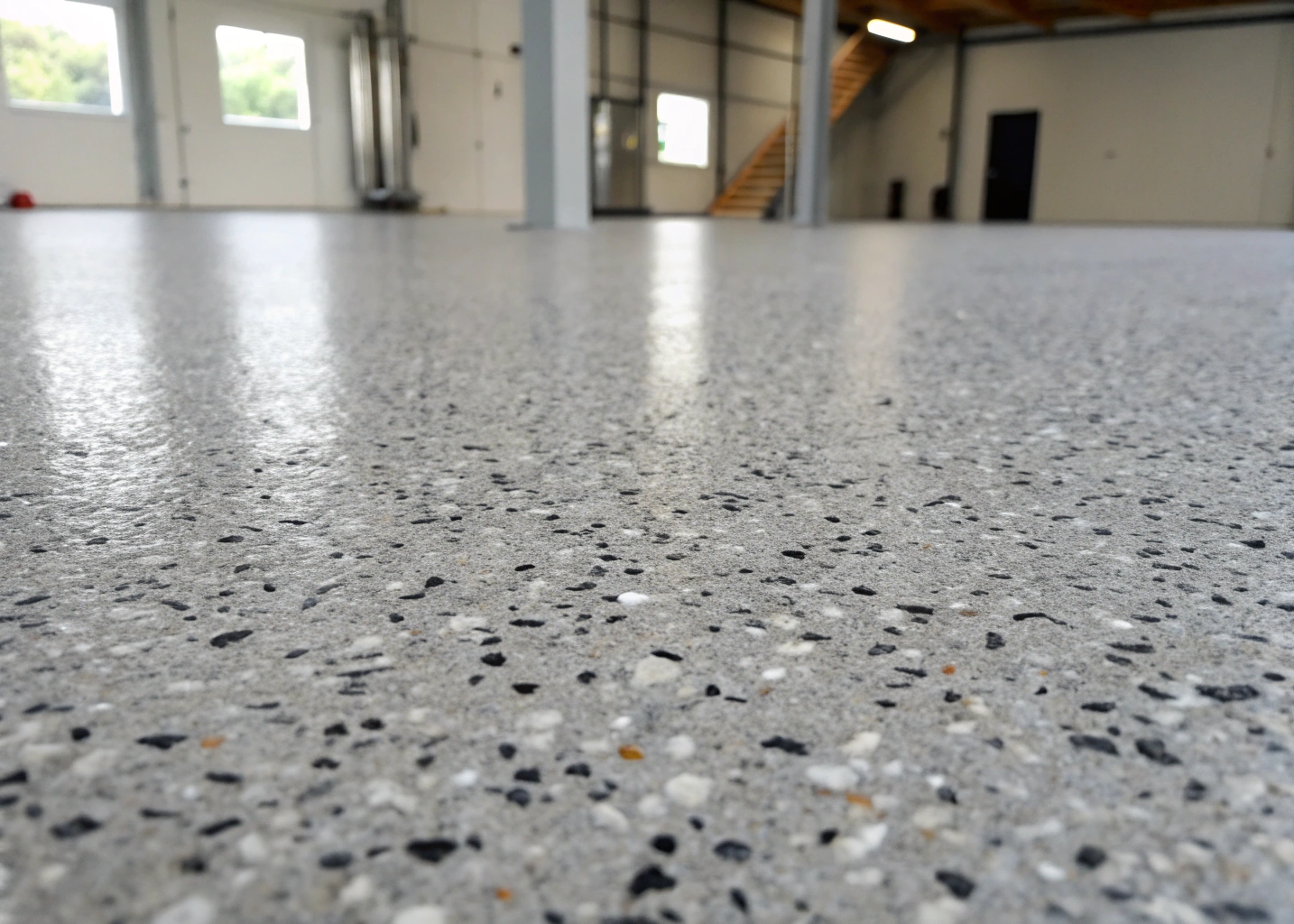
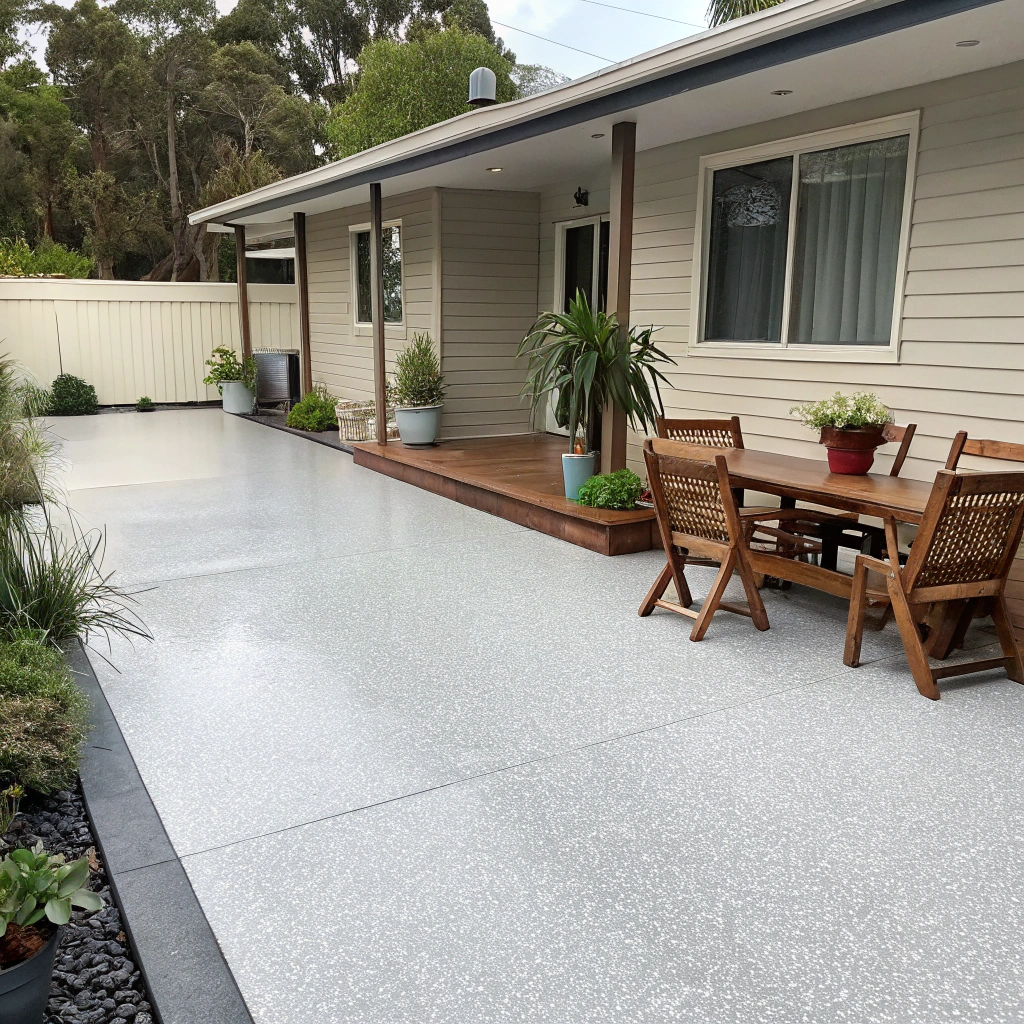
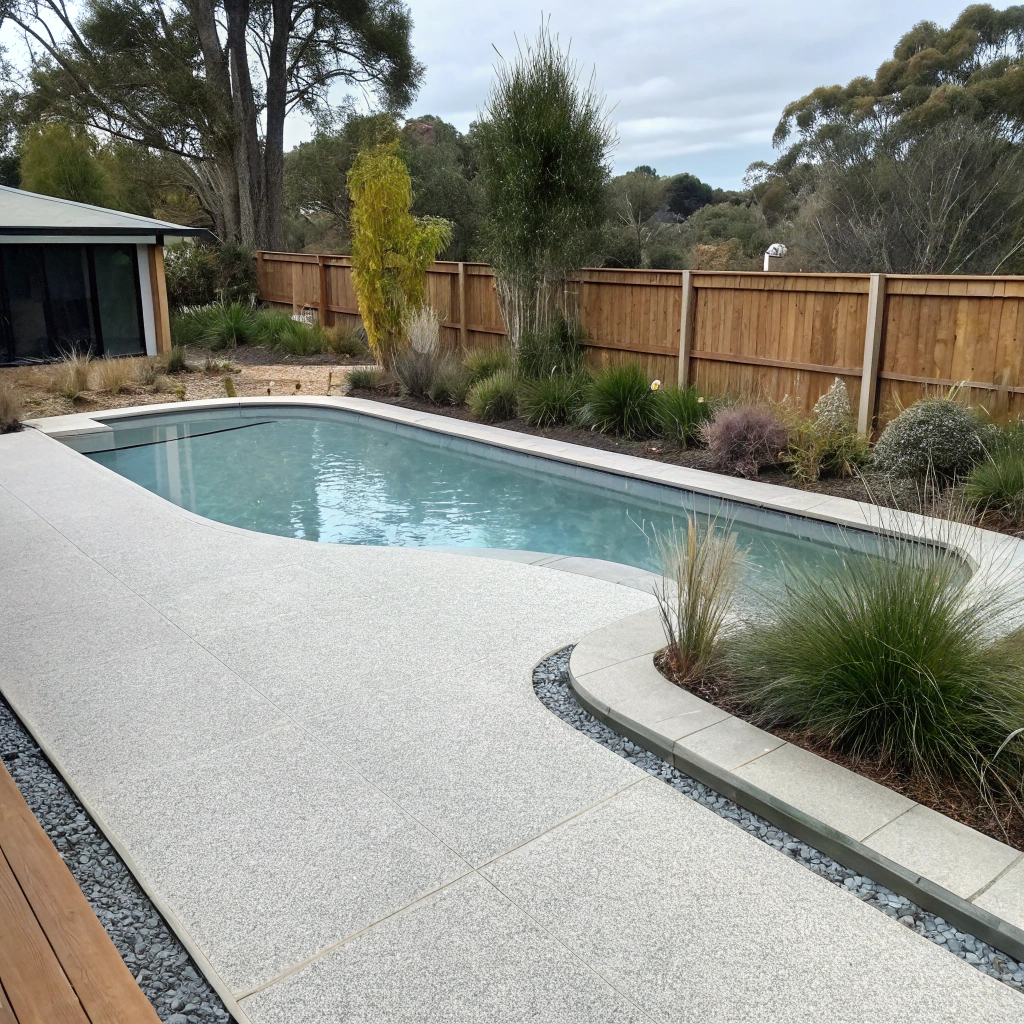
The finish applied to an epoxy floor system does more than determine how the space looks — it influences how the surface performs under daily use across driveways, workshops, and residential interiors. Solid colour epoxy systems deliver a clean, uniform appearance well-suited to Howrah’s neatly presented residential properties. In contrast, colour flake systems add texture to the finished surface, improving slip resistance underfoot and concealing minor surface variation in older concrete.
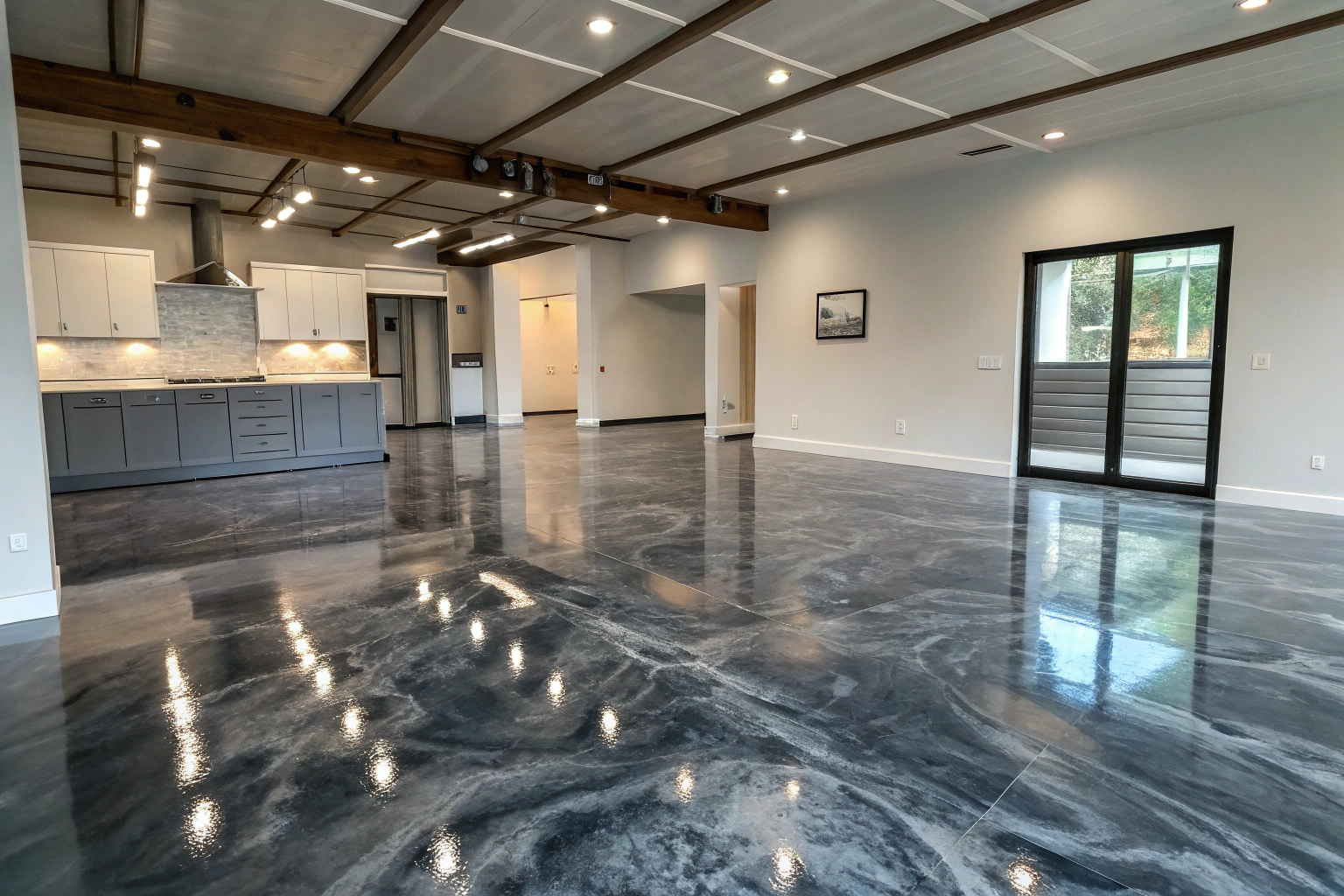
Metallic epoxy finishes offer a higher-end decorative result, producing depth and movement in the coating that suits premium living spaces, entertainment areas, and internal concrete floors where visual impact is a priority. The character of a metallic system is distinct from both solid and flake finishes, with each installation producing a result that is subtly unique depending on how the coating moves during application. Across all finish types, gloss and satin topcoat options are available to control the level of reflectivity in the finished floor.
Colour selection is made prior to installation, with samples available to assess against the existing walls, lighting conditions, and intended use of the space. For Howrah homeowners, the most popular combinations balance visual impact with the practical durability required of a hardworking floor — a surface that looks considered without demanding careful treatment to stay that way.
Concrete Preparation Standards That Determine Coating Longevity
Surface preparation is the single most important variable in how long an epoxy floor coating performs. A coating applied to a correctly prepared slab will outlast one applied to an unprepared surface by years — regardless of the product used. The preparation standard required is determined by the condition of the concrete, not by preference or time constraints.
Diamond grinding is the industry benchmark for residential garage floors. It removes surface laitance, opens the concrete’s pore structure, and creates the mechanical adhesion profile that allows the epoxy system to bond at depth rather than sitting on top of the slab. For Howrah’s older concrete, grinding also removes oil contamination and surface carbonation that would otherwise prevent adhesion entirely. Where cracks or spalling are present, these are repaired using appropriate fillers before coating — not concealed beneath it. Homeowners who understand this process are better equipped to evaluate the quality of quotes they receive and to recognise the difference between a contractor cutting corners and one delivering a coating system built to last.
Understanding Cure Times and Return-to-Use After Epoxy Installation
Epoxy floor coatings cure through a chemical reaction rather than simple drying, and the timeline for that process is influenced by product type, coating thickness, and ambient temperature. In Hobart’s cooler months, cure times extend noticeably compared to mainland conditions — a factor that Howrah homeowners should account for when scheduling installation.
Most residential garage floor epoxy systems allow light foot traffic within 24 hours of the final topcoat application. Return to vehicle traffic typically requires a minimum of 72 hours, though a full chemical cure — the point at which the coating reaches its maximum hardness and chemical resistance — generally takes between five and seven days. Placing vehicles or heavy equipment on the floor before full cure is reached risks surface indentation and premature wear at contact points.
A professional installer will provide a clear return-to-use schedule specific to the products applied and the conditions present at the time of installation. For Howrah homeowners planning installation around a busy household schedule, understanding this timeline in advance allows the garage to be cleared, the job completed, and the space returned to full use without disruption to daily routines.
Frequently Asked Questions About Epoxy Flooring in Howrah
A professionally installed epoxy floor system applied to a correctly prepared slab will typically perform for ten to fifteen years in Tasmanian residential conditions before any remedial attention is required.
Yes. Mid-century concrete slabs common to Howrah homes respond well to professional epoxy installation provided the surface is properly diamond ground, contamination is removed, and any cracks are filled before coating begins.
Professional installers work within temperature and humidity parameters suited to the products being applied. Cool conditions extend cure times, and a competent contractor will schedule and manage installation accordingly to achieve a sound result.
Concrete paint is a surface-applied product with limited adhesion and durability. Epoxy is a two-part chemical system that bonds to the prepared slab at depth, delivering significantly greater hardness, chemical resistance, and longevity.
A professional installer conducts a moisture vapour transmission test prior to installation. Howrah slabs without an effective damp proof course are particularly susceptible and require a moisture-tolerant primer system before any coating is applied.
A clean, professionally finished garage floor improves the presentation of a property at sale and is consistently noted by eastern shore buyers as a positive feature, particularly in the mid-century residential market where bare or deteriorating slabs are common.
Get a Free Epoxy Flooring Quote for Your Howrah Home
Howrah homeowners looking to transform a tired garage slab into a clean, durable, and professionally finished floor can get started with a free on-site quote. Every assessment includes a concrete condition review, moisture check, and finish recommendation tailored to the slab and the space — with no obligation to proceed.
Clear Cut Epoxy Flooring services the eastern shore, including Howrah, Rosny Park, and Tranmere. Enquiries are responded to promptly, quotes are provided in writing, and every installation is carried out to a preparation standard that gives the finished coating the best possible foundation. Contact the team today to book your free quote and take the first step toward a floor built to last.
