
Why Sandy Bay Homeowners Choose Epoxy Over Timber and Tile
Timber and tile remain common choices across Hobart’s residential market, but Sandy Bay homeowners undertaking serious renovations are increasingly specifying epoxy floor coatings where those materials fall short. The reasons are practical as much as aesthetic.
Timber is vulnerable to moisture — a genuine concern in Hobart’s cooler, wetter months — and requires ongoing maintenance to hold its finish in high-traffic areas like garages and alfresco zones. Tile introduces grout lines that trap dirt, crack under point loads, and create visual interruptions in open-plan spaces where a seamless surface reads far better.
Epoxy systems eliminate both problems. A professionally installed coating produces a continuous, non-porous surface that handles foot traffic, vehicle loads, chemical exposure, and cleaning without degrading. In spaces like garages, basement conversions, and outdoor entertaining areas, that durability is the primary specification driver.
For Sandy Bay properties where presentation matters at every level, epoxy also provides a finish quality — particularly in metallic and terrazzo-style systems — that timber and tile cannot replicate at comparable cost.

Internal Living Extensions — Where Epoxy Meets Interior Design
Epoxy flooring is being specified with increasing frequency inside Sandy Bay homes — not just in utility spaces, but in open-plan living areas, kitchen extensions, and converted basements where the floor is a visible design element. The material’s capacity to produce a continuous, seamless surface across large areas makes it a natural fit for contemporary interiors where grout lines, joins, and transitions interrupt the visual flow.
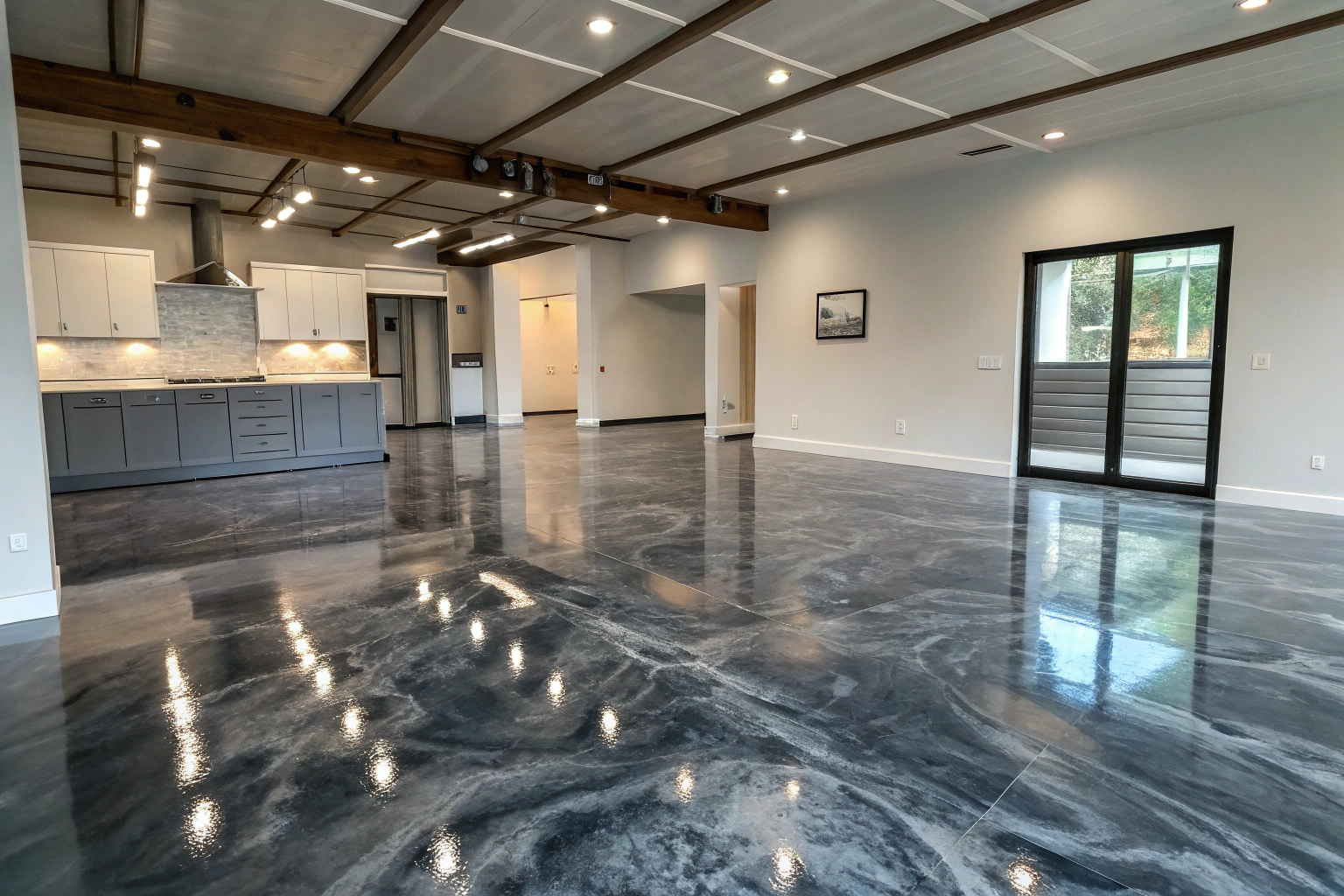
Metallic epoxy systems are the most commonly selected finish in interior residential applications. The depth and light-reactive quality of a well-installed metallic coat produce a result that reads closer to polished concrete or resin than a conventional floor coating — appropriate for Sandy Bay properties where interior finishes are specified at a consistently high standard.
The substrate preparation requirements for internal living areas are no different from garage or commercial installations. Diamond grinding, crack repair, and moisture testing are completed before any coating is applied, ensuring the finished surface bonds correctly and performs without delamination, bubbling, or edge failure over time.
Epoxy Flooring Services Available Across Sandy Bay
Clear Cut Epoxy Flooring installs floor coating systems across the full range of residential applications common to Sandy Bay — from garages and basement conversions through to alfresco entertaining areas and internal living extensions where a seamless, high-performance finish is the specification standard.
Every project in Sandy Bay is approached the same way regardless of scale. The substrate is assessed, moisture tested, and prepared to a commercial standard before any coating is applied. That preparation process — diamond grinding, crack repair, and primer selection — is what determines the longevity of the finished system and where most DIY and underprepared installations fall short.
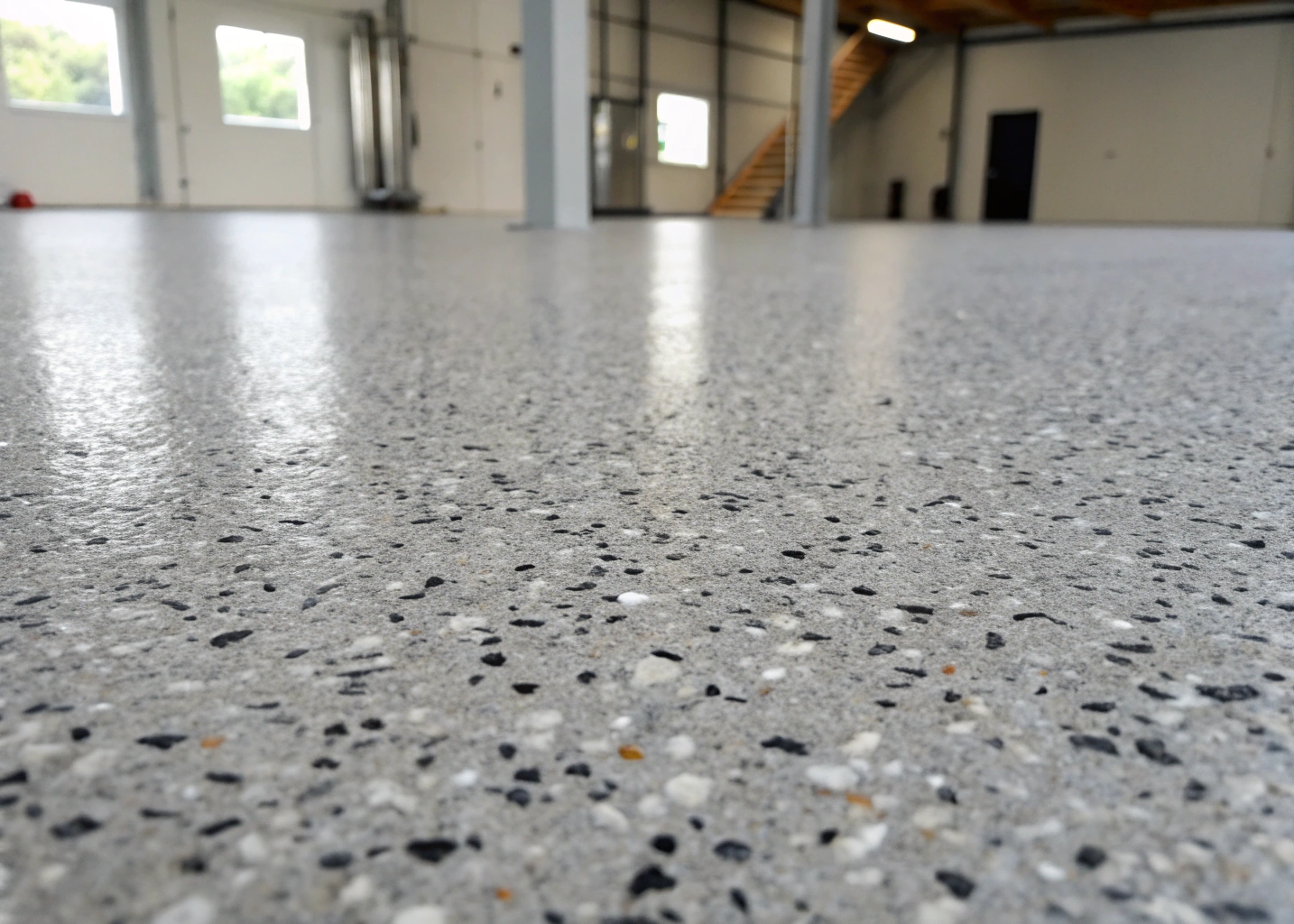
Decorative finish options span metallic systems, terrazzo-style aggregate coatings, flake broadcast finishes, and seamless indoor-outdoor applications. System selection is based on the substrate condition, the intended use of the space, and the finish standard the property demands.
Sandy Bay installations are carried out by experienced applicators using commercial-grade two-part epoxy systems — the same products and processes used in high-specification commercial environments.
Choosing the Right Epoxy System for Your Sandy Bay Floor
Not all epoxy systems are the same, and the right specification depends on where the floor is, how it will be used, and what finish standard the property demands.
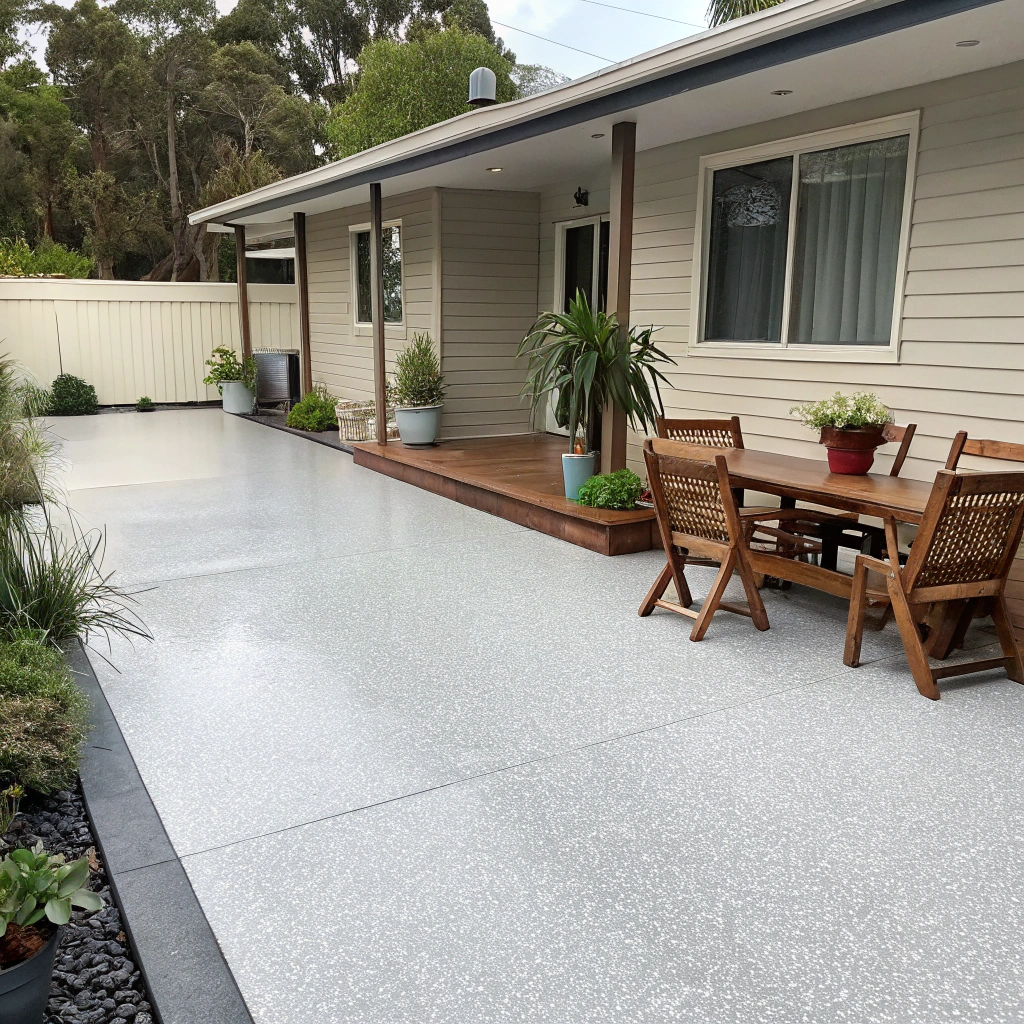
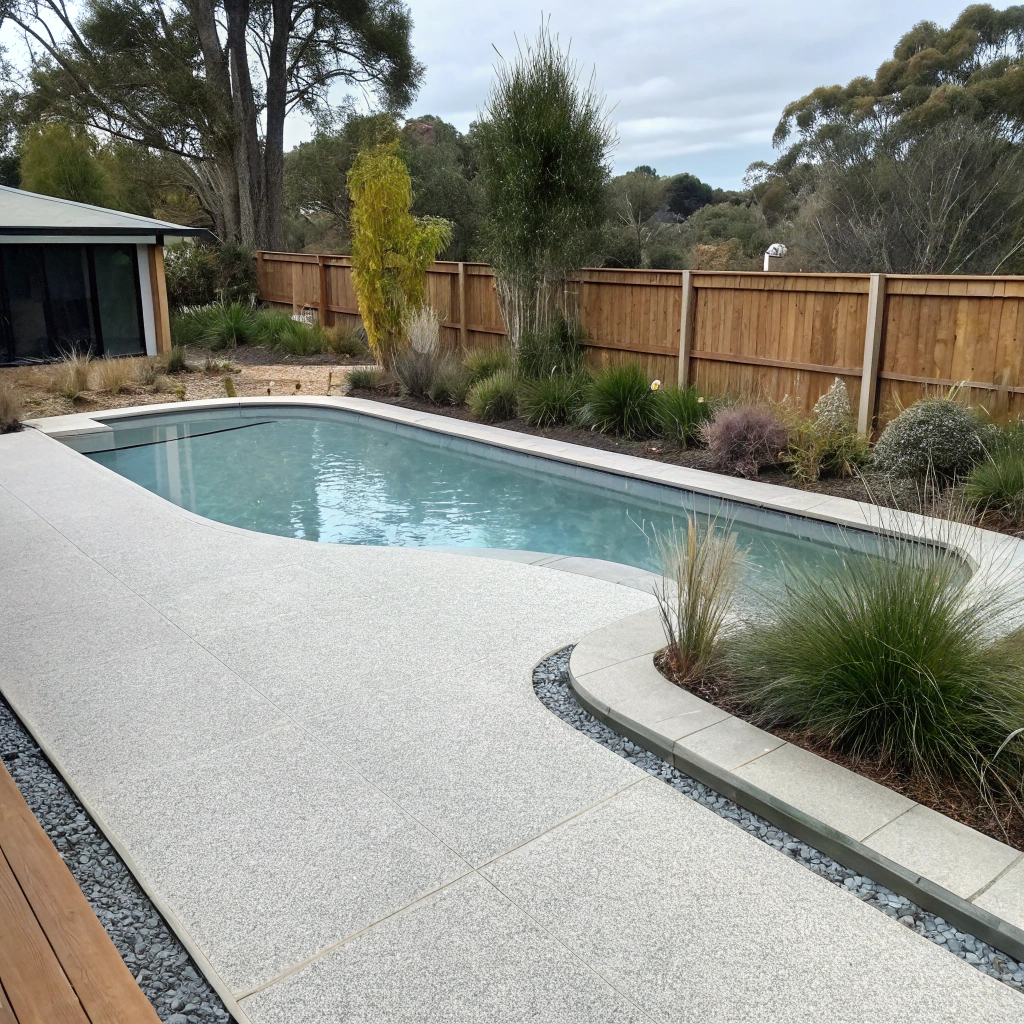
Metallic epoxy is the most specified decorative system in Sandy Bay’s residential market — a two-coat application that produces a deep, light-reactive finish suited to garages, basement conversions, and internal living extensions where visual impact is part of the brief. Terrazzo-style systems use aggregate blends to replicate the look of polished stone at a fraction of the cost, performing well in alfresco areas and open-plan interiors.
Flake broadcast systems offer a textured, slip-resistant surface and are commonly installed in garages and outdoor entertaining areas where practicality is the primary driver. For spaces that connect indoors to out, seamless indoor-outdoor coatings create a continuous finish across internal and external slabs.
Each system has different preparation requirements, cure times, and thickness profiles. A site assessment determines which product is appropriate for the substrate condition, exposure, and intended use before any coating is specified.
The Finish Options Sandy Bay Properties Are Being Specified With
Sandy Bay’s renovation market skews toward finish quality, and the epoxy systems being specified across the suburb reflect that. Metallic epoxy remains the most selected decorative option — a deep, luminous finish that shifts with light and produces a result distinct from any other floor covering available at a comparable installation cost.
Terrazzo-style systems are gaining ground in interior applications, particularly in homes where the existing architectural character calls for something more textural. Aggregate blends are selected to complement the broader interior palette, producing a finish that reads as considered and deliberate rather than utilitarian.
For alfresco areas and outdoor entertaining spaces, flake broadcast and quartz aggregate systems provide the slip resistance and UV stability that purely decorative coatings cannot offer in exposed conditions. These systems are available across a wide colour range and hold their finish through Hobart’s seasonal temperature and moisture variation without fading or surface degradation.
Across all finish types, the installed result is determined as much by preparation quality and applicator experience as by the product itself.
What Professional Surface Preparation Actually Involves
| Diamond Grinding | Moisture Testing | Crack Repair and Priming |
|---|---|---|
| Diamond grinding is the mechanical process that opens the concrete surface to accept a coating. Angle grinders and consumer sanders cannot replicate what a professional grinding unit achieves — a consistent surface profile across the entire slab that gives the epoxy system a substrate it can bond to permanently, rather than sit on top of. | Hobart’s cool, damp climate means moisture vapour transmission is a live concern on most slabs, particularly in garages and basements with no damp proof course. Professional installers test moisture levels before specifying a primer system. Applying an epoxy coating over a slab with elevated moisture content is the single most common cause of premature delamination and coating failure. | Cracks, control joints, and surface voids are repaired and filled before any coating is applied. Primer selection follows — different substrates and moisture readings require different primer chemistries to ensure the topcoat bonds correctly. Skipping or rushing either step produces a floor that looks acceptable on day one and fails within eighteen months under normal residential use. |
FAQ Section
Professionally installed epoxy systems last 10–15 years in residential settings under normal use. Longevity depends primarily on surface preparation quality, the system specified, and whether the substrate was correctly moisture-tested before installation.
Epoxy can be installed through Hobart’s cooler months with the correct product selection and application conditions. Temperature and humidity affect cure times, and professional installers adjust their process and product specification accordingly to ensure proper adhesion and finish quality.
Older concrete slabs common in Sandy Bay’s Federation and mid-century homes are suitable substrates for epoxy, provided preparation is thorough. Diamond grinding, crack repair, and moisture testing address the conditions typically found in aged concrete before any coating system is applied.
Metallic epoxy uses pigmented metallic powders suspended in a clear resin system to produce a deep, light-reactive finish. Standard solid-colour systems deliver a uniform, flat result. Metallic systems require more skilled application but produce a significantly higher-specification decorative outcome.
Most residential epoxy systems are trafficable within 24 hours of application and reach full cure within 5–7 days. Vehicle traffic and heavy loads should be avoided until full cure is complete. Cure times vary depending on the system specified and ambient temperature during installation.
Existing coatings must be assessed before any new system is applied. Delaminating, peeling, or contaminated surfaces require full removal before recoating. Applying epoxy over a compromised existing layer produces the same failure mode as applying over an unprepared substrate.
Get a Quote for Epoxy Flooring in Sandy Bay
Sandy Bay properties are quoted on-site. A site assessment allows accurate measurement, substrate evaluation, and system specification before any pricing is provided — ensuring the quote reflects the actual scope of the installation rather than an estimate based on floor area alone.
Clear Cut Epoxy Flooring services Sandy Bay and the broader Hobart area. Residential garage floors, alfresco entertaining areas, basement conversions, and internal living extensions are all within scope.
Contact the team to arrange a Sandy Bay quote at a time that suits. Enquiries are responded to promptly, and assessments are scheduled without obligation.
Call, email, or submit an enquiry through the website to get started.
