
Is Epoxy Flooring Good for Warehouses?
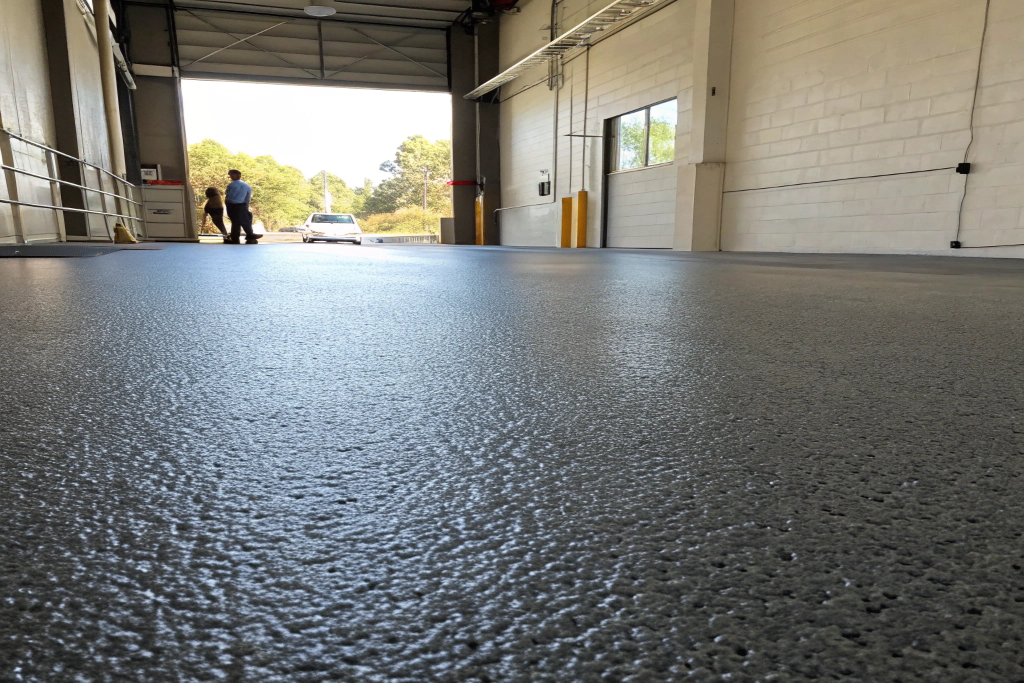
Yes — and it’s one of the best investments a warehouse operator can make. A properly applied warehouse epoxy system handles forklift traffic and heavy loads without breaking down, seals the concrete so dust stops being a daily problem, and creates a surface that’s genuinely easy to clean and maintain. It’s built for industrial use in a way that bare or painted concrete simply isn’t.
For Hobart warehouse operators, the practical benefits are clear:
- Impact and abrasion resistance — holds up under forklifts and wheeled equipment without chipping or peeling
- Dust suppression — seals the surface so fine concrete dust stops getting into machinery and stock
- Chemical resistance — spills sit on top and wipe clean instead of soaking into the slab
- Slip resistance — anti-slip systems for loading docks and wet areas meet AS 4586 safety ratings
- Line marking — forklift lanes and safety zones applied as part of the same job

Why Warehouse Floors Need a Different Kind of Epoxy System
Not every epoxy system is built the same way, and warehouse floors need something in a completely different league to what you’d put in a garage or a shop floor.
The loads are different. A forklift carrying a full pallet puts enormous pressure on a small area of floor — over and over, every single shift. Add constant wheeled equipment movement, heavy static loads sitting in the same spot for weeks, and the occasional hard impact, and you’ve got conditions that will destroy a coating that wasn’t built for it. Bubbling, peeling, cracking at the edges — that’s what happens when the wrong system goes down on a working warehouse floor.
A warehouse epoxy system is specified for that kind of punishment from the ground up — the right thickness, the right hardness, and the right surface bond to stay intact under real industrial use.
How Warehouse Epoxy Performs Where It Counts
Finish and System Options for Hobart Warehouse Environments
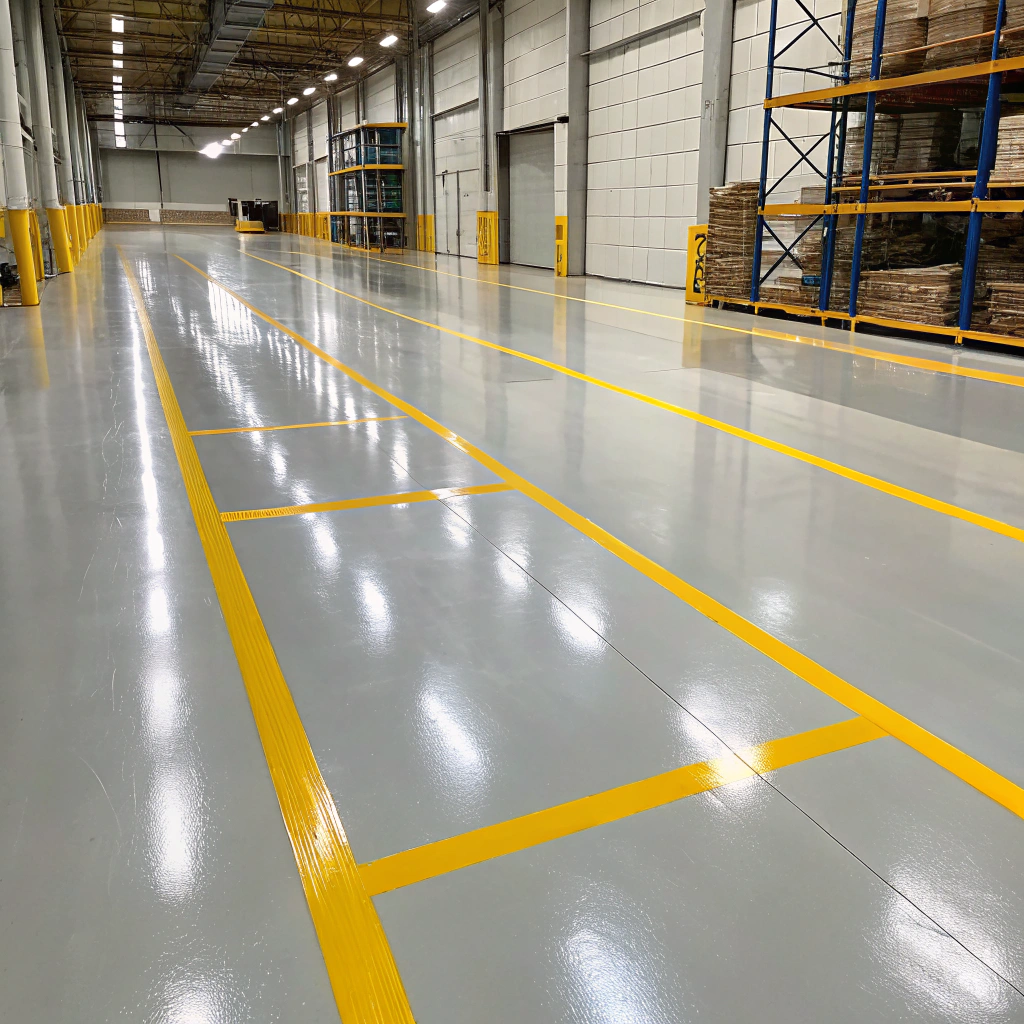
Solid Colour Systems: Safety grey and warehouse yellow are the go-to colours for working industrial floors — and for good reason. They’re clean, they show dirt clearly so your team can see what needs attention, and they hold up under heavy daily use without fading or breaking down. No frills, just a tough sealed floor that does its job.
Anti-Slip Broadcast Systems: For anywhere moisture is a factor — loading docks, wash-down bays, cool room entries — we broadcast aggregate into the topcoat during application. Hobart winters are wet, and a smooth floor in those zones is a genuine slip risk. The broadcast finish adds the grip needed to keep those areas safe and compliant year-round.
Line Marking Packages: Forklift lanes, pedestrian walkways, pallet bays, exclusion zones — all of it goes down as part of the same installation. Epoxy accepts line marking cleanly, and having it done in one visit means the floor comes out of the job organised and ready to operate from day one. No second trade, no second visit, no gaps in the finish.
Surface Preparation: Why It Determines How Long Your Floor Lasts
This is the part most people never see — and it’s the reason cheap epoxy jobs fail within a year or two. The coating is only ever as good as what it’s stuck to.
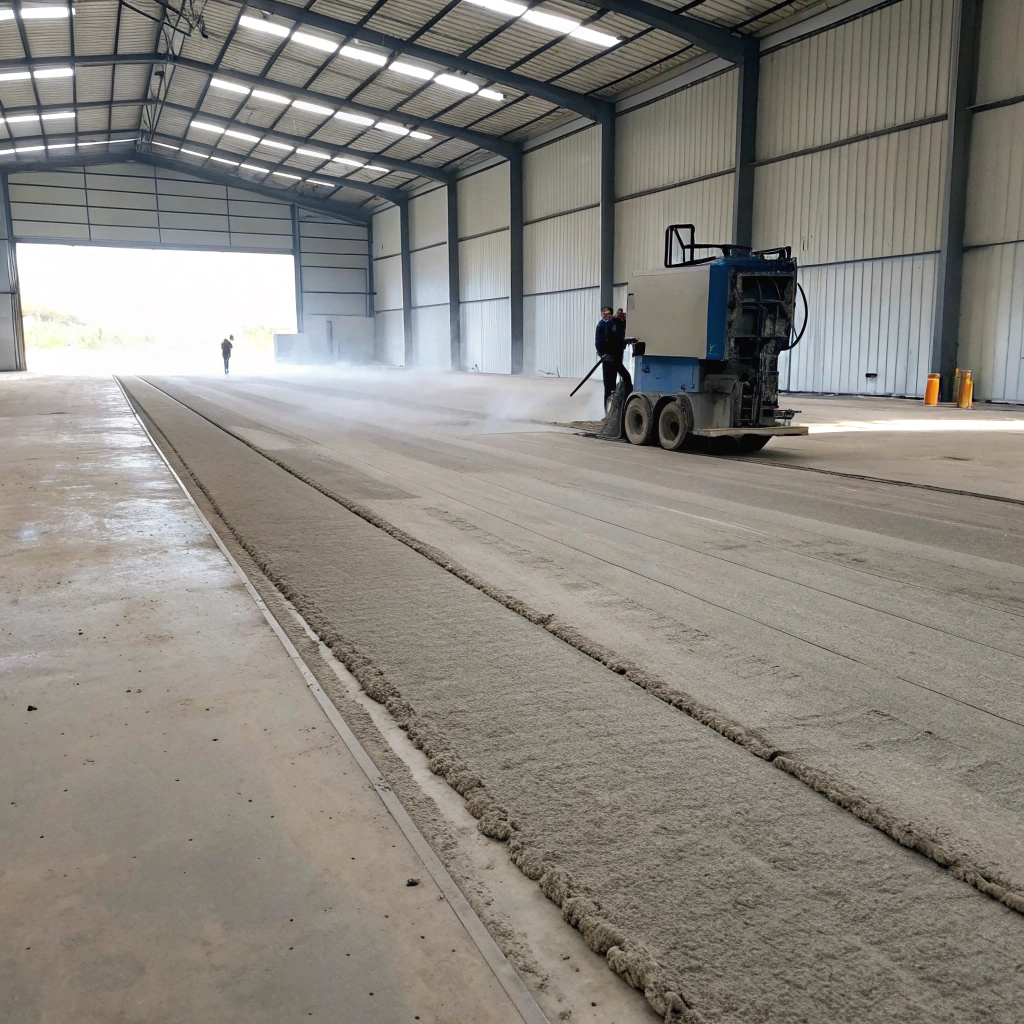
Shot Blasting
Shot blasting is how we prepare large warehouse slabs. A machine drives thousands of small steel shot particles into the concrete surface at high speed, opening it up at a mechanical level and stripping away any contamination sitting on top. What’s left is a clean, profiled surface the epoxy can bond into properly — not just sit on top of.
Chemical etching — the method used in DIY kits and cheaper jobs — doesn’t achieve that on a large industrial slab. It’s inconsistent, it leaves contamination behind, and it doesn’t create the surface profile a heavy-duty system needs to hold long term. Shot blasting does.
Joint & Crack Treatment
Every movement joint and existing crack in the slab gets treated before any coating goes down. This step gets skipped on a lot of jobs — and it’s exactly why those floors start lifting at the edges and cracking through the surface within months.
Treat the joints and cracks properly before application and the finished floor stays flat, sealed, and bonded. Skip it and the problems underneath simply push straight through the coating. It’s not complicated — it just has to be done right.
How a Better Floor Reduces Risk in Your Facility
A deteriorating warehouse floor isn’t just an inconvenience — it creates real liability for the person running the facility. Under WorkSafe Tasmania obligations, employers are responsible for maintaining a safe working environment, and a cracked, dusty, slippery concrete floor sits squarely in that category.
A properly applied epoxy system deals with the three biggest floor-related risks in one installation. The sealed surface stops concrete dust from becoming an airborne problem for your team. Anti-slip aggregate on docks and wet zones brings those areas up to a standard that holds up under inspection. And treating cracks and joints before coating removes the trip hazard edges that build up as bare concrete deteriorates.
Most operators already know these things need fixing — the floor has been on the list for a while. A warehouse epoxy system is how you get them all dealt with properly, in a single job, rather than patching problems one at a time and hoping nothing becomes a formal issue first.



What Happens During a Warehouse Epoxy Installation
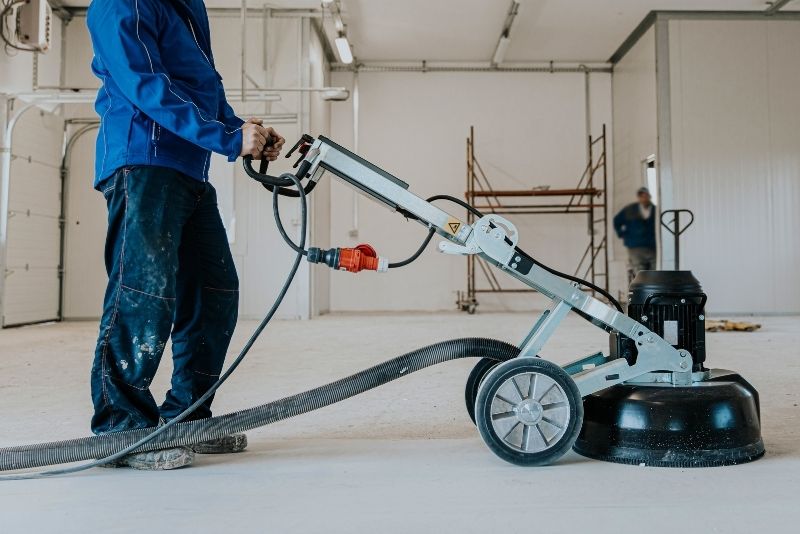
Site Assessment: Before anything gets specified or scheduled, we come out and look at the floor. We check the condition of the slab, test for moisture — which matters more in Hobart than most places given the cold, damp winters — and get a clear picture of how the facility operates and what load demands the floor needs to handle. The system we recommend comes from what we actually find on site, not a standard package we apply to every job.
Application Sequence: A large warehouse floor doesn’t have to mean shutting the whole facility down. We plan the installation in stages, working through sections while keeping the rest of the floor operational. The sequence gets worked out before we start so you know exactly what’s accessible and when throughout the job.
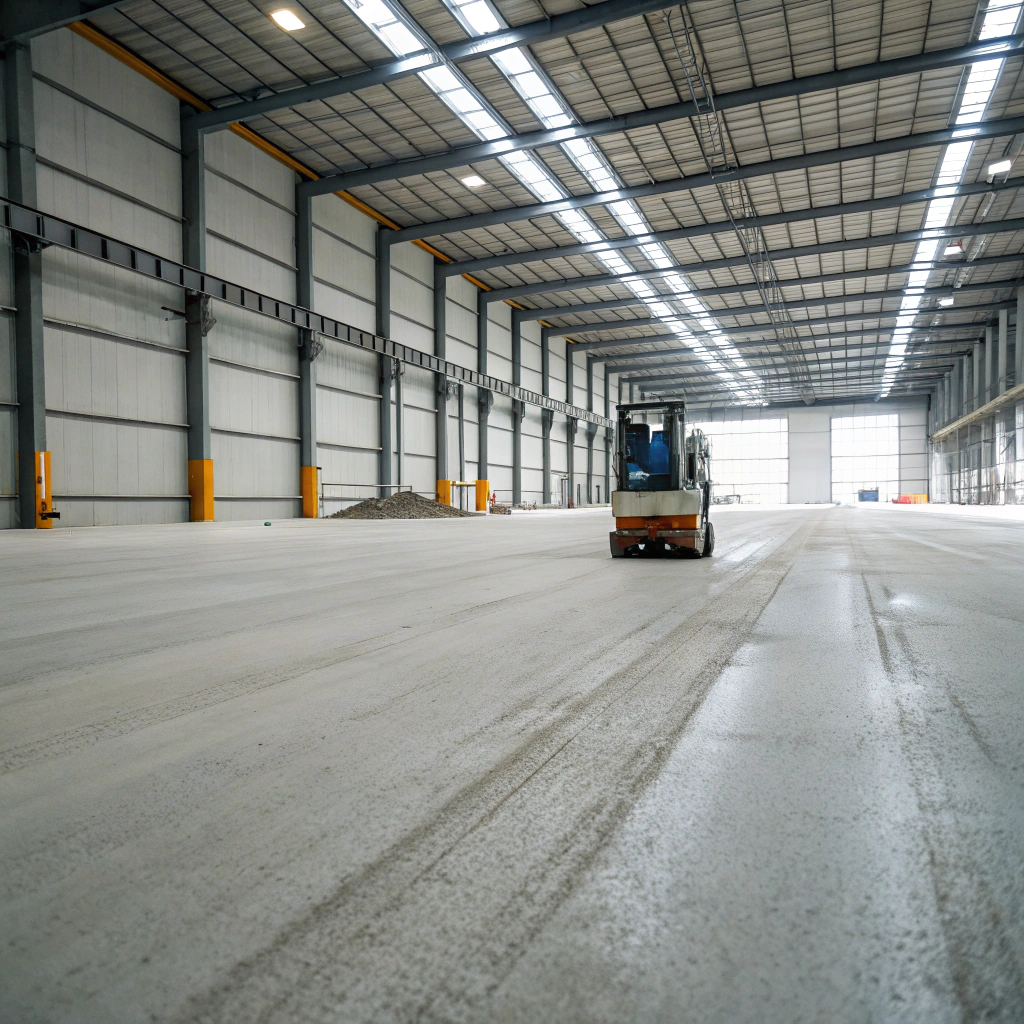
Cure Times & Downtime Planning: Light foot traffic is typically possible within 24 hours of each section being completed. Full operational load — forklifts, heavy equipment, pallet jacks — generally needs 5 to 7 days of cure time depending on the system and the conditions on the day. We give you those figures upfront so your team can plan around the schedule rather than finding out after the fact.
Choosing the Right System for Your Facility
Every warehouse floor is different — the condition of the slab, how the space gets used, what equipment runs across it, whether there are wet zones, and what the concrete underneath is actually doing all feed into which system is right for the job.
That’s why we don’t quote from a brochure. A site assessment is how the process starts — we look at the floor, talk through how your facility operates, and work out exactly what the slab needs before anything gets specified. Floor condition, moisture levels, load classification, finish requirements — all of that gets factored in before a system gets recommended.
For warehouse operators across Hobart looking for a heavy-duty epoxy flooring system that holds up to real daily use, that conversation is where it starts. Get in touch to book your free site assessment and we’ll take it from there.
Frequently Asked Questions
A properly prepared and applied warehouse epoxy system typically lasts 10 to 15 years under normal industrial use. The biggest factor in longevity is surface preparation — a floor that’s been correctly shot blasted and had its cracks treated before coating will significantly outlast one that hasn’t.
It depends on the size of the floor and its condition going in. Most warehouse jobs run between two and five days from preparation through to final coat. We’ll give you a clear timeline during the site assessment so you can plan around it.
Not necessarily. We stage larger jobs in sections so part of the floor stays accessible while we work through the rest. We plan the sequence around how your facility operates before we start.
Light foot traffic is generally fine within 24 hours. For full operational load — forklifts, pallet jacks, heavy equipment — we recommend allowing 5 to 7 days of cure time. We’ll give you the specific figures for your job upfront.
In most cases it comes down to preparation. If the surface wasn’t shot blasted, if moisture wasn’t tested and dealt with, or if cracks and joints weren’t treated before coating went down, the system will fail regardless of the product used. That’s the part we never cut corners on.
It depends on the condition of the slab. Minor cracking and surface damage can be treated as part of the preparation process. Heavily deteriorated concrete may need remediation work first. We assess the slab during the site visit and tell you exactly what’s required before any work starts.
A standard smooth finish can be slippery in wet conditions, which is why we don’t use that on loading docks or wash-down areas. We broadcast anti-slip aggregate into the topcoat on any zone where moisture is a factor, bringing those areas up to AS 4586 slip resistance ratings.
Ready to Fix Your Warehouse Floor?
Book a free site assessment with Clear Cut Epoxy Flooring. We’ll come out to your facility, look at the slab, test for moisture, and give you a clear recommendation on what your floor actually needs — no obligation, no guesswork.
We work around your operations when it comes to scheduling, so talk to us about timing and we’ll find an approach that keeps your facility moving.
Call us or fill out the contact form to get started.
