
Why Hobart Property Owners Choose Repair Over Full Recoat
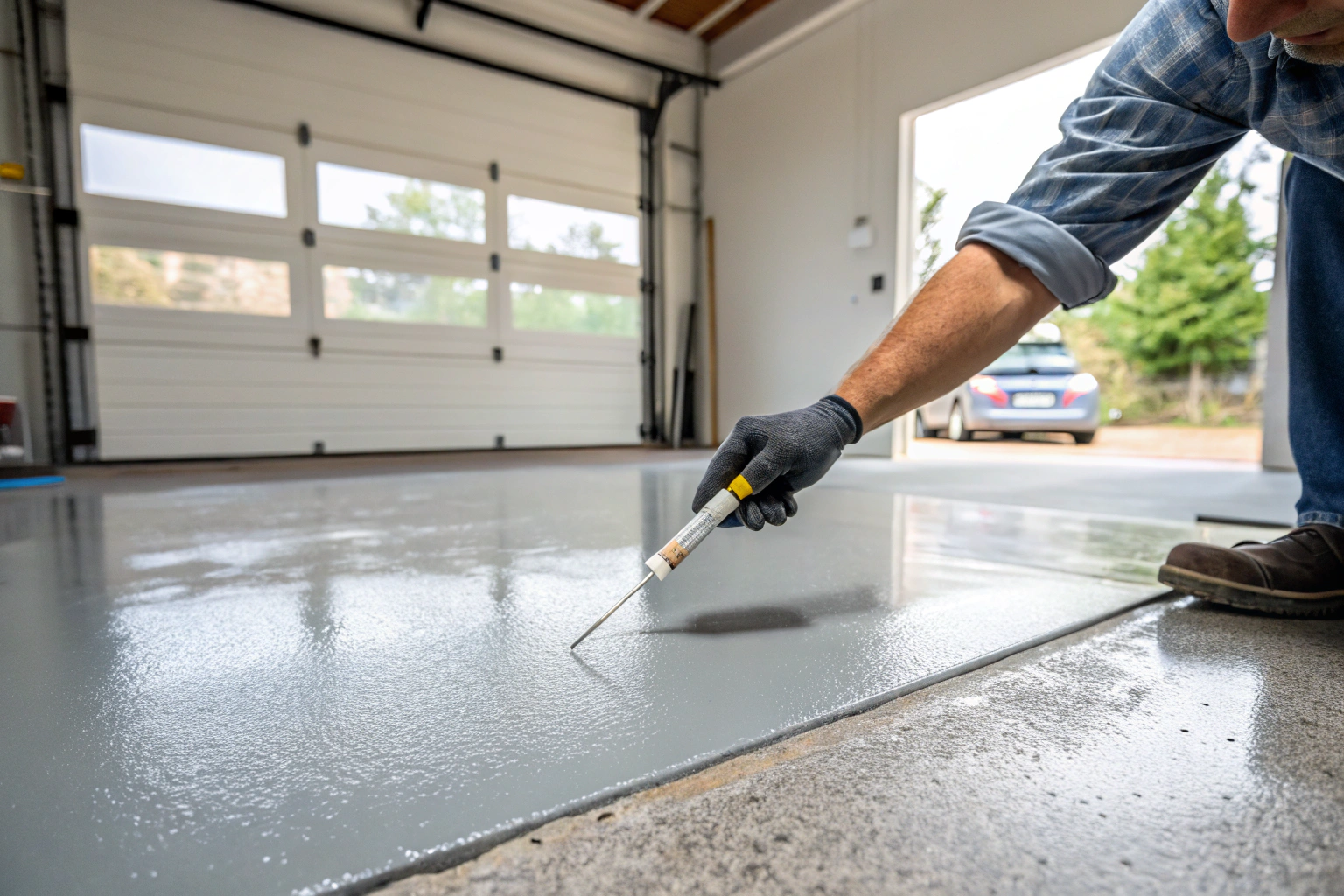
A full epoxy recoat is a significant job. The floor needs to be ground back, the existing coating removed or prepared, and the whole surface reapplied from scratch. For a floor that’s genuinely failing — delaminating broadly, worn right through across the whole surface, or compromised by widespread moisture damage — that’s the right call. But for a floor with localised chips, scratches, or impact damage, it’s overkill.
Targeted repair addresses the problem where it actually exists. The damaged area is prepared, filled, and refinished to match the surrounding floor. The rest of the coating — which is still performing exactly as it should — stays untouched. You’re not paying to fix what isn’t broken.
For Hobart business operators, there’s another factor: disruption. A full recoat can take a workshop or commercial space offline for days. A spot repair on a chipped or gouged section is often completed far faster, with minimal impact on your operations.
Cost, time, and practicality all point in the same direction — repair first, recoat only when the floor genuinely demands it.

Types of Epoxy Floor Damage We Repair in Hobart
Not all epoxy floor damage is the same, and the repair approach depends on what’s actually happened to the surface. Here’s what we deal with regularly across Hobart properties: Impact Chips and Gouges Localised damage from dropped tools, equipment strikes, or forklift tine contact that has removed epoxy down to the concrete substrate. These are the most common repair jobs we see in workshops and warehouses across Glenorchy and Clarence.
Surface Scratches and Scuffs Topcoat damage from dragged equipment, abrasive materials, or heavy traffic that hasn’t penetrated through to the base coat. The coating is still intact underneath — the surface just needs refinishing.
Worn Patches: High-traffic areas where the topcoat has worn through, exposing the base coat or bare concrete beneath. Commonly found around entry points, loading zones, and workbench areas.
Edge Delamination: Localised lifting at floor edges, around drains, or at expansion joints where the coating has separated from the substrate. Left alone, these edges catch equipment wheels and allow moisture underneath.Chemical Damage Spots Contained surface degradation from chemical spills that have etched or softened the coating in a specific area — common in workshops, kitchens, and light manufacturing spaces across Hobart.
Colour and Finish Matching
Anyone can fill a chip. Getting the repair to actually blend with the surrounding floor — that’s where the skill comes in.
Epoxy coatings change over time. UV exposure, foot traffic, cleaning chemicals, and general wear all shift the colour and sheen of an existing floor away from its original specification. Matching a repair to an aged coating isn’t as simple as ordering the same product that went down three years ago. The existing floor has moved, and the repair compound needs to account for that.
We assess the surrounding finish before any topcoat goes down — colour tone, sheen level, and surface texture all factored in. The goal is a repair that integrates with the floor rather than announcing itself every time someone walks past.
On older or heavily UV-exposed floors, a perfectly invisible repair isn’t always achievable, and we’ll tell you that upfront. What we can guarantee is an honest assessment of the likely outcome before work begins — so there are no surprises once the job is done.
Signs Your Epoxy Floor Needs Repair Before It Needs Replacement
Most epoxy floors don’t fail all at once. They give you signals first — and catching those signals early is the difference between a straightforward repair job and a full restoration bill. Here’s what to look for on your Hobart property before the damage gets ahead of you.
- Visible chips or gouges exposing bare concrete — the coating has been removed down to the substrate, and moisture now has a direct entry point
- Raised or lifting edges around drains, joints, or walls — delamination that’s started in one spot will spread if water gets underneath
- Scratches cutting through the topcoat into the base coat — the surface layer is gone, and the base coat is now taking direct wear; it wasn’t designed to handle it
- Dull or worn patches in high-traffic areas — the topcoat has thinned to the point where the underlying system is exposed
- Chemical staining or etching in contained areas — the coating has been compromised, but only in the affected zone, not across the whole floor
If any of these match what you’re looking at right now, the floor is telling you it needs attention — not replacement. A targeted repair addressed at the right time protects the rest of the coating and extends the overall floor life significantly.
Epoxy Floor Repair vs Full Recoat — Which One Do You Actually Need?
| Epoxy Floor Repair | Full Recoat |
|---|---|
| If the damage on your floor is localised — a chip here, a gouge there, a worn patch near the entry — repair is almost always the right call. The surrounding coating is sound, the substrate is intact, and there’s no reason to treat the whole floor as a problem when only a small section actually is. Targeted repair costs less, causes less disruption, and gets your floor looking right again without unnecessary work. | A full recoat makes sense when damage is widespread rather than localised — when the topcoat has worn through across large sections, when delamination is happening in multiple areas, or when the existing coating has deteriorated to the point where spot repairs would amount to patching a floor that’s already past its serviceable life. If that’s where your floor is at, we’ll tell you straight rather than sell you a repair that won’t hold. |
| For Hobart workshop and commercial operators, the disruption calculation matters too. A spot repair can often be completed in a single visit with minimal downtime. You’re not shutting the workshop for two days — you’re addressing the problem area and getting back to work. | Where moisture damage is involved — particularly relevant in Hobart’s cooler, damper climate — repairing the surface without addressing the underlying cause won’t fix the problem for long. Our assessment looks at the full picture, so the recommendation we make is based on what will actually last. |
Repair Work That Meets WorkSafe Requirements for Commercial Floors
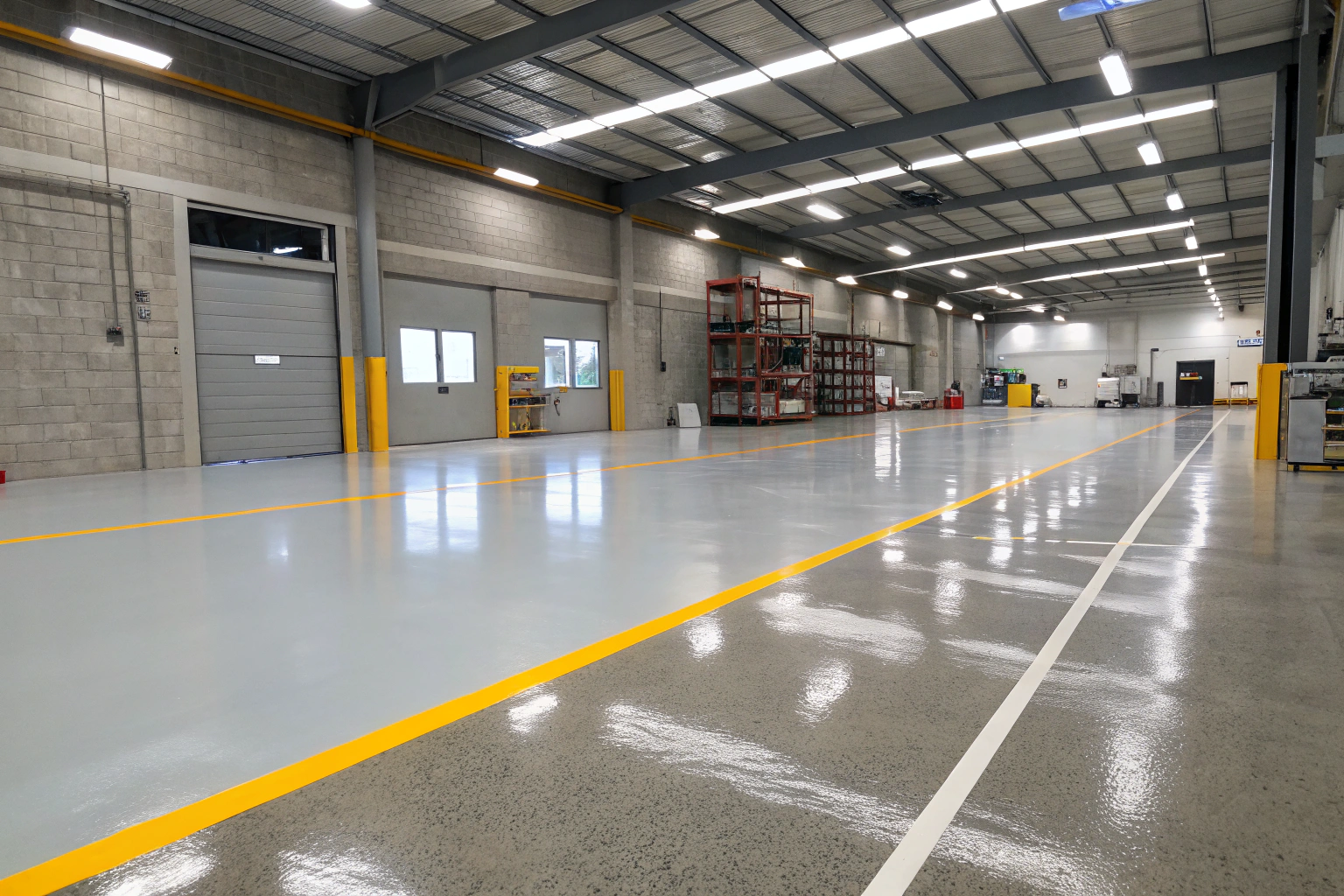
For Hobart business operators, a damaged epoxy floor isn’t just an aesthetic problem — it’s a compliance one. Raised chip edges, deep scratches, and worn patches in commercial and industrial environments create trip hazards and snagging points for wheeled equipment that sit squarely in WorkSafe Tasmania’s hazard management framework. If your floor has been flagged in an inspection or you’ve had a near-miss on a damaged section, getting it repaired isn’t optional.
Our commercial epoxy repairs address the specific damage types that generate safety concerns — eliminating raised edges, restoring anti-slip surface texture where it’s been worn through, and removing the exposed concrete edges where contamination and moisture get in. Where a repair area requires an anti-slip topcoat to match the surrounding floor’s rated finish, that’s what goes down. We work across workshops, warehouses, commercial kitchens, and light manufacturing facilities throughout Hobart and can provide documentation of the repair work completed for your safety records if required.
HOW WE REPAIR CHIPPED AND SCRATCHED EPOXY FLOORS
Every repair starts with understanding exactly what’s happened to the surface. Here’s how the process works from assessment through to finished result:
Step 1 — Damage Assessment: We evaluate the depth and extent of the damage. A surface scratch behaves very differently from a deep gouge that’s exposed the concrete substrate, and the repair method needs to match what’s actually there. For many Hobart clients, this assessment can be completed from photos before a site visit is even required.
Step 2 — Repair Area Preparation: The damaged area is ground back to sound coating or bare concrete, depending on depth. This step is non-negotiable — applying a repair over a compromised edge or loose coating will fail. Proper preparation is what makes the repair last.
Step 3 — Fill and Repair Compound Application: A compatible epoxy fill or repair compound is applied to the prepared area, building the surface back up to the correct level and restoring structural continuity with the surrounding floor.
Step 4 — Sanding Flush Once cured, the repaired area is sanded back flush with the surrounding surface. This is what creates a smooth, seamless transition rather than a raised patch that catches foot traffic and equipment wheels.
Step 5 — Topcoat Matching and Application The final topcoat is applied and matched to the surrounding floor finish as closely as possible — colour, sheen level, and texture all factored in. This is the skilled part of the job, and it’s where an experienced applicator makes the difference between a repair that integrates and one that stands out as an obvious patch.
What Makes a Repair Fail — and How We Avoid It
Most epoxy repair failures come down to one of three things: inadequate preparation, incompatible materials, or skipping steps to save time. All three are avoidable, and all three are things we see regularly on floors where a previous repair has broken down.
Inadequate preparation is the most common cause. Applying a repair compound over a contaminated, oily, or structurally unsound surface gives it nothing to bond to. The repair lifts, the edges catch, and within months, you’re back to square one. Every repair we do starts with grinding back to sound material — no shortcuts.
Incompatible materials cause adhesion failure between the repair compound and the existing coating system. Not all epoxy products work together, and using the wrong fill or topcoat product is a fast way to produce a repair that looks fine for six weeks and then delaminates. Rushing the cure between stages compresses the chemical bonding process and produces a repair that’s mechanically weak from day one. We work to the product’s actual cure schedule — because that’s what makes the repair last.
Frequently Asked Questions
Yes. Targeted repairs are designed to address the damaged area only. The surrounding coating stays untouched. That’s the whole point — fixing what’s broken without treating a perfectly sound floor as a problem.
On newer floors, a well-executed repair integrates closely with the surrounding finish. On older or UV-exposed floors, some variation is normal. We give you an honest assessment of the likely outcome before work begins.
All three. The repair approach and topcoat matching process differ between systems, but we work across solid colour, flake broadcast, and metallic epoxy floors throughout Hobart.
A properly prepared and applied repair should perform comparably to the surrounding floor. Longevity depends on the traffic and conditions the floor is exposed to, but a correctly done repair isn’t a weak point in the floor.
It depends on how widespread the damage is. Multiple localised repairs across an otherwise sound floor still make sense. If the damage is spread broadly across the surface, we’ll tell you when a full recoat becomes the better investment.
Yes. We work across both. Residential garage floor chip and scratch repairs are a regular part of what we do across Hobart suburbs including Clarence, Glenorchy, Kingborough, and beyond.
Get Your Epoxy Floor Assessed — No Commitment Required
If your epoxy floor has taken some damage and you’re not sure whether it can be repaired, the easiest next step is to send us some photos. Most damage can be assessed and quoted from images before a site visit is even needed, which means no waiting around for an appointment just to find out where you stand.
Clear Cut Epoxy Flooring works with property owners, workshop operators, business tenants, and facilities managers right across Hobart and Greater Tasmania. Whether it’s a chipped garage floor in Clarence, a gouged workshop floor in Glenorchy, or a worn commercial surface in the CBD, we’ll give you a straight answer on what the repair involves, what outcome to expect, and what it’ll cost.
No pressure. No obligation. Just an honest assessment from a specialist who works with epoxy floors every day.
Get in touch today — send through your photos, and we’ll get back to you with an assessment.
