
Automotive Workshop Epoxy Flooring Hobart – Built for Heavy Use and Chemical Resistance
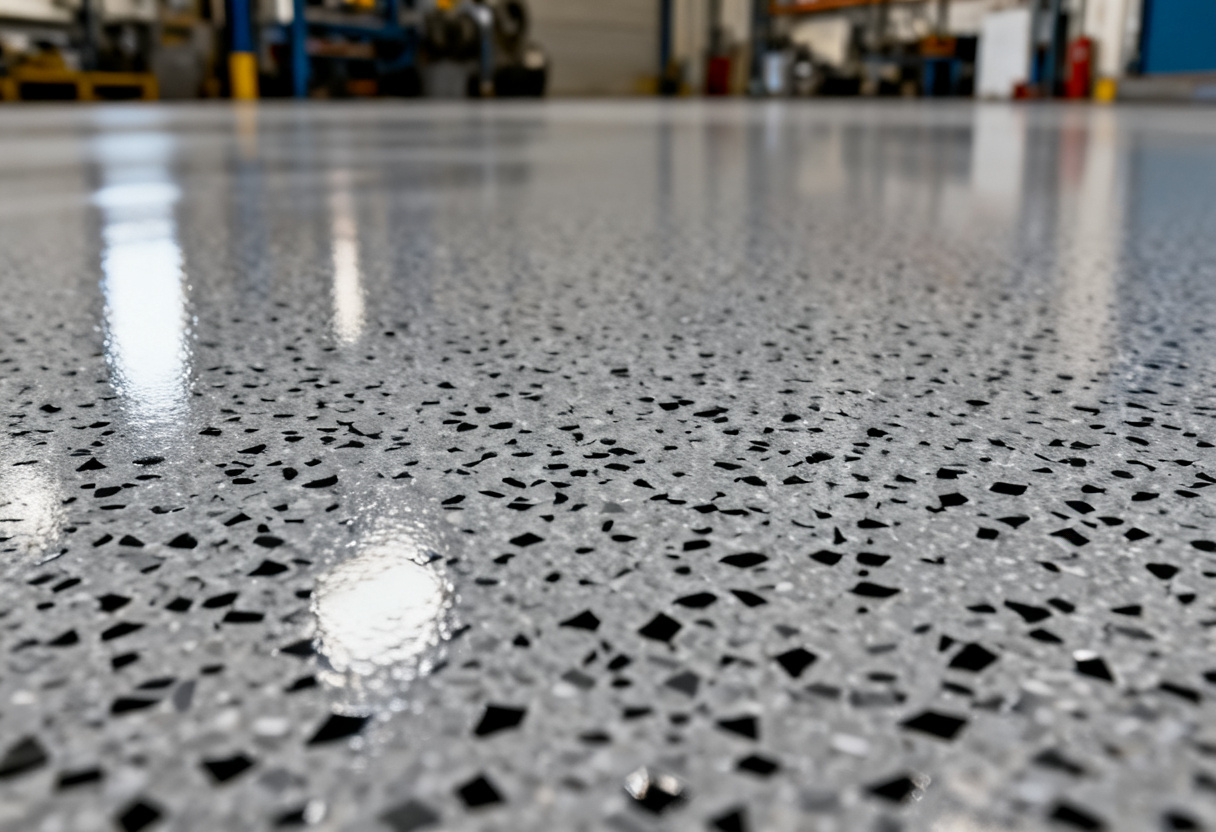
An automotive workshop floor doesn’t get an easy life. Oil, grease, hydraulic fluid, coolant, brake fluid, fuel spills — and that’s before you factor in the daily punishment from hoists, jack stands, trolley jacks, and vehicles being driven in and out across concrete that was probably last painted sometime in the early 2000s. If that sounds like your workshop in Glenorchy, Moonah, Cambridge, or Rosny Park, you already know that bare or painted concrete just doesn’t cut it anymore.
Automotive shop epoxy flooring Hobart workshop owners are choosing is built specifically for that environment — chemical resistant, load-rated, slip-resistant underfoot, and fast to clean down at the end of a shift. It’s not a cosmetic upgrade. It’s a working floor that performs the same way your tools do — reliably, day after day, without letting you down.

Why Hobart Workshop Owners Specify Epoxy Over Everything Else
A concrete floor that can’t keep up with the demands of an automotive environment becomes a liability fast — a staining problem, a safety problem, and a presentation problem all at once. Here’s what a properly specified epoxy system delivers.
How It Works — From First Contact to Finished Floor
Step 1 — Free Site Assessment
We come out to your workshop and assess the slab in person — checking concrete condition, moisture levels, oil contamination, and any cracks or surface damage that need addressing before a coating goes anywhere near it.
Step 2 — Honest Quote
You get a written quote covering preparation, materials, and installation — broken down clearly so you know exactly what you’re paying for. If your floor needs more work than a standard job, you’ll hear that upfront, not on day one.
Step 3 — Surface Preparation and Degreasing
Oil-contaminated slabs get specialist degreasing treatment first — drawing out subsurface contamination that standard grinding alone won’t fix. This is the step most cheap jobs skip, and it’s exactly why those jobs fail within months.
Step 4 — Diamond Grinding and Crack Repair
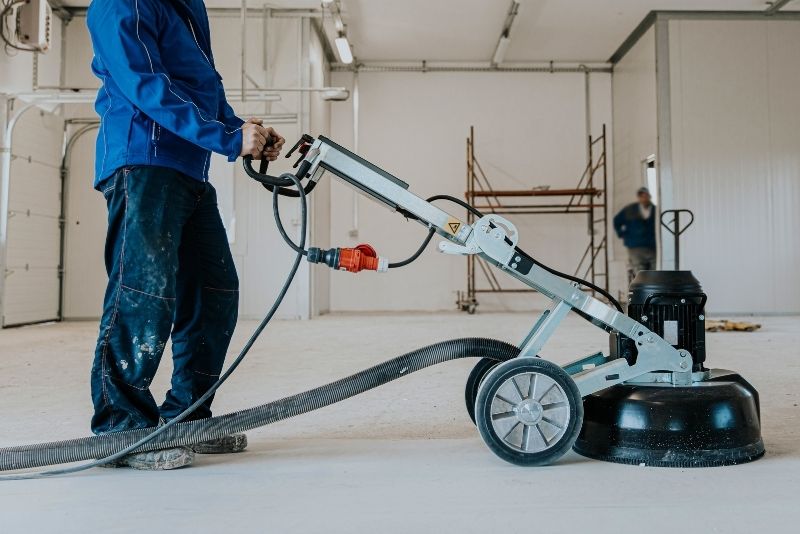
Once degreasing is complete we diamond grind the entire surface to open the concrete and create a proper mechanical bonding profile. Cracks, joints, and surface damage are repaired at this stage. The floor doesn’t get coated until the substrate is genuinely ready.
Step 5 — Primer, Base Coat and Finish
Penetrating primer goes down first — including moisture-tolerant systems where Hobart’s damp conditions require it. Base coat follows, then the finish coat with anti-slip aggregate broadcast as standard. Line marking is completed at this stage if it’s in scope.
Step 6 — Cure and Handover
We leave you with a clear cure timeline covering foot traffic, vehicle loads, and hoist use. Hobart’s cooler climate affects cure times — especially through winter — and we factor that into scheduling from the start.


Finish Options for Automotive Workshop Floors
Solid colour systems — typically in workshop grey, light grey, or safety yellow — deliver a clean, professional finish that’s easy to inspect for fluid contamination and keeps the floor looking sharp. This is the most popular choice for mechanical workshops and service centres across Hobart.
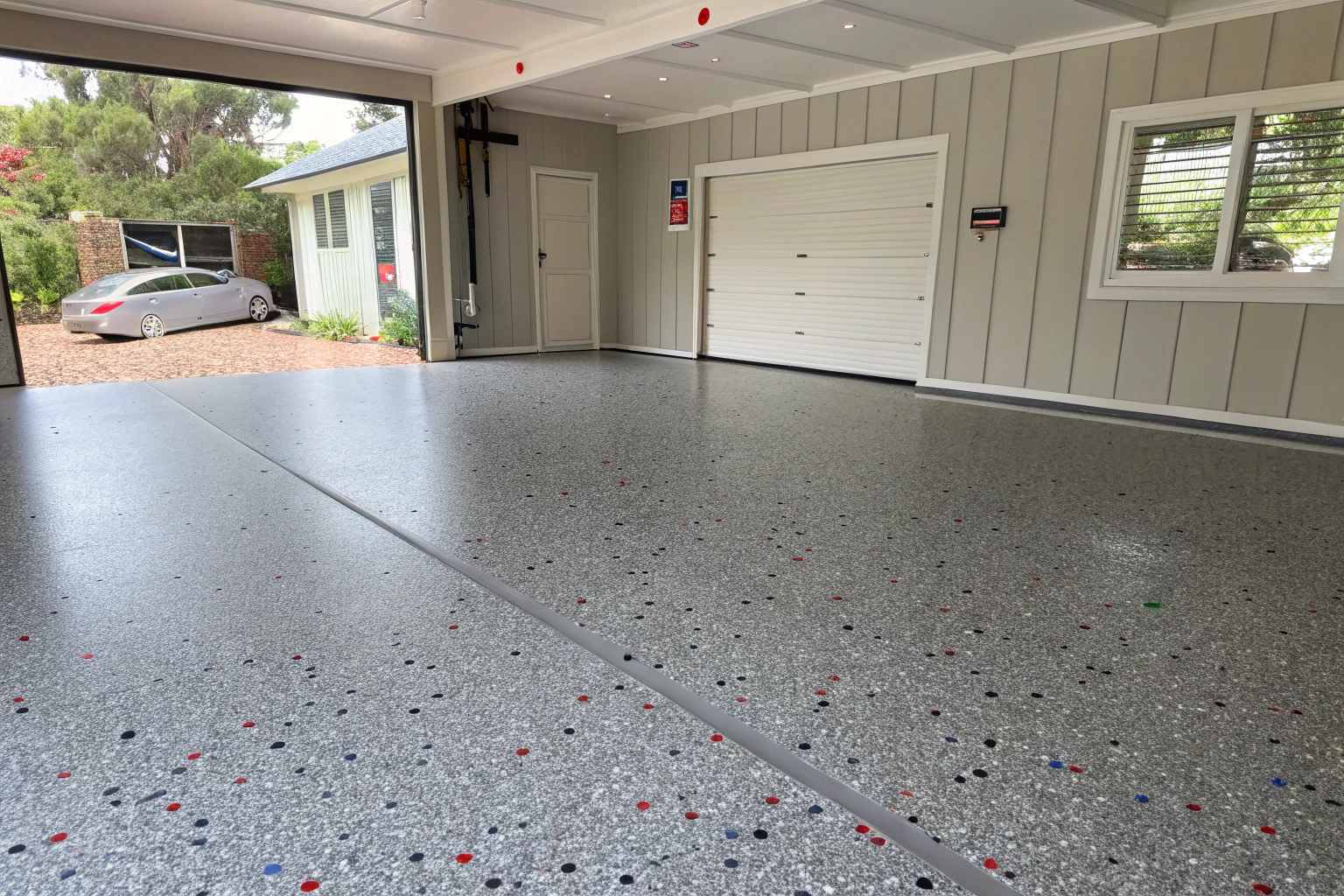
Flake broadcast systems add decorative vinyl flake to the surface, which does a better job of hiding minor staining and fluid marks between cleans. They also add texture that contributes to slip resistance. A good option for detailing bays, showroom-adjacent workshop areas, or spaces where presentation carries extra weight.
Line marking is fully compatible with epoxy systems and can be incorporated during installation — bay demarcation lines, safety zone markings, pedestrian walk areas, and customer reception zones can all be laid out cleanly as part of the job.
Get a Quote for Your Hobart Workshop Floor
If your automotive workshop floor is overdue for an upgrade — whether it’s bare concrete, failing paint, or a previous coating that’s given up — get in touch for a free site assessment and quote.
Clear Cut Epoxy Flooring has assessed and prepared heavily contaminated automotive workshop slabs across Hobart, including premises in Glenorchy, Moonah, Cambridge, and Rosny Park. We’ll give you an honest read on the preparation your slab actually needs before we quote — no surprises once the job starts.
Call us or fill in the enquiry form to get the conversation going.
FAQs About Automotive Shop Epoxy Flooring
How long does an automotive workshop epoxy floor take to install in Hobart?
Most workshop floors in the Hobart area take two to three days from preparation through to final coat, depending on the size of the slab and the condition of the concrete. Cure time before you can drive vehicles back on is typically 24–72 hours after the final coat, depending on the system used and the ambient temperature — and Hobart’s cooler climate does slow cure times, so we factor that in when we schedule jobs. We’ll give you a clear timeline before we start so you can plan around your workshop’s operations.
Can epoxy be installed over an existing painted concrete floor in my workshop?
It depends on the condition of the existing paint and how well it’s bonded to the slab underneath. If the paint is peeling, flaking, or sitting over contaminated concrete, it needs to come off entirely — painting over a failed surface just shifts the problem. We assess this during the site visit and give you a straight answer on what preparation is actually required.
How much does automotive workshop epoxy flooring cost in Hobart?
Pricing varies based on the size of the floor, the condition of the slab, the level of contamination, and the system specified — a simple single-colour system on a well-prepared slab is priced differently to a flake broadcast system on a heavily oil-contaminated workshop floor that needs multiple preparation passes. As a rough guide, commercial workshop floors in Hobart typically range from $40–$80+ per square metre installed, but we won’t lock in a number until we’ve actually seen your slab. The site assessment is free and there’s no obligation.
Is epoxy flooring slippery when wet in a workshop environment?
Standard smooth epoxy can be slippery when wet, which is why we don’t install smooth systems in working automotive workshops. We specify anti-slip aggregate broadcast into the topcoat as standard for workshop environments, giving the floor grip underfoot even when there’s fluid contamination — which matters in a Hobart workshop where wet conditions are part of daily life, especially through winter.
How do I maintain an epoxy floor in a busy Hobart automotive workshop?
Day-to-day maintenance is straightforward — sweep or blow out debris, mop spills as they happen, and do a proper wash-down at the end of the week with a neutral pH cleaner. Avoid acidic degreasers that can dull the surface over time. A properly installed epoxy floor in a working automotive environment doesn’t need special treatment — it just needs regular cleaning, which is a lot easier than maintaining bare or painted concrete.
Will epoxy flooring hold up under a hoist in my workshop?
Yes, as long as the right system is specified and the substrate preparation is done properly — this is not the place to cut corners on product selection. We use commercial-grade systems engineered for vehicle loads and hoist point loads, not residential garage products that aren’t rated for the same demands. If your workshop runs a two-post or four-post hoist, we’ll factor that into the system spec when we assess the job.
